An international team led by Imperial has pinpointed a single gene associated with one of the leading causes of heart thickening and failure
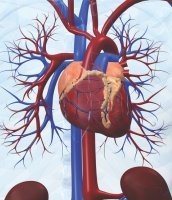
Adapted from a news release issued by the Medical Research Council Wednesday 5 October 2011 An international research team led by Imperial College London has for the first time pinpointed a single gene associated with one of the leading causes of heart thickening and failure. Scientists have found that the Endog gene in rats and mice influences the thickness of the muscular heart wall, how well the heart pumps and how much fat accumulates inside the organ. The researchers say the findings, published today , bring them one step closer to developing new treatments that target the underlying causes of heart conditions, rather than just treating the symptoms. Professor Stuart Cook from the Medical Research Council (MRC) Clinical Sciences Centre at Imperial College London, who led the study, said: "Our study shows that the Endog gene, which was previously thought to be involved in cell death, actually plays an important role in the enlargement of the heart, which can lead to heart failure and eventually death in the worst cases. We found that a faulty copy of this gene causes the heart to become thick and fatty, making it 'heavy' with poor function. "It does this by interfering with the heart cells' energy source - the mitochondria. Like any other muscle in our body, the heart needs energy to keep it pumping.
TO READ THIS ARTICLE, CREATE YOUR ACCOUNT
And extend your reading, free of charge and with no commitment.