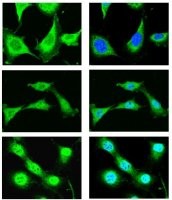
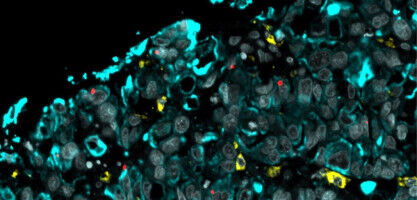
Imperial reseachers have discovered an essential protein involved in controlling inflammation in cancer.
Adapted from a news release issued by Cancer Research UK Thursday 31 March 2011 Scientists have discovered an essential protein that controls inflammation induced by "tumour necrosis factor" (TNF) - an important part of the body's defences against infection and a driver of cancer-associated inflammation, according to research published in Nature today. The study - led by Cancer Research UK -funded scientists based at Imperial College London in close collaboration with scientists at La Trobe University in Melbourne - may also shed light on the causes of certain autoimmune diseases, such as rheumatoid arthritis and psoriasis. TNF plays a pivotal role in protecting the body against infection by bacteria, viruses and other pathogens. It does this by directing the immune system to spot rogue pathogens and then destroy them. As the name suggests, when TNF was first discovered scientists thought its main role in the body was to help kill cancer cells. But later research showed that in many types of cancer TNF instead serves to promote cancer growth. So rather than destroying cancer cells, it encourages them to grow and spread by triggering inflammation in the surrounding tissues.
TO READ THIS ARTICLE, CREATE YOUR ACCOUNT
And extend your reading, free of charge and with no commitment.