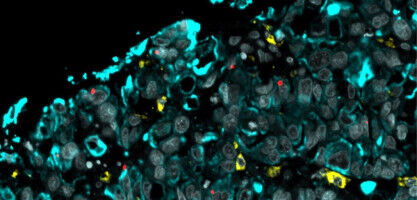
Modified Ectsasy holds promise as potent blood cancer treatment
Scientists at the University of Birmingham have discovered a modified form of the drug MDMA - commonly known as Ecstasy - which has 100 times more cancer-busting properties than the popular recreational drug itself and which they hope may be able to be produced in a safe form to treat patients. Research results published online today (18 August 2011) in the journal Investigational New Drugs show significant success in 'redesigning the designer drug' for potential use as a cancer-killing agent in the treatment of leukaemia, lymphoma and myeloma. The new work builds on the Birmingham scientists' discovery six years ago that more than half of the cancers of white blood cells they looked at responded in the test tube to the growth-suppressing properties of psychotropic drugs. These include amphetamine derivatives such as Ecstasy and weight-loss pills, and antidepressants such as fluoxetine (Prozac). At the time, the team stressed that translating their laboratory findings into a useable clinical compound would present significant problems, not least because the dose of MDMA required to treat a cancerous tumour would have proved fatal to the patient. They aimed to break down the actions of the drug to isolate its cancer-killing properties from its general toxicity. Working with researchers from the University of Western Australia who produced the new compounds for them, the Birmingham scientists found specially modified forms of Ecstasy boosted in their ability to attack and destroy cancerous cells by a factor of 100.