


news 2011
Life Sciences
Results 141 - 160 of 241.
Life Sciences - Environment - 18.05.2011
Scientists reveal genetic ’wiring’ of seeds
PA 162/11 The genetic 'wiring' that helps a seed to decide on the perfect time to germinate has been revealed by scientists for the first time. Plant biologists at The University of Nottingham have also discovered that the same mechanism that controls germination is responsible for another important decision in the life cycle of plants — when to start flowering.
Health - Life Sciences - 17.05.2011
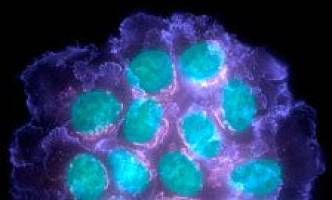
Researchers at King's have achieved a breakthrough in understanding a biological process which causes many common cancers, including lung and breast cancer. The achievement opens up new possibilities for the development of improved cancer drugs. The findings are published in the journal Molecular and Cellular Biology.
Health - Life Sciences - 17.05.2011
Protection against one of Africa’s oldest animal plagues
An international research team, including University of Manchester scientists, using a new combination of approaches has found two genes that may prove of vital importance to the lives and livelihoods of millions of farmers in a tsetse fly-plagued swathe of Africa. The team's results, published in the Proceedings of the National Academy of Sciences (PNAS) , is aimed at finding the biological keys to protection from a single-celled trypanosome parasite that causes both African sleeping sickness in people and a wasting disease in cattle.
Health - Life Sciences - 16.05.2011
Scientists find genetic link to depression
Research led by King's College London has discovered the first solid evidence that genetic variations on chromosome 3 may cause depression. In a rare occurrence in genetic research the findings have been replicated concurrently by another group from Washington University, and both papers are published today in the American Journal of Psychiatry.
Life Sciences - Agronomy & Food Science - 16.05.2011

A gene linked to type 2 diabetes and cholesterol levels has been identified as a 'master regulator' by a team at King's College London and the University of Oxford. The researchers found that the gene controls the behaviour of other genes found within fat tissues in the body. As fat plays a key role in susceptibility to metabolic diseases such as obesity, heart disease and diabetes, the regulatory gene could be a possible target for future treatments to fight these diseases.
Life Sciences - Health - 13.05.2011

Scientists at King's College London have for the first time uncovered a gene responsible for Adams-Oliver Syndrome (AOS), a condition which can cause birth defects of the heart, limbs or blood vessels. The study, published in the American Journal of Human Genetics today, gives valuable insight not only into this particular condition, but also the possible genetic causes of these common birth defects found in the wider population.
Health - Life Sciences - 10.05.2011

The UK's biggest-ever study to discover the genes that cause the incurable autoimmune disease, lupus, is set to considerably advance understanding of the disease and could result in a genetic test predicting who is most likely to develop the condition. Researchers at King's are taking advantage of the latest advances in gene technology to analyse DNA samples from 5,000 people with lupus from all over the UK, Europe and Canada, in order to identify the full set of genes that predispose them to getting the condition.
Life Sciences - Health - 05.05.2011
Worm discovery could help one billion people worldwide
Scientists have discovered why some people may be protected from harmful parasitic worms naturally while others cannot in what could lead to new therapies for up to one billion people worldwide. Parasitic worms are a major cause of mortality and morbidity affecting up to a billion people, particularly in the Third World, as well as domestic pets and livestock across the globe.
Health - Life Sciences - 05.05.2011
Daily pill for Duchenne muscular dystrophy
A new drug for the muscle-wasting disease Duchenne muscular dystrophy has shown significant benefits in mice, opening the door for clinical trials. The promising results indicate that a simple, daily pill to treat all patients with Duchenne muscular dystrophy should be possible, whether or not this specific drug formulation makes it all the way through clinical trials without further development.
Health - Life Sciences - 03.05.2011
Scientists discover ’how to stop your immune system from killing you’
Scientists at the University of Birmingham have discovered a 'molecular hoover' with the potential to prevent autoimmune conditions. Research findings published today in the journal Science by Dr David Sansom and his team in the MRC Centre for Immune Regulation at Birmingham show how a protein, called CTLA-4, keeps the immune system damped down during day-to-day activities and prevents inappropriate aggressive behaviour from T cells, the 'command centre of our immune response'.
Health - Life Sciences - 27.04.2011
New weapon in fight against cancer
PA 127/11 A virus-packed blood cell that attacks cancers from within has added a new weapon to its armoury — and it's all down to timing. Mathematicians at The University of Nottingham have worked with scientists at the University of Sheffield and Keele University to apply mathematical modelling to a revolutionary cancer treatment to optimise outcomes.
Life Sciences - Health - 27.04.2011
Scientists prove new technology to control malaria-carrying mosquitoes
Scientists at Imperial College London and the University of Washington, Seattle, have taken an important step towards developing control measures for mosquitoes that transmit malaria Scientists at Imperial College London and the University of Washington , Seattle, have taken an important step towards developing control measures for mosquitoes that transmit malaria.
Environment - Life Sciences - 21.04.2011

Exotic species can be used to restore important functions in ecosystems that were lost following the extinction of key species, according to a new study of giant tortoises on a small island in the Indian Ocean. The study was carried out by an international team of researchers led by the University of Bristol.
Health - Life Sciences - 21.04.2011
Parasite sheds light on sleeping sickness
Fresh insight into the survival strategy of the sleeping sickness parasite could help inform treatments for the disease. University scientists have found that the parasite, which can transform itself into either of two physical forms, has developed a careful balance between these. One of these types ensures infection in the bloodstream of a victim, and the other type is taken up by the tsetse fly and spread to another person or animal.
Health - Life Sciences - 20.04.2011
Heart drugs could cut pregnancy risks
Pregnant women could benefit from a pioneering trial that will test whether heart disease drugs can be used to treat pre-eclampsia. Researchers are investigating if a class of drugs - known as statins - can prevent the potentially fatal condition. Pre-eclamspia affects up to eight per cent of pregnant women in the UK.
Health - Life Sciences - 18.04.2011
Protein KO stops tumour growth
Science | Health Jonathan Wood | 18 Apr 11 Research published last week in the journal PNAS may have identified a promising new target for developing drugs against one of the most common types of lung cancer. Oxford University researchers have helped a team at biotech company Genentech in South San Francisco look at the role of a protein called PAK1 in the growth of tumours.
Environment - Life Sciences - 15.04.2011
Big personality birds find the best homes
Science Cath Harris | 15 Apr 11 Birds willing to move around and take risks are better at finding the best places to live, researchers have found. Those with 'fast-exploring' personalities - birds tending to be hyperactive - are far more likely to end up in areas providing enough food, shelter and reproductive opportunities, a new study shows.
Life Sciences - Health - 15.04.2011
Genes that control ’ageing’ steroid identified
Eight genes which control levels of the main steroid produced by the adrenal gland, believed to play a role in ageing and longevity, have been uncovered by an international consortium of scientists, co-led by King's College London. Crucially, some of these eight genetic regions are also associated with other important diseases of ageing, including type 2 diabetes and lymphoma.
Life Sciences - Pedagogy - 14.04.2011
Geneticist solves airport baby riddle
A University researcher has helped a man abandoned at birth in Gatwick airport to trace his genetic roots. Dr Jim Wilson, of the Centre for Population Health Sciences, analysed the man's to identify where his parents may have come from. Steve Hydes, now 25, was found as a ten day old baby on the floor of a ladies toilet in Gatwick airport.
Health - Life Sciences - 14.04.2011

Adapted from a news release issued by the Medical Research Council. Wednesday 13 April 2011 Scientists have found a new group of proteins that could boost the effectiveness of vaccinations, making it much easier to immmunise newborn African children.


