


news 2011
Life Sciences
Results 121 - 140 of 241.
Health - Life Sciences - 09.06.2011

The research by academics at the universities of Bristol and Bangor has shown for the first time that overweight and obese people have a dulled sensitivity to the sweetness of soft drinks but an enhanced subconscious liking of sweet food. The findings also found that even if people are not overweight, drinking two sugary drinks a day for just four weeks is sufficient to both dull sensitivity to the taste sensation, and increase preference for sweeter tastes, particularly in people who did not already have a 'sweet tooth'.
Life Sciences - Chemistry - 08.06.2011

by Simon Levey 8 June 2011 Scientists across the country are today being invited to join two new multidisciplinary networks to carry out research and share knowledge in chemical biology, led by the Institute of Chemical Biology at Imperial College London. Chemical biology is defined as the use of chemistry and chemical tools to understand and solve biological problems.
Life Sciences - 08.06.2011
Learn to pay attention!
PA 180/11 A new scientific theory on what we learn to pay attention to and what we learn to ignore could turn 30 years of research on its head. Research by Dr Mark Haselgrove from The University of Nottingham (UK), and Dr Guillem Esber from the University of Maryland (USA), challenges two long held and contradictory theories on which cues our brains use to predict events of significance.
Life Sciences - Chemistry - 08.06.2011
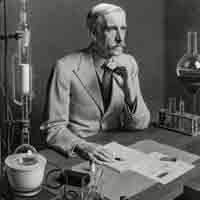
A plaque commemorating the life and work of the eminent biochemist Sir Frederick Gowland Hopkins (1861 to 1947) will be unveiled at his former Cambridge home on Friday. The plaque will be displayed on the exterior of 71 Grange Road, Cambridge, where Hopkins lived with his family for many years. It has been designed and made by the present owner of the house, Mark Bury FRSA, a distinguished engraver, designer and lettercutter.
Health - Life Sciences - 06.06.2011

New research provides breakthrough in understanding common cancer Researchers from the University of Sheffield have discovered valuable insight into how people develop B-cell lymphoma, one of the most common cancers in the UK. The team, from the University's Institute for Cancer Studies and funded by Leukaemia and Lymphoma Research, Biotechnology and Biological Sciences Research Council (BBSRC) and Yorkshire Cancer Research, found that a mechanism different to that previously thought to be the cause of lymphoma may be responsible for the development of the disease.
Health - Life Sciences - 06.06.2011
Experts prove link between phosphate intake and heart disease
Lowering phosphate intake in humans can reduce heart disease, according to research by experts at the University of Sheffield. This is the first time the connection between a high phosphate diet and atherosclerosis - the cause of heart disease - has been proven. The findings have been published in Arteriosclerosis, Thrombosis and Vascular Biology (2 June 2011).
Health - Life Sciences - 02.06.2011
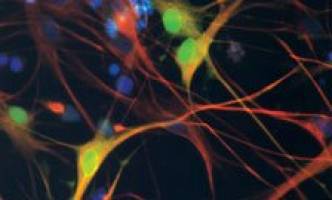
Cancer Research UK-funded researchers at King's College London have identified a way of eliminating leukaemic stem cells, which could in the future lead to new treatments that may enable complete remission for leukaemia patients. Leukaemic stem cells sustain the disease and are likely to be responsible for relapse, so elimination of these cells is believed to be key for achieving complete remission.
Health - Life Sciences - 02.06.2011
Study identifies protection against African sleeping sickness
Researchers at the University of Liverpool have identified two genes that may prove key to protecting against African sleeping sickness in people and a wasting disease in cattle. Cases of sleeping sickness infections in people have fallen in the last 13 years, from an estimated 300,000 incidences a year in 1998, to 30,000 in 2009.
Life Sciences - Health - 02.06.2011
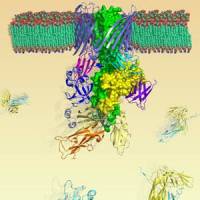
Scientists have uncovered the structure of the protein complex that assembles the tiny hair-like strands that cover the outside of bacteria. Called pili, these 'hairs' allow bacteria to group together and stick to human cells to cause infection - and are therefore a key target for a new generation of antibiotics.
Environment - Life Sciences - 31.05.2011
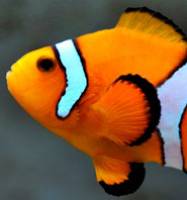
Baby clownfish use hearing to detect and avoid predator-rich coral reefs during the daytime, but new research from the University of Bristol demonstrates that ocean acidification could threaten this crucial behaviour within the next few decades. Since the Industrial Revolution, over half of all the CO2 produced by burning fossil fuels has been absorbed by the ocean, making pH drop faster than any time in the last 650,000 years and resulting in ocean acidification.
Health - Life Sciences - 30.05.2011
Study offers hope for cancer therapy
Ovarian cancer patients could be helped by a test that identifies the specific type of tumour they have. University researchers hope this improved diagnosis will help doctors to personalise treatment programmes so that patients receive the most effective drugs. The Edinburgh team worked with scientists from Ireland to identify six subgroups of the disease, each of which had a different genetic signature.
Life Sciences - 26.05.2011
Spatial awareness not reliant on just sight
Our brain's understanding of spatial awareness is not triggered by sight alone, scientists have found. University researchers have found that our brain can use other senses - such as touch - to help us understand spatial awareness. The findings could help in designing technology for the visually impaired.
Life Sciences - 26.05.2011
Orangutans bite back
Science Pete Wilton | 26 May 11 Life as a seed isn't easy: you need to be tough enough to deter all but the most muscular-jawed predators but not so hard that you can't germinate. A new study published this week in Journal of the Royal Society Interface shows just how fine this evolutionary balance between protection and reproduction is.
Health - Life Sciences - 26.05.2011
Reindeer use UV light to survive in the wild
Links : Research paper in Journal of Experimental Biology Professor Glen Jeffery UCL Institute of Ophthalmology UCL researchers have discovered that reindeer can not only see ultraviolet (UV) light, but that it is also crucial to their survival in the harsh arctic environment.
Life Sciences - 25.05.2011
by Simon Levey 24 May 2011 New research suggests that scientists may need to revise the criteria they use to assess whether a plant species is at risk of going extinct, if they are to concentrate their conservation efforts on the plants most in need. According to widely-used criteria, known at the Red List, a species is considered to be 'at risk of extinction' if it inhabits a limited geographical area and has a small population size.
Health - Life Sciences - 23.05.2011
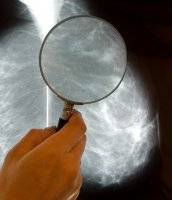
Researchers have identified a new protein involved in the development of drug resistance in breast cancer which could be a target for new treatments, they report today Medicine. In a mouse model of breast cancer, blocking production of the protein using genetic techniques caused tumours to shrink. The scientists are now looking for new drugs which could achieve a similar effect.
Life Sciences - Health - 20.05.2011
Oxford academics recognised by Royal Society
The Royal Society has elected eight Oxford University academics as new Fellows. They are Professor Hagan Bayley, Professor Alan Grafen, Professor Ian Horrocks, Professor Alex Kacelnik, Professor Steffen Lauritzen, Professor David Manolopoulos, Professor Fiona Powrie and Professor Angela Vincent. Professor Hagan Bayley is Professor of Chemical Biology at the Department of Chemistry and a Fellow of Hertford College.
Life Sciences - Health - 20.05.2011
Crossing your arms relieves pain
Crossing your arms reduces the intensity of pain you feel when receiving a painful stimulus on the hand, according to research by scientists at UCL. Published in the current issue of the journal PAIN, the research shows that crossing your arms over the midline (an imaginary line running vertically down the centre of the body) confuses the brain and reduces the intensity of the pain sensation.
Life Sciences - Chemistry - 20.05.2011
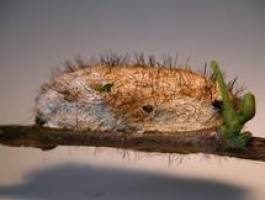
A new way of treating wild silkmoth cocoons could see new silk industries springing up wherever wild silk is found in Africa and South America, as well as silk's Asian heartland. A team led by Oxford University scientists found that the surfaces of wild cocoons are coated with a layer of the mineral calcium oxalate, which makes them difficult to unravel.When the researchers removed this layer using an acidic solution they discovered that it was possible to reel cocoons into long strands of silk comparable to those derived from the domesticated Mulberry silk moth ( Bombyx mori ).
Health - Life Sciences - 19.05.2011
Computer game helps eye specialists treat disease in children
An eye consultant has drawn on his teenage passion for computer programming to create a special test to check the vision of children as young as four, in a way that can flag up problems caused by glaucoma, drug side-effects, brain tumours and other conditions. Mr Tariq Aslam, a consultant at Manchester Royal Eye Hospital and senior lecturer at The University of Manchester, found that it was very difficult getting children to sit still and concentrate while machines designed for adults measured what they could see at the edge of their vision.


