Understanding how organisms move and interact has implications far beyond behavioural ecology. This model may, for instance, shed light on the processes responsible for the formation of territorial boundaries in early human hunter-gatherer societies, and eventually help predict how the size of modern day countries will evolve.
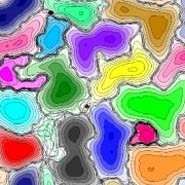
A new study into the exclusion tactics adopted by urban foxes suggests that the transient nature of animal territory is a result of a complex system of individual-level interactions. The size of an animal's territory is ultimately dependent on how long it can exert its control before intruders cross the boundaries into its space. The precise nature of such changeable territorial boundaries is revealed in a new study which offers fresh insights from the combined perspectives of biological sciences, mathematics and engineering. Researchers from the University of Bristol used thirty years of data regarding the movements of the urban red fox to construct and verify a mathematical model on which their analysis was based. A trade-off between two factors emerged as key determinants of territoriality - the time necessary for an animal to move between its own boundaries and the time span during which the fox could maintain its scent trail within that territory. In 1994, when a disease called sarcoptic mange infected and killed most of Bristol's fox population, Professor Stephen Harris noticed that as the animals on one territory died, the neighbouring animals were able to move in and take over within a matter of three or four days. He assumed that this was because the scent marks of the original fox population were no longer fresh.
TO READ THIS ARTICLE, CREATE YOUR ACCOUNT
And extend your reading, free of charge and with no commitment.