


news 2011
Categories
Years
2009 | 2010 | 2011 | 2012 | 2013 | 2014 | 2015 | 2016 | 2017 | 2018 | 2019 | 2020 | 2021 | 2022 | 2023 | 2024 | 2025 | 2026 |
2009 | 2010 | 2011 | 2012 | 2013 | 2014 | 2015 | 2016 | 2017 | 2018 | 2019 | 2020 | 2021 | 2022 | 2023 | 2024 | 2025 | 2026 |
Results 421 - 440 of 597.
Health - Life Sciences - 05.04.2011
Scientists have identified a gene that appears to play a role in regulating how much alcohol people drink, in a study of over 47,000 people published today in Proceedings of the National Academy of Sciences . The researchers say that finding a common genetic variation influencing levels of alcohol consumption may lead to a better understanding of mechanisms underlying alcohol drinking behaviour in the general population.
Social Sciences - 05.04.2011
Top 10 evidence gaps in information about UK immigration
A new report by Oxford University researchers reveals ten key problems with the UK's evidence base on migrants and migration. The report is by the Migration Observatory, a project of the University's Centre on Migration, Policy and Society (COMPAS). The Migration Observatory was launched by Immigration Minister Damian Green, MP and Baroness Oona King of Bow last week.
Life Sciences - Health - 05.04.2011

Imperial College London and King's College London News Release Scientists have identified a gene that appears to play a role in regulating how much alcohol people drink, in a study of over 47,000 people published today in Proceedings of the National Academy of Sciences. The researchers say that finding a common genetic variation influencing levels of alcohol consumption may lead to a better understanding of mechanisms underlying alcohol drinking behaviour in the general population.
Life Sciences - Psychology - 05.04.2011
What our eyes can’t see, the brain fills in
Researchers from the University of Glasgow have shown that when parts of our vision are blocked, the brain steps in to fill in the blanks. The team from the Institute of Neuroscience and Psychology conducted a series of experiments that showed how our brains predict what cannot be seen by drawing on our previous experiences to build up an accurate picture.
Health - 05.04.2011
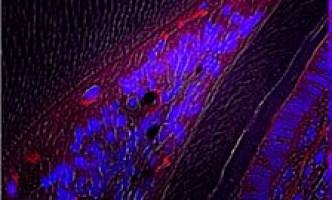
Scientists from King's College London have uncovered the first genetic evidence that shows cells found on the surface of blood vessels can act as stem cells to assist in both organ growth and tissue repair. The study, funded by the Medical Research Council, is published today in the journal, Proceedings of the National Academy of Sciences (PNAS).
Health - Life Sciences - 05.04.2011
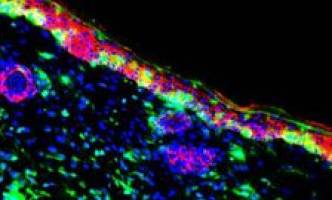
Researchers at King's College London and Osaka University in Japan have identified specific bone marrow cells that can transform into skin cells to repair damaged skin tissue, according to a study published today in the journal, Proceedings of the National Academy of Sciences (PNAS) . The team has uncovered how this process works, providing new insights into the mechanisms behind skin repair.
Life Sciences - Health - 04.04.2011
Research leads revolution in the treatment of Alzheimer’s Disease
PA 109/11 Scientists have uncovered five new genes in the search for the genetic make-up of late-onset Alzheimer's disease (AD). Their work into this devastating condition is already changing the way people are thinking about treating and diagnosing the disease. The results of this latest study, in which The University of Nottingham played a key role, are published today April 3 2011 .
Chemistry - 02.04.2011
Missing copy of Davy’s first book found at UCL
An extremely rare copy of the very first book written by Humphry Davy, one of the world's greatest scientists, at just 19 years of age, has been discovered in UCL's library collections. Essays on heat, light and the combinations of light was published in 1799, a youthful work that Davy was later in life embarrassed about having written.
Chemistry - 01.04.2011
Missing copy of Davy’s first book found at UCL
An extremely rare copy of the very first book written by Humphry Davy, one of the world's greatest scientists, at just 19 years of age, has been discovered in UCL's library collections. Essays on heat, light and the combinations of light was published in 1799, a youthful work that Davy was later in life embarrassed about having written.
Chemistry - Life Sciences - 01.04.2011
Did clay mould life’s origins?
Science Cath Harris | 01 Apr 11 An Oxford University scientist has taken our understanding of the origin of life a step further. Professor Don Fraser from the Department of Earth Sciences has carried out neutron scattering experiments to try to find out more about the role of geochemistry in determining the origin of our amino acids - key building blocks of life on Earth - and specifically why the DNA-coded amino acids that make up our proteins are all left-handed.
Physics - Environment - 01.04.2011

Bombardments of 'micro-meteorites' on Earth and Mars four billion years ago may have caused the planets' climates to cool dramatically, hampering their ability to support life, according to research published today in the journal Geochimica et Cosmochimica Acta. Scientists from Imperial College London studied the effects of the Late Heavy Bombardment (LHB), a period of time in the early Solar System when meteorite showers lasting around 100 million years barraged Earth and Mars.
Health - 01.04.2011
New research: transport is major public health challenge
Transport is a public health challenge comparable to sewers in the 19th century and clean air in the 20th century in its difficulty, its financial implications and its consequences, according to research edited by UCL's Dr Jennifer Mindell.
Health - 01.04.2011
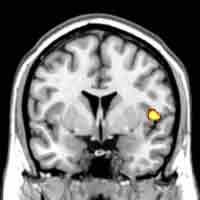
Brain scans of aggressive and antisocial teenage boys with conduct disorder (CD) have revealed differences in the structure of the developing brain that could link to their behaviour problems. The study, by neuroscientists at the University of Cambridge and the MRC Cognition and Brain Sciences Unit, reveals that the brain differences were present regardless of the age of onset of the disorder, challenging the view that adolescence-onset CD is merely a consequence of imitating badly behaved peers.
Chemistry - Life Sciences - 31.03.2011
Did clay mould life’s origins?
Science Cath Harris | 01 Apr 11 An Oxford University scientist has taken our understanding of the origin of life a step further. Professor Don Fraser from the Department of Earth Sciences has carried out neutron scattering experiments to try to find out more about the role of geochemistry in determining the origin of our amino acids - key building blocks of life on Earth - and specifically why the DNA-coded amino acids that make up our proteins are all left-handed.
Physics - Chemistry - 31.03.2011
Quantum mapmakers complete first voyage through spin liquid
Scientists from Oxford University have mapped a state of matter called 'quantum spin liquid', whose existence was proposed in the 1970s but which has only been observed recently. Until now there has been very limited information describing the physical characteristics of a quantum spin liquid state, but researchers from Oxford University's Department of Physics working with the Rutherford Appleton Laboratory have demonstrated the effect of temperature and magnetic field on this state of matter.
Life Sciences - Electroengineering - 31.03.2011

Links: UCL Ear Institute Research paper in Current Biology The antennal ears of different fruit fly species are actively tuned to high-frequency components of their respective mating songs, according to new research led by UCL scientists. During courtship, male fruit flies serenade females with a 'love song' produced by quiet, close-range wing vibrations.
Health - Life Sciences - 31.03.2011
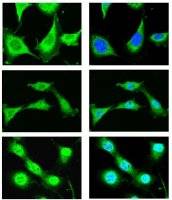
Adapted from a news release issued by Cancer Research UK Thursday 31 March 2011 Scientists have discovered an essential protein that controls inflammation induced by "tumour necrosis factor" (TNF) - an important part of the body's defences against infection and a driver of cancer-associated inflammation, according to research published in Nature today.
Health - Psychology - 31.03.2011
Older bereaved ’die of broken immune system not broken heart’
Immunity experts at the University of Birmingham have found biological evidence to suggest that bereavement lowers physical immunity, putting older people at risk of life-threatening infections. Brand new research published online in the journal Brain Behavior and Immunity shows that the emotional stress of bereavement is associated with a fall in the efficiency of white blood cells known as neutrophils, which combat infections such a pneumonia, a major cause of death in older adults.
Physics - Chemistry - 31.03.2011
Clues to Stellar Evolution Revealed in Red Giants’ Core
University of Birmingham asteroseimologists are part of a team of scientists who have studied approximately 600 red giant stars and have been able to distinguish between those that burn hydrogen and those that are burning helium in their cores, according to research published today (30 March 11). Red giants are stars that are nearing the end of their life.
Psychology - 30.03.2011

Research calls into question people's ability to form their own judgements about their preferred election candidate after finding voters could be heavily swayed by 'the worm'. 'The worm' is a continuous response tracking measure that is increasingly being used in live election debates around the world.


