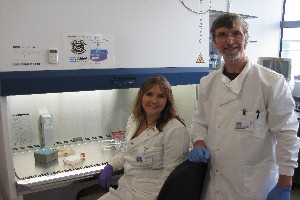
Drs Lynne and Ian Hampson led the cancer study
University of Manchester scientists have discovered for the first time an important new way in which the human papilloma virus (HPV) triggers cancer in what could lead to new treatments for cervical and mouth cancer. HPV infection is known to increase the risk of developing cancers of the cervix and mouth with the two high-risk forms of the virus accounting for approximately 70% of all cervical cancer cases. Vaccinations against these high-risk forms of HPV should reduce the incidence of cervical cancer but the frequency of mouth cancer actually increased in the UK by about 50% between 1989 and 2007, a trend that seems to be accelerating. If the current vaccines prove effective at preventing oral HPV infection, the authors claim their findings provide additional justification for the current programme of vaccinating young girls and may also lend support to extending the programme to young boys too. "Scientists have known for some years about the link between HPV and certain cancers but the biological processes involved are not fully understood,” said Dr Ian Hampson, who with wife Dr Lynne Hampson headed the research. "Our latest results shed new light on this. "Our study has shown that a protein in cells called Cdc42, which is already known to be implicated in a number of cancers as well as in tumour spread, is inappropriately activated by the human papilloma virus.
TO READ THIS ARTICLE, CREATE YOUR ACCOUNT
And extend your reading, free of charge and with no commitment.