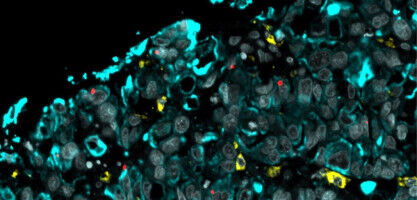
Stem cells replace stroke damaged tissue in rats
PA 59/09 Effective stem cell treatment for strokes has taken a significant step forward as scientists reveal how they have replaced stroke-damaged brain tissue in rats. Researchers at The University of Nottingham are among a team of scientists who have shown that by inserting tiny scaffolding with stem cells attached, it is possible to fill a hole left by stroke damage with brand new brain tissue within seven days. The work, funded by the Biotechnology and Biological Sciences Research Council (BBSRC) and led by Dr Mike Modo of the Institute of Psychiatry, Kings College London is published in Biomaterials. Previous experiments where stem cells have been injected into the void left by stroke damage have had some success in improving outcomes in rats. The problem is that in the damaged area there is no structural support for the stem cells so they tend to migrate into the surrounding healthy tissues rather than filling up the hole left by the stroke. Researchers at the Wolfson Centre for Stem Cells, Tissue Engineering & Modelling (STEM) made, modified and attached the stem cells to the particles. Kevin Shakesheff, Professor of Advanced Drug Delivery and Tissue Engineering, said: "This was a great collaborative project with the Kings College team and hopefully this technology will be taken to the clinical setting soon.