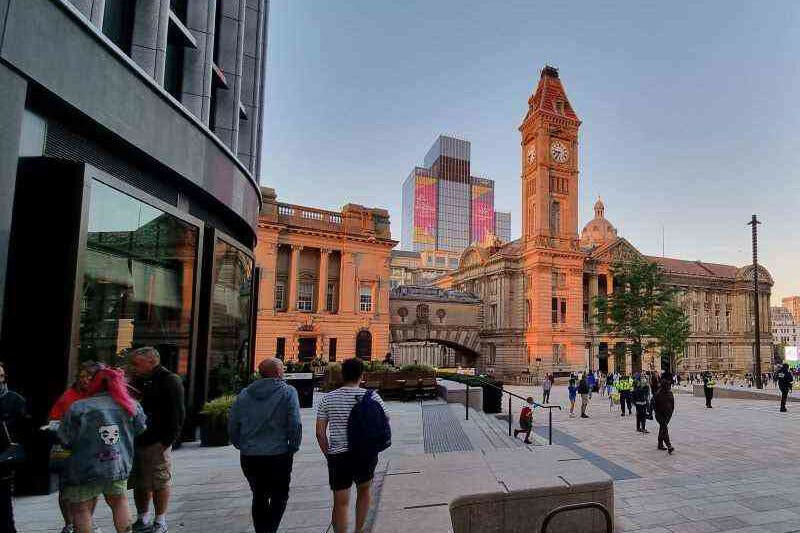
Birmingham's city centre could be liberated from the dominance of the car - photo Tony Moran
Birmingham's city centre could be liberated from the dominance of the car - photo Tony Moran - Birmingham now has a post-Commonwealth Games opportunity to move towards a more sustainable urbanism approach in city policy and planning. As the dust settles on the Birmingham 2022 Commonwealth Games , attention turns to long-term implications and questions of 'legacy' from the Games experience. The immediate impact was highly impressive, but when arguments are made to justify the resources involved in hosting such events, it is the lasting benefits that really matter. For Birmingham, as with most host cities in recent decades, attention is most likely to focus on the economic dimension - the direct and indirect knock-on effects - and on the sporting legacy, particularly relating to engagement amongst the city's more deprived communities. But just as important for Birmingham is a less immediately obvious but nonetheless crucial strand - the potential catalytic impact towards a more sustainable urbanism approach in city policy and planning. The Games represent an opportunity to accelerate the city's transition to net zero, the switch to more sustainable transport and mobility, and new approaches to housing and neighbourhood renewal. In the city centre, we could see this potential in the short-term liberation of many streets and spaces from the dominance of the car and the opening up of possibilities for social interaction, leisure and alternative ways of moving around with ease.".
TO READ THIS ARTICLE, CREATE YOUR ACCOUNT
And extend your reading, free of charge and with no commitment.