The University of Leeds is to lead a £1m project to study the giant desert storms of the Sahara which will help improve climate and weather prediction models.
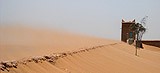
Extreme sandstorms like the fast-moving 'walls of dust' seen in Hollywood film The Mummy may look spectacular, but their effects on weather systems and climate change are even more dramatic. These storms - known as 'haboobs' - sweep large quantities of mineral dust off the sands of the Sahara into the atmosphere, where it exerts a wide range of effects on the environment. Project leader Dr Peter Knippertz, of the University of Leeds, said: "Dust is a really important player in the climate system - for example, dust from the Sahara provides most of the nutrients needed to fertilise the Amazon rainforest. But the harsh desert environment of the Sahara means very few measurements have ever been made there." Dust is one of the main sources of iron to the oceans where it is important in the formation of CO2-guzzling phytoplankton. In the atmosphere, dust particles affect how much energy from the sun enters and leaves the planet, which has a longer-term impact on climate, and dust also deteriorates overall air quality and therefore has direct implications for human health. The haboob storms of the Sahara are one of the main sources of atmospheric dust. They are caused by downdrafts at the end of a thunderstorm, which can whip up a solid wall of dust up to 1,000 metres high that travels at speeds of up to 50mph.
TO READ THIS ARTICLE, CREATE YOUR ACCOUNT
And extend your reading, free of charge and with no commitment.