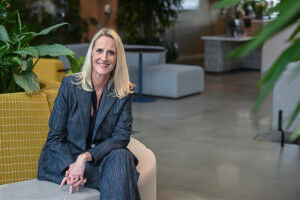
This week Dr Mathelinda Nabugodi, Lecturer in Comparative Literature and Programme Director for UCL’s two Creative Critical PhD programmes, talks Romanticism, archives, and why she’d usually rather read than watch a film.
What is your role and what does it involve?
I am a Lecturer in Comparative Literature and Programme Director for two Creative Critical PhD programmes. My research explores how practices of racial enslavement shaped Romanticism, a literary and artistic movement centred on ideals of human freedom that spread around Europe in the decades around 1800. Traditionally, Romanticists have shied away from discussing the links between the period’s obsession with liberty and concurrent practices of enslavement. I am particularly interested in how literature encoded ideas about Blackness. This means that I spend a lot of time reading dead racists - but I also get to uncover inspiring records of Black resistance.
How long have you been at UCL and what was your previous role?
I started this role in 2023. Before that, I was in the literary archive at the Fitzwilliam Museum in Cambridge.
What working achievement or initiative are you most proud of?
A few years ago, I was the first person to graduate from the PhD in Creative Critical Writing at UCL - and now I’m leading the programme! It is designed to foster experimentation with how we conduct and present research in the humanities. The best part of my job is getting to support students doing just that.
Tell us about a project you are working on now which is top of your to-do list
I have been awarded a Philip Leverhulme Prize in Languages and Literatures. I found out a few weeks ago and am still buzzing. The prize money will fund my next project, which explores Scandinavian involvement in the transatlantic slave economy. I grew up in Sweden, but I had no idea that Sweden had established slave-trading forts in West Africa and engaged in trafficking people for hundreds of years. It was only when I started researching Black British history that I discovered this dark past, so at odds with the modern image of Scandinavia as being all’about equality, social democracy, and wellbeing.
What is your favourite album, film and novel?
Ali Farka Touré and Toumani Diabeté’s Ali & Toumani is my go-to album for thinking and writing. Controversially, I’ll say that I don’t have a favourite film because the medium doesn’t quite work for me - I get bored and distracted... That said, I really loved Yorgos Lanthimos’ Bugonia. I did indeed find it boring for long stretches, but that was just the thing needed to prepare for the sublime twist at the end. And as for novel, I’ll go with Nathalie Legér’s Exposition in Amanda DeMarco’s translation. In my head, I actually call it Explosion because it so completely exploded my conceptions of what is possible when it comes to writing about an archive.
What is your favourite joke (pre-watershed)?
When being given a book - "But I already have a book."
Who would be your dream dinner guests?
A lot of my research is about trying to locate and recover Black presences in Romantic-era archives. Mostly, there is very little to go on - a passing remark, a conjecture, a coincidence. So, for example, Lord Byron employed a Black page boy to carry secret love notes to his mistress Teresa Guiccioli. We know this because Byron casually mentions it in a letter. These love notes are now preserved in several archives in Britain and the US - obviously they are revered because they were written by a great poet, but for me they also carry a trace of the young boy who once hid them in his pocket. Sadly, we do not even know the boy’s name. I would love to have him at my dinner party, together with all the other Black people whose presences I have sensed in the archives that I work in.
What advice would you give your younger self?
Know your worth and be assertive.
What would it surprise people to know about you?
Often it does surprise people when I tell them I’m from Sweden.
What is your favourite place?
By the sea.
- University College London, Gower Street, London, WC1E 6BT (0) 20 7679 2000