Photoshopping: The final frontier
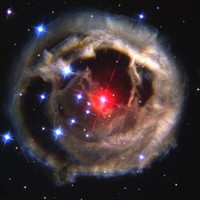
It's space, but is it art? Stunning images of the galaxy are fast becoming common currency thanks to technology like the Hubble Space Telescope, but a unique investigation at the University of Cambridge this week will seek to determine whether something strange is going on behind the scenes. In an event at the University's Institute of Astronomy this Friday (April 9th), researchers from around the world will examine the deft photo-manipulation which usually occurs before images from Outer Space are reproduced in newspapers, magazines or on television, in an effort to understand why it is happening and what it achieves. Few of the pictures of space that astronomers produce reach the public in their original form. Those sent back by Hubble, for instance, consist of blurred, monochrome, electronic data which is low on both definition and detail. While most people are under no illusions about the fact that they have been enhanced, many of us are happy to accept them even though we might generally be suspicious about other examples of photographic manipulation. The one-day symposium, entitled "The Aesthetics of Astrophotography", will try to explore this curious relationship between science, art and the viewing public by shedding light on what is really going on in astronomy's dark room. "The question we want to ask is why do astronomers employ artistic conventions as part of a scientific project?" organiser Barry Phipps, from Churchill College, Cambridge, said.
TO READ THIS ARTICLE, CREATE YOUR ACCOUNT
And extend your reading, free of charge and with no commitment.