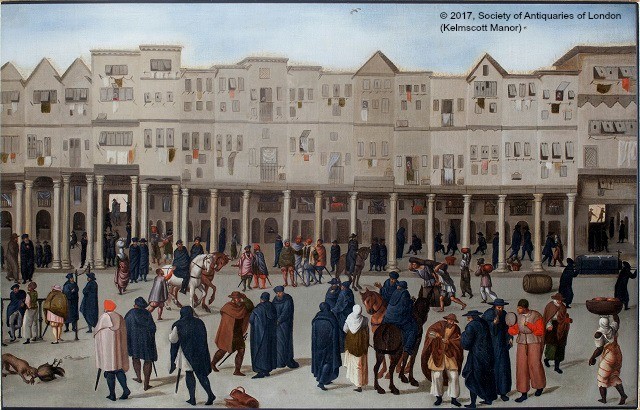
The exhibition recreates the mercantile heart of sixteenth-century Lisbon
A new exhibition in Portugal's foremost national museum the Museu Nacional de Arte Antiga offers a new interpretation of Renaissance Lisbon, thanks to research by a Queen Mary University of London (QMUL) historian. Wednesday 22 February 2017 'The story of this exhibition actually starts in England on a gloomy April day in 1866, when the Pre-Raphaelite painter and poet, Dante Gabriel Rossetti, left his home in Chelsea to inspect an old painting of a cityscape that he had spotted in a print shop in north London,' said Professor Kate Lowe , co-curator and Professor of Renaissance History and Culture at QMUL's School of History, and co-Director of QM's Centre for Renaissance and Early Modern Studies. 'At the time, The British art world was becoming interested in Spanish painting. Rossetti did not recognise the city depicted in this painting - which was in fact Lisbon - but he made an inspired guess as to its Iberian origin,' she added. '150 years later, co-curator Annemarie Jordan Gschwend and I identified the painting bought by Rossetti (later split in two) as a view of the Rua Nova dos Mercadores, the main commercial street in Lisbon' she said. In November 1755, much of Lisbon, including the Rua Nova dos Mercadores, was destroyed in a devastating earthquake and tsunami. The two paintings previously owned by Rossetti are the only surviving detailed visual representations of the street. Starting with the paintings, - A Cidade Global: Lisboa no Renascimento/The Global City: Lisbon in the Renaissance?
TO READ THIS ARTICLE, CREATE YOUR ACCOUNT
And extend your reading, free of charge and with no commitment.