


Environment - Mar 27
The University of Manchester signs Memorandum of Understanding with United Utilities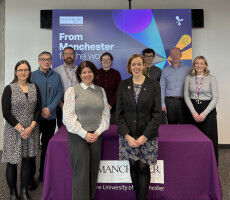
The University of Manchester signs Memorandum of Understanding with United Utilities
Agronomy & Food Science - Mar 27
Gather & Gather unveils fresh new Spring/Summer 2026 menu designed for the warmer seasons
Gather & Gather unveils fresh new Spring/Summer 2026 menu designed for the warmer seasons
Environment - Mar 26
University of Manchester hits major sustainability milestone, with Main Campus becoming 100% 'Zero Landfill'
University of Manchester hits major sustainability milestone, with Main Campus becoming 100% 'Zero Landfill'
Campus - MANCHESTER - Mar 26
Manchester students mentor local teenagers to build confidence in applying for university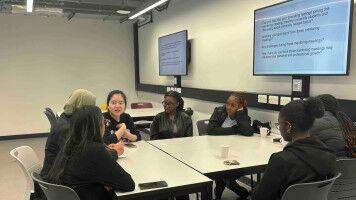
Manchester students mentor local teenagers to build confidence in applying for university

news
University College London
Results 601 - 620 of 2154.
Health - 01.11.2022
AI trained to detect hard to spot cancerous lesions in colon
An artificial intelligence (AI) tool, developed by scientists at UCL, UCLH and UCL-spinout Odin Vision, has been further refined to identify hard to spot 'flat' polyps, that - when left untreated - can become highly aggressive and are a major cause of colorectal (bowel) cancer. For the study, published last year in Digestive Endoscopy, the research team trained the AI in Odin Vision's CADDIE system on these flat polyps.
Health - Pharmacology - 01.11.2022
Best blood thinner for minimising bleeding risk identified
A large-scale comparison of direct oral anticoagulants (blood thinners), commonly prescribed for irregular heartbeats, has identified the drug with the lowest risk of bleeding, in a new study led by UCL researchers. In the paper published in Annals of Internal Medicine , the researchers report that one of the two most common direct oral anticoagulants (DOACs), apixaban, has the lowest risk of gastrointestinal bleeding, with similar performance on stroke prevention and other side effects.
Health - Life Sciences - 31.10.2022

Researchers at UCL and Great Ormond Street Hospital for Children (GOSH) have engineered donor T-cells to try and treat seriously ill children with resistant leukaemia, who had otherwise exhausted all available therapies. The Phase I trial, published in Science Translational Medicine, is the first use of "universal" CRISPR-edited cells in humans and represents a significant step forward in the use of gene-edited cells for cancer treatment.
Health - Life Sciences - 27.10.2022

A fault in cells that form a key part of the immune system can be repaired with a pioneering gene editing technique, finds new research demonstrated in human cells and mice, led by UCL scientists. Researchers say the study, published in Science Translational Medicine , could lead to new treatments for a rare disease of the white blood cells that normally help to control the immune system - known as regulatory T cells - and those that protect the body from repeat infections and cancer - known as effector T cells.
Paleontology - Life Sciences - 27.10.2022

A fossil discovery from Scotland has provided new information on the early evolution of lizards, during the time of the dinosaurs, reports a study involving UCL researchers. The tiny skeleton discovered on the Isle of Skye, called Bellairsia gracilis , is only 6 cm long and dates from the Middle Jurassic, 166 million years ago.
Life Sciences - 26.10.2022

Actors may suppress their core sense of self when acting, as they immerse themselves in a new role, finds a new study by UCL researchers. The research, published in Journal of Cognitive Neuroscience, suggests that when actors take on a new character, they may be able to suppress their everyday self - implying that theatre training may have a big impact on the fundamental mechanisms of the human brain.
Environment - Health - 26.10.2022

Fossil fuels continue to be prioritised over clean energy solutions by governments and companies to the detriment of health, finds the latest Lancet Countdown report led by UCL researchers. The 2022 Report of the Lancet Countdown on Health and Climate Change, published today, has found that ongoing crises, such as the Covid-19 pandemic, conflict in Ukraine, and a global energy and cost of living crisis, have caused countries to become over reliant on fossil fuels - compounding climate change and its effect on health.
Life Sciences - 26.10.2022

Actors may suppress their core sense of self when acting, as they immerse themselves in a new role, finds a new study by UCL researchers. The research, published in Journal of Cognitive Neuroscience, suggests that when actors take on a new character, they may be able to suppress their everyday self - implying that theatre training may have a big impact on the fundamental mechanisms of the human brain.
Health - Psychology - 24.10.2022
Anti-inflammatory drug could help people with PTSD forget traumatic events
The tablet form of the stress hormone cortisol could accelerate the process of forgetting intrusive memories, when given immediately after a traumatic event, finds a new study by UCL researchers. The research, published in Translational Psychiatry , found that hydrocortisone (30mg) - an anti-inflammatory drug used to treat conditions such as arthritis - acts to weaken the emotions that underly painful memories, such as those experienced in post-traumatic stress disorder (PTSD).
Life Sciences - History & Archeology - 24.10.2022

The first genetic data from Palaeolithic human individuals in the UK - the oldest human DNA obtained from the British Isles so far - indicates the presence of two distinct groups that migrated to Britain at the end of the last ice age, according to new research. Published today in Nature Ecology and Evolution, the new study by UCL Institute of Archaeology, the Natural History Museum and the Francis Crick Institute researchers reveals for the first time that the recolonisation of Britain consisted of at least two groups with distinct origins and cultures.
Health - Life Sciences - 21.10.2022

Scientists have discovered that cervical cancer can be divided into two distinct molecular subgroups - one far more aggressive than the other - as part of the largest 'omics' study of its kind, led by researchers at UCL and the University of Southampton. Published in Nature Communications , researchers say the breakthrough findings are a 'major step forward' in understanding disease and provide a tantalising new clue in determining the best treatments for individual patients.
Health - Economics - 20.10.2022

A quarter of a million working-age people aged 50 or older, could have stayed in paid employment for longer, had the levelling up health targets been achieved a decade ago, finds a new UCL-led study. Researchers believe this is important as staying in work can provide both positive health and financial outcomes for individuals.
Health - 19.10.2022
Five hours’ sleep a night linked to higher risk of multiple diseases
Getting less than five hours of sleep in mid-to-late life could be linked to an increased risk of developing at least two chronic diseases, finds a new study led by UCL researchers. The research, published in PLOS Medicine , analysed the impact of sleep duration on the health of more than 7,000 men and women at the ages of 50, 60 and 70, from the Whitehall II cohort study.
Psychology - 18.10.2022

Writing in The Conversation, Dr Ruth Plackett (UCL Epidemiology & Health) synthesises the results of research looking into how to best protect one's mental health while navigating the volatile social media landscape. The recent inquest into the death of British teenager Molly Russell in 2017 has concluded that the 14-year-old "died from an act of self harm while suffering from depression and the negative effects of online content".
Psychology - Health - 14.10.2022
Talk therapy could improve mental health of people with dementia
People living with dementia may benefit from talking therapies available on the NHS, if they suffer from anxiety or depression, finds a new study led by UCL researchers. Mental health problems such as depression and anxiety are very common in people with dementia, and previous studies estimate that 38% of people with mild dementia are affected by the conditions.
Life Sciences - Health - 13.10.2022

Brain cells living in a dish can perform goal-directed tasks, such as playing the tennis-like computer game, Pong, finds a new study involving UCL researchers. The findings, published in Neuron , could have implications for future research by providing a new perspective on artificial intelligence (AI) models of how the brain works - and a basis for testing the effects of drugs on a little proto-brain, whose decisions can be measured behaviourally.
Psychology - Life Sciences - 11.10.2022

Following a meditation programme for 18 months can improve attention and socio-emotional regulation capacities for people over 65, finds a new study co-led by a UCL researcher. But the researchers did not identify any significant impact of meditation on the volume and functioning of the brain structures studied, in comparison to control groups, so the potential to prevent dementia remains unclear, they report in JAMA Neurology .
Health - 10.10.2022

Research involving UCL has shown the effectiveness of a world-first contact tracing method to identify, test and treat sex partners of people with chlamydia - a sexually transmitted infection (STI) that affects 250,000 people in the UK each year. Accelerated Partner Therapy (APT) is a contact tracing method, in which healthcare professionals assess sex partners of people with chlamydia by phone before giving the patient a package of antibiotics and STI self-sampling kits to deliver to their partner(s).
Life Sciences - Chemistry - 10.10.2022

An early step in metabolic evolution enabled the emergence of ATP as the universal energy carrier, setting the stage for the origin of life, finds a new study led by UCL researchers. According to the findings published in PLOS Biology , a simple two-carbon compound may have been a crucial player in the evolution of metabolism before the advent of cells.
Innovation - Microtechnics - 07.10.2022

A new system of flying drones working together to 3D print material, has been developed by a team involving researchers at UCL and Imperial College London. It's the first time flying drones have been coordinated like this to 3D print an object. The system, called Aerial Additive Manufacturing (Aerial-AM), is a new approach to 3D printing using collaborative flying robots to transport and deposit building material.


Environment - Mar 27
The University of Manchester signs Memorandum of Understanding with United Utilities
The University of Manchester signs Memorandum of Understanding with United Utilities
Agronomy & Food Science - Mar 27
Gather & Gather unveils fresh new Spring/Summer 2026 menu designed for the warmer seasons
Gather & Gather unveils fresh new Spring/Summer 2026 menu designed for the warmer seasons
Environment - Mar 26
University of Manchester hits major sustainability milestone, with Main Campus becoming 100% 'Zero Landfill'
University of Manchester hits major sustainability milestone, with Main Campus becoming 100% 'Zero Landfill'
Campus - MANCHESTER - Mar 26
Manchester students mentor local teenagers to build confidence in applying for university
Manchester students mentor local teenagers to build confidence in applying for university