


Environment - Mar 27
The University of Manchester signs Memorandum of Understanding with United Utilities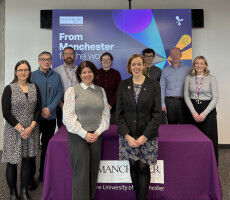
The University of Manchester signs Memorandum of Understanding with United Utilities
Agronomy & Food Science - Mar 27
Gather & Gather unveils fresh new Spring/Summer 2026 menu designed for the warmer seasons
Gather & Gather unveils fresh new Spring/Summer 2026 menu designed for the warmer seasons
Environment - Mar 26
University of Manchester hits major sustainability milestone, with Main Campus becoming 100% 'Zero Landfill'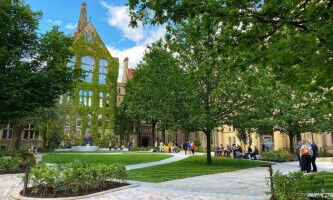
University of Manchester hits major sustainability milestone, with Main Campus becoming 100% 'Zero Landfill'
Campus - MANCHESTER - Mar 26
Manchester students mentor local teenagers to build confidence in applying for university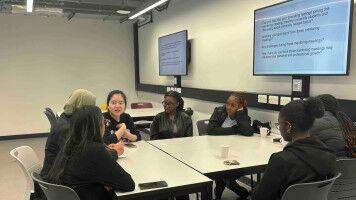
Manchester students mentor local teenagers to build confidence in applying for university

news
University College London
Results 2081 - 2100 of 2154.
Health - Law - 18.08.2010
Drop in teenage smokers
The number of 16- and 17-year-old smokers has dropped since it became illegal to sell cigarettes to under-18s according to new UCL research published today in the journal Addiction . In the first study of its kind, more than 1,100 16- and 17-year-olds were interviewed from across England before and after the age rise in October 2007.
Life Sciences - Health - 17.08.2010
Scientists uncover Achilles heel of chronic inflammatory pain
Researchers have made a discovery that could lead to a brand new class of drugs to treat chronic pain caused by inflammatory conditions such as arthritis and back pain without numbing the whole body. The team, funded by the Biotechnology and Biological Sciences Research Council (BBSRC) and working at UCL (University College London), have shown for the first time that genes involved in chronic pain are regulated by molecules inside cells called small RNAs.
Life Sciences - 12.08.2010
Single neurons can detect sequences
Single neurons in the brain are surprisingly good at distinguishing different sequences of incoming information, according to new research by UCL neuroscientists. The study shows that single neurons, and indeed even single dendrites, the tiny receiving elements of neurons, can very effectively distinguish between different temporal sequences of incoming information.
Health - Life Sciences - 20.07.2010
Cells grouping tactic points to new cancer treatments
The mechanism that cells use to group together and move around the body has been discovered by scientists at UCL - a finding that has implications for the development of new cancer treatments. The study, which used embryonic cells, points to a new way of treating cancer where therapy is targeted at the process of cancer cells grouping together.
Life Sciences - 16.07.2010
Part of the brain that tracks limbs in space discovered
Scientists have discovered the part of the brain that tracks the position of our limbs as we move through space. When a mosquito lands on your hand, you can rapidly and effortlessly make a movement of the other hand to brush it away, even in darkness. But performing this seemingly simple action involves a surprisingly complex coordination of different types of sensory information in order for your brain to construct a constantly updated 'map' of the body in space.
Health - Life Sciences - 14.07.2010
Bright stars of the brain regulate breathing
Astrocytes - brain cells named after their characteristic star-shape and previously thought to act only as the 'glue' between neurons, have a central role in the regulation of breathing, according to scientists. The finding provides a new dimension for research into fundamental principles of brain organization and function and may be relevant for understanding causes of devastating conditions associated with respiratory failure such as Sudden Infant Death Syndrome.
Health - Life Sciences - 12.07.2010
UCL researchers have discovered that two genes, called Mahjong and Lgl, could be star players in helping to identify how the body's own cells fight back against cancer cells. This discovery could lead to future treatments to make healthy cells better-equipped to attack cancer cells, an entirely new concept for cancer research.
Environment - History & Archeology - 07.07.2010

A UCL archaeologist is part of a team who have unearthed the earliest evidence of human occupation in Britain. Simon Parfitt was part of a team of archaeologists, palaeontologists and earth scientists from the British Museum, the Natural History Museum, UCL, and Queen Mary, University of London, who unearthed the new evidence at an archaeological dig in East Anglia.
Health - Life Sciences - 05.07.2010
Scientists discover how to switch cancer protector gene on
A new UCL study has revealed that a gene that normally protects against ovarian cancer is switched off in two-thirds of cases and switching it back on arrests tumour growth. The researchers found that the 'protector gene', known as EPB41L3, is inactivated in 65 per cent of ovarian cancers and reactivating the gene halted tumour growth and triggered large numbers of the cancer cells to commit suicide.
Life Sciences - Health - 30.06.2010
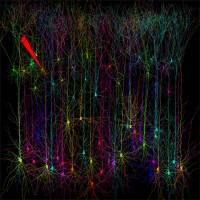
Next time your brain plays tricks on you the brain is intrinsically unreliable. This may not seem surprising to most of us, but it has puzzled neuroscientists for decades. Given that the brain is the most powerful computing device known, how can it perform so well even though the behaviour of its circuits is variable? A long-standing hypothesis is that the brain's circuitry actually is reliable - and the apparently high variability is because your brain is engaged in many tasks simultaneously, which affect each other.
Health - Life Sciences - 24.06.2010
Parkinson’s patients risky behaviour explained
Scientists at UCL have explained Parkinson's patients' risky behaviour, a rare side effect of standard treatments for the disease. The finding has implications for future medication of patients. The standard treatments for Parkinson's disease, which work by increasing dopamine signalling in the brain, can trigger highly risky behaviours, known as 'impulsive-compulsive spectrum behaviours? (ICBs) in approximately 5-10% of patients.
Physics - 22.06.2010
"Ghost particle" sized up by cosmologists
Cosmologists at UCL are a step closer to determining the mass of the elusive neutrino particle, not by using a giant particle detector, but by gazing up into space. Although it has been shown that a neutrino has a mass, it is vanishingly small and extremely hard to measure - a neutrino is capable of passing through a light year (about six trillion miles) of lead without hitting a single atom.
Health - Life Sciences - 18.06.2010
UCL researching light therapy as a potential treatment for epilepsy
A new clinical trial at UCL is investigating whether light therapy could benefit people with epilepsy who continue to have seizures after trying several types of medication. The research, which is being carried out at the UCL Institute of Neurology and the National Hospital for Neurology and Neurosurgery, is being funded by children's health charity Action Medical Research.
Life Sciences - 17.06.2010
UCL brain study reveals that agreement is rewarding
Researchers at the Wellcome Trust Centre for Neuroimaging at UCL and Aarhus University in Denmark have found that the 'reward' area of the brain is activated when people agree with our opinions. The study, published today in the journal Current Biology , suggests that scientists may be able to predict how much people can be influenced by the opinions of others on the basis of the level of activity in the reward area.
Health - 17.06.2010
Key NHS IT Programmes UCL report
The Summary Care Record (SCR) and HealthSpace technologies, introduced in the NHS as part of the National Programme for IT (NPfIT), have so far demonstrated only modest benefits according to the final report of a three-year independent evaluation carried out by UCL researchers. The report's publication coincides with the publication of a research paper based on the findings in the British Medical Journal .
History & Archeology - 14.06.2010
Slade 2010 MA degree show opens
Sculptures, paintings, installations and audiovisual work by this year's graduating MA students from the UCL Slade School of Fine Art are now on display on UCL's main campus. The final year students on the MA/MFA Fine Art programmes will be showcasing their work at the Slade School in UCL's main quad from 10'16 June.
Life Sciences - Chemistry - 11.06.2010
How the wrong genes are repressed: new finding from UCL
The mechanism by which 'polycomb' proteins critical for embyronic stem cell function and fate are targeted to DNA has been identified by UCL scientists. The discovery, which has implications for the fields of stem cell and tissue engineering, is detailed in research published today in the journal Molecular Cell .
Health - Psychology - 06.06.2010
Link found between passive smoking and poorer mental health
Second-hand smoke exposure is associated with psychological distress and risk of future psychiatric illness, according to new UCL research that suggests the harmful affects of passive smoking go beyond physical health. The new research, published today in the Archives of General Psychiatry , examined the associations between mental health and second hand smoke (SHS) exposure ? known as passive smoking ? by measuring the circulating biochemical marker cotinine, which is found in saliva and can be used to measure levels of exposure to tobacco smoke.
Environment - 01.06.2010
Demand for daily travel has peaked
In the UK we each travel an annual 7,000 miles in the course of our daily routines - a distance equivalent to a return trip from London to New York. It has been assumed that if our finances allowed, we would travel even further in search of a greater choice of schools, shops and places of work. However, a new paper from the UCL Centre for Transport Studies shows that demand for routine 'daily travel' has already reached saturation point.
Health - History & Archeology - 28.05.2010
Infrequent toothbrushing linked to heart disease
People with poor oral hygiene have an increased risk of heart disease compared to those who brush their teeth twice a day, according to UCL research published today on BMJ.com. In the last 20 years there has been increased interest in links between heart problems and gum disease.


Environment - Mar 27
The University of Manchester signs Memorandum of Understanding with United Utilities
The University of Manchester signs Memorandum of Understanding with United Utilities
Agronomy & Food Science - Mar 27
Gather & Gather unveils fresh new Spring/Summer 2026 menu designed for the warmer seasons
Gather & Gather unveils fresh new Spring/Summer 2026 menu designed for the warmer seasons
Environment - Mar 26
University of Manchester hits major sustainability milestone, with Main Campus becoming 100% 'Zero Landfill'
University of Manchester hits major sustainability milestone, with Main Campus becoming 100% 'Zero Landfill'
Campus - MANCHESTER - Mar 26
Manchester students mentor local teenagers to build confidence in applying for university
Manchester students mentor local teenagers to build confidence in applying for university