


Environment - Mar 27
The University of Manchester signs Memorandum of Understanding with United Utilities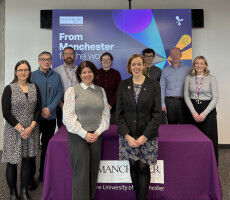
The University of Manchester signs Memorandum of Understanding with United Utilities
Agronomy & Food Science - Mar 27
Gather & Gather unveils fresh new Spring/Summer 2026 menu designed for the warmer seasons
Gather & Gather unveils fresh new Spring/Summer 2026 menu designed for the warmer seasons
Environment - Mar 26
University of Manchester hits major sustainability milestone, with Main Campus becoming 100% 'Zero Landfill'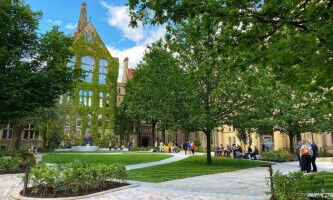
University of Manchester hits major sustainability milestone, with Main Campus becoming 100% 'Zero Landfill'
Campus - MANCHESTER - Mar 26
Manchester students mentor local teenagers to build confidence in applying for university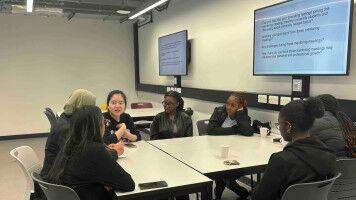
Manchester students mentor local teenagers to build confidence in applying for university

news
University College London
Results 2001 - 2020 of 2154.
Life Sciences - 24.08.2012
Human drive for fairness
People will reject an offer of water, even when they are severely thirsty, if they think the offer is unfair, according to a new study by researchers at the Wellcome Trust Centre for Neuroimaging at UCL. The findings have important implications for understanding how we make decisions that need to balance fairness and self-interest.
Economics - 16.08.2012

Neighbourhood income deprivation has a strong negative effect on altruistic behaviour when measured by a 'lost letter' experiment, according to new UCL research published today in PLoS One. Researchers from UCL Anthropology used the lost letter technique to measure altruism across 20 London neighbourhoods by dropping 300 letters on the pavement and recording whether they arrived at their destination.
Life Sciences - Health - 15.08.2012

Brain scans have revealed distinctive features in the brain structure of karate experts, which could be linked to their ability to punch powerfully from close range. Researchers from UCL and Imperial College London found that differences in the microstructure of connections in the brain were correlated with how black belts and novices performed in a test of punching ability.
History & Archeology - Life Sciences - 09.08.2012

Exciting new fossils discovered east of Lake Turkana confirm that there were two additional species of our genus - Homo - living alongside our direct human ancestral species, Homo erectus , almost two million years ago. The finds, announced in Nature today, include a face, a remarkably complete lower jaw, and part of a second lower jaw.
Physics - 08.08.2012

A new advance in X-ray imaging has revealed the dramatic three-dimensional shape of gold nanocrystals, and is likely to shine a light on the structure of other nano-scale materials. Described today in Nature , the new technique improves the quality of nanomaterial images, made using X-ray diffraction, by accurately correcting distortions in the X-ray light.
Health - 03.08.2012

New research published online first in The Lancet Neurology highlights the long-term, often hidden, after-effects of meningitis in children. The study, led by Professor Russell Viner at the UCL Institute of Child Health, shows that 1 in 3 children who have experienced meningococcal group B disease (MenB), the most common type of bacterial meningitis in the UK, will be left with after-effects.
Health - Life Sciences - 23.07.2012
First study into the effects of MDMA on the resting brain
Researchers from UCL and Imperial College London are carrying out a neuroscience study to examine for the first time how the resting brain responds to MDMA, the pure form of the Class A drug ecstasy. The study is funded by Channel 4, and recorded footage of it will be shown on two new science programmes this autumn, ' Drugs Live: The Ecstasy Trial ', alongside a live studio debate to explore issues linked with MDMA.
Life Sciences - 18.07.2012
Punishment motivated by fairness, not revenge
Researchers at UCL and Harvard have found that we punish cheats only when they end up better off than us, in a study that challenges the notion that punishment is motivated by revenge. Published today in the journal Biology Letters , the research shows that victims of cheating compare their own payoffs with those of partners when making punishment decisions.
Health - 18.07.2012
Psychological distress increases risk of death from stroke
Psychological distress was associated with a higher risk of death from stroke, according to a new study by researchers in UCL Epidemiology & Public Health, published in the Canadian Medical Association Journal . Psychological distress includes factors such as anxiety, depression, sleeping problems, and loss of confidence, and is common in approximately 15-20% of the general population.
Physics - 16.07.2012
A magnetic monster’s dual personality
An international team of scientists have discovered a rare hybrid star using ESA's XMM-Newton and Nasa's SWIFT X-ray-telescopes. While the first example of its kind was discovered two years ago, the team has now identified its long-sought twin. Featuring both the properties of magnetars and radio pulsars, the new hybrid star will help the team to understand more on the interior of neutron stars.
Physics - 04.07.2012
UCL physicists celebrate discovery of Higgs-like particle
Scientists at the CERN - including members from UCL's High Energy Physics Group working at the ATLAS experiment - have discovered a new subatomic particle that could be the elusive Higgs boson, which is believed to be crucial in the formation of the universe. Videos: what the discovery of the Higgs means to UCL physicists "We've all talked before about rumours, about hints, about projections and the hows and whys.
Health - Life Sciences - 03.07.2012
Skin patch improves attention span in stroke patients
Researchers at the UCL Institute of Neurology have found that giving the drug rotigotine as a skin patch can improve inattention in some stroke patients. Hemi-spatial neglect, a severe and common form of inattention that can be caused by brain damage following a stroke, is one of the most debilitating symptoms, frequently preventing patients from living independently.
Health - Life Sciences - 28.06.2012

Stem cells from patients with a rare form of muscular dystrophy have been successfully transplanted into mice affected by the same form of dystrophy, according to a new study published today in Science Translational Medicine . For the first time, scientists have turned muscular dystrophy patients' fibroblast cells (common cells found in connective tissue) into stem cells and then differentiated them into muscle precursor cells.
Physics - Electroengineering - 13.06.2012

Theories of the primordial Universe predict the existence of knots in the fabric of space - known as cosmic textures - which could be identified by looking at light from the cosmic microwave background (CMB), the relic radiation left over from the Big Bang. Using data from NASA's Wilkinson Microwave Anisotropy Probe (WMAP) satellite, researchers from UCL, Imperial College London and the Perimeter Institute have performed the first search for textures on the full sky, finding no evidence for such knots in space.
Life Sciences - Health - 11.06.2012

An international team of scientists has uncovered the structure of the protective protein coat which surrounds many bacteria like a miniature suit of armour. Their research and could help us develop new vaccines. Until now, scientists have known very little about the structure and function of this coat, which scientists call S-layer, despite the fact that some bacteria invest as much as a third of their total protein production in building it.
Chemistry - 07.06.2012

Chemists at UCL have discovered a new property of flames, which allows them to control reactions at a solid surface in a flame and opens up a whole new field of chemical innovation. Published in the journal Angewandte Chemie, authors of the new study have discovered their previous understanding of how flames interact with a solid surface was mistaken.
Health - 04.06.2012

Counting the number of tumour cells in blood samples taken before and after treatment for advanced neuroendocrine tumours could provide a 'snapshot' of how well patients are responding within weeks of starting treatment, according to results from a study being presented at the American Society for Clinical Oncology cancer conference today (Monday).
Health - Life Sciences - 01.06.2012

An innovative strategy for regenerating skeletal muscle tissue using cells derived from the amniotic fluid is outlined in new research published by scientists at the UCL Institute of Child Health. The paper shows that damaged muscle tissues can be treated with cells derived from the fluids which surround the fetus during development, leading to satisfactory regeneration and muscle activity.
Life Sciences - 30.05.2012
Iconic New Zealand reptile shows chewing is not just for mammals
The tuatara, an iconic New Zealand reptile, chews its food in a way unlike any other animal on the planet - challenging the widespread perception that complex chewing ability is closely linked to high metabolism. Using a sophisticated computer model, scientists from UCL and the University of Hull demonstrate how the tuatara is able to slice its food like a "steak knife".
Life Sciences - Health - 28.05.2012

A gene previously linked to too much growth in patients has now also been linked to growth restriction. Different forms of the gene can lead to very different conditions, according to research published . IMAGe* syndrome is a rare developmental disorder which can affect foetal growth, resulting in smaller than average body and organ size.


Environment - Mar 27
The University of Manchester signs Memorandum of Understanding with United Utilities
The University of Manchester signs Memorandum of Understanding with United Utilities
Agronomy & Food Science - Mar 27
Gather & Gather unveils fresh new Spring/Summer 2026 menu designed for the warmer seasons
Gather & Gather unveils fresh new Spring/Summer 2026 menu designed for the warmer seasons
Environment - Mar 26
University of Manchester hits major sustainability milestone, with Main Campus becoming 100% 'Zero Landfill'
University of Manchester hits major sustainability milestone, with Main Campus becoming 100% 'Zero Landfill'
Campus - MANCHESTER - Mar 26
Manchester students mentor local teenagers to build confidence in applying for university
Manchester students mentor local teenagers to build confidence in applying for university