


Environment - Mar 27
The University of Manchester signs Memorandum of Understanding with United Utilities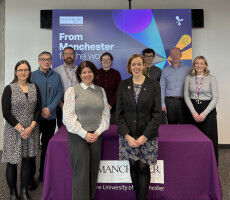
The University of Manchester signs Memorandum of Understanding with United Utilities
Agronomy & Food Science - Mar 27
Gather & Gather unveils fresh new Spring/Summer 2026 menu designed for the warmer seasons
Gather & Gather unveils fresh new Spring/Summer 2026 menu designed for the warmer seasons
Environment - Mar 26
University of Manchester hits major sustainability milestone, with Main Campus becoming 100% 'Zero Landfill'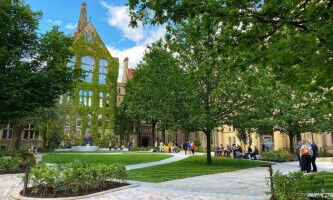
University of Manchester hits major sustainability milestone, with Main Campus becoming 100% 'Zero Landfill'
Campus - MANCHESTER - Mar 26
Manchester students mentor local teenagers to build confidence in applying for university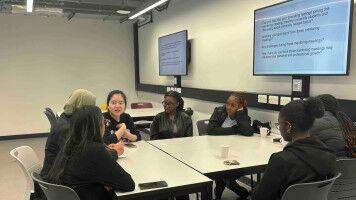
Manchester students mentor local teenagers to build confidence in applying for university

news
University College London
Results 1981 - 2000 of 2154.
Life Sciences - 24.10.2012
Loneliness? It’s all a state of mind
Researchers from UCL have found that lonely people have less grey matter in a part of the brain associated with decoding eye gaze and other social cues. Published in the journal of Current Biology, the study also suggests that through training people might be able to improve their social perception and become less lonely.
Health - 24.10.2012
Personalised feedback makes healthcare workers twice as likely to clean their hands
A major three-year trial led by researchers at UCL, in partnership with the Health Protection Agency, has shown that giving one-to-one feedback to healthcare workers makes them twice as likely to clean their hands or use soap. The Feedback Intervention Trial (FIT) is the first such trial to be done in a large number of hospitals anywhere in the world.
Life Sciences - Health - 19.10.2012
First micro-structure atlas of the human brain completed
A European team of scientists have built the first atlas of white-matter microstructure in the human brain. The project's final results have the potential to change the face of neuroscience and medicine over the coming decade. The project investigators met today in Paris, after 3 years of research, to announce the conclusion of the project and present a report of their findings.
Health - 16.10.2012

Results from a major phase III Cancer Research UK-funded trial show that elderly patients with advanced non small cell lung cancer (NSCLC) who developed a rash within 28 days of receiving the targeted drug erlotinib (Tarceva) survived on average 6.2 months, compared to 4.1 months for patients who were given a placebo.
Health - 16.10.2012
Psychological interventions could reduce mental health problems after intensive care
A study by UCL researchers at University College Hospital's intensive care unit has suggested that psychological interventions could reduce the mental health problems experienced by many patients. The research, published in Critical Care Journal , found that more than 50 per cent of patients in the study discharged from intensive care went on to suffer adverse psychological problems.
Health - 15.10.2012

Children at risk for eating disorders on average have a higher IQ and better working memory but are less able to control automatic thoughts, according to researchers at the UCL Institute of Child Health. The study, published in the journal Psychological Medicine , looked at what characteristics might make some children more likely to develop an eating disorder later in life.
Health - Life Sciences - 11.10.2012

In a UCL-led study, published in the American Journal of Human Genetics, an international consortium of over 180 scientists report the identification of 21 new gene variants associated with cholesterol predictors of heart disease and metabolic disorders. The findings expand the list of potential targets for drugs and other treatments for lipid-related cardiovascular disease, a leading global cause of death and disability.
Life Sciences - 10.10.2012

Heightened activity between the emotional and auditory parts of the brain explains why the sound of chalk on a blackboard, or a knife on a bottle, is so unpleasant. In a study published today in the Journal of Neuroscience UCL and Newcastle University scientists reveal the interaction between the region of the brain that processes sound, the auditory cortex, and the amygdala, which is active in the processing of negative emotions when we hear unpleasant sounds.
Economics - 05.10.2012
UCL Discovery downloads surpass 2m
The total number of papers, reports and PhD dissertations downloaded from UCL Discovery , the university's Open Access repository, surpassed 2,000,000 during September 2012. UCL Discovery, the UK repository with the largest number of records, contains nearly 14,274 records with access to full text; the 2,000,000th to be downloaded was by Professor Richard Blundell (UCL Economics): Labor Supply Models: Unobserved heterogeneity, nonparticipation and dynamics.
Health - 03.10.2012
Balancing fertility and child survival in developing world
Children in smaller families are only slightly more likely to survive childhood in high mortality environments, according to a new study of mothers and children in sub-Saharan Africa seeking to understand why women, even in the highest fertility populations in world, rarely give birth to more than eight children.
Health - Life Sciences - 03.10.2012

Mexiletine, a decades-old drug previously used to treat abnormal heart rhythms, has been used to alleviate the symptoms of patients with nondystrophic myotonias (NDMs), rare diseases that affect the skeletal muscle and cause functionally limiting stiffness and pain. The preliminary research, published today in The Journal of the American Medical Association , shows that taking mexiletine can improve patient-reported stiffness.
Physics - 01.10.2012
Loopholes discovered in Sun’s magnetic belt
The mystery surrounding how an electrically charged solar wind can be unleashed from around the Sun's equator - an area where strong magnetic fields should strap it to the surface - has been solved by an international team of researchers. Using data from the Hinode telescope, researchers have been studying the 'slow' solar wind, which comes from the aptly named 'equatorial belt' of the Sun where the magnetic field is strapped to the surface of our local star.
Life Sciences - 28.09.2012

Trying to keep an image we've just seen in memory can leave us blind to things we are 'looking' at, according to the results of a study by researchers at the Institute of Cognitive Neuroscience. It's been known for some time that when our brains are focused on a task, we can fail to see other things that are in plain sight.
Psychology - 28.09.2012

Our brains are better at hearing new and approaching sounds than detecting when a sound disappears, according to a study by researchers at the UCL Institute. The findings could explain why parents often fail to notice the sudden quiet from the playroom that usually accompanies the onset of mischief.
Health - 26.09.2012
Targeted health support needed for those with lower IQs
Targeted health support is necessary for people with lower IQs according to new research which shows that they are unhappier and more likely to have poorer health than people with higher IQs. The study, published in the journal Psychological Medicine, is the first to demonstrate the role of socio-economic and clinical factors, providing new insight into the relationship between IQ and happiness.
Life Sciences - Health - 18.09.2012
Toxic protein build-up in blood shines light on fatal brain disease
A new light-based technique for measuring levels of the toxic protein that causes Huntington's disease (HD) has been used to demonstrate that the protein builds up gradually in blood cells. Published today (17th) in the Journal of Clinical Investigation, the findings shed light on how the protein causes damage in the brain, and could be useful for monitoring the progression of HD, or testing new drugs aimed at suppressing production of the harmful protein.
Physics - Earth Sciences - 17.09.2012
Dark energy camera records first images
Eight billion years ago, rays of light from distant galaxies began their long journey to Earth. On 12 September, that ancient starlight found its way to a mountaintop in Chile, where the newly-constructed Dark Energy Camera, the most powerful sky-mapping machine ever created, captured and recorded it for the first time.
Health - 14.09.2012

People who have highly demanding jobs and little freedom to make decisions are 23 per cent more likely to experience a heart attack compared with their counterparts without such work stress, according to a study of nearly 200 000 people from seven European countries. Professor Mika Kivimäki from UCL Epidemiology & Public Health led the research which is published today in The Lancet.
Health - Administration - 13.09.2012
MMR and the development of UCL’s research governance framework
UCL has today published a paper - MMR and the development of a research governance framework in UCL - that sets out how the university's research governance framework has been updated to take account of institutional issues highlighted by the case of Andrew Wakefield. Wakefield was struck off the medical register by the GMC in 2010 following an investigation into allegations of serious professional misconduct relating to his research into a possible link between autism and MMR.
Life Sciences - 06.09.2012

Professional ball game players report the sensation of the ball 'slowing-down' just before they hit it. Confirming these anecdotal comments, a new study published in Proceedings of the Royal Society B shows that time is perceived to slow down during the period of action preparation, as the result of an increased intake of visual information.


Environment - Mar 27
The University of Manchester signs Memorandum of Understanding with United Utilities
The University of Manchester signs Memorandum of Understanding with United Utilities
Agronomy & Food Science - Mar 27
Gather & Gather unveils fresh new Spring/Summer 2026 menu designed for the warmer seasons
Gather & Gather unveils fresh new Spring/Summer 2026 menu designed for the warmer seasons
Environment - Mar 26
University of Manchester hits major sustainability milestone, with Main Campus becoming 100% 'Zero Landfill'
University of Manchester hits major sustainability milestone, with Main Campus becoming 100% 'Zero Landfill'
Campus - MANCHESTER - Mar 26
Manchester students mentor local teenagers to build confidence in applying for university
Manchester students mentor local teenagers to build confidence in applying for university