


Environment - Mar 27
The University of Manchester signs Memorandum of Understanding with United Utilities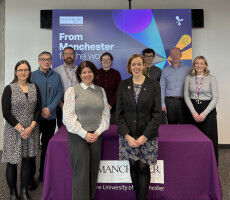
The University of Manchester signs Memorandum of Understanding with United Utilities
Agronomy & Food Science - Mar 27
Gather & Gather unveils fresh new Spring/Summer 2026 menu designed for the warmer seasons
Gather & Gather unveils fresh new Spring/Summer 2026 menu designed for the warmer seasons
Environment - Mar 26
University of Manchester hits major sustainability milestone, with Main Campus becoming 100% 'Zero Landfill'
University of Manchester hits major sustainability milestone, with Main Campus becoming 100% 'Zero Landfill'
Campus - MANCHESTER - Mar 26
Manchester students mentor local teenagers to build confidence in applying for university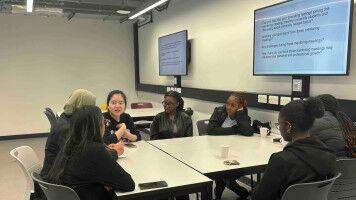
Manchester students mentor local teenagers to build confidence in applying for university

news
University College London
Results 1821 - 1840 of 2154.
Health - Life Sciences - 03.11.2014
Drug tests on mothers’ hair links recreational drug use to birth defects
Drug tests on 517 mothers in English inner city hospitals found that nearly 15% had taken recreational drugs during pregnancy and that mothers of babies with birth defects of the brain were significantly more likely to have taken drugs than mothers with normal babies. The study found no significant links between recreational drug use and any other type of birth defect.
Health - 03.11.2014
Sense of meaning and purpose in life linked to longer lifespan
A UCL-led study of 9,050 English people with an average age of 65 found that the people with the greatest wellbeing were 30% less likely to die during the average eight and a half year follow-up period than those with the least wellbeing. The study, published in The Lancet as part of a special series on ageing, was conducted by researchers from UCL, Princeton University and Stony Brook University.
Administration - 29.10.2014
Publishers address concerns on ’total cost of ownership’ of e-resources
UCL welcomes the news that two major academic publishers are to reduce the costs of their subscriptions against payments they receive to publish open-access articles from 2015. Research Councils UK and other funders require open access publication of research findings funded by them. However, this has left UCL - a long-term advocate of open access - and other research-intensives universities paying publishers twice: once in the form of article-processing charges in order to have papers published and again in the form of subscriptions in order to be able to read them.
Health - Life Sciences - 27.10.2014
Scientists identify potential cause for 40% of pre-term births
Scientists from UCL and Queen Mary University of London have identified what they believe could be a cause of pre-term premature rupture of the fetal membrane (PPROM) which accounts for 40 per cent of pre-term births, the main reason for infant death world-wide. The researchers, whose work was funded by the charity Wellbeing of Women, used bioengineering techniques to test the effect of repetitive stretch on tissues of the amniotic membrane which surrounds and protects the baby prior to birth.
Health - Life Sciences - 23.10.2014
How glands expand to fight off disease
The same specialised immune cells that patrol the body looking for signs of infection also trigger the expansion of glands called lymph nodes, which are the control centres of our immune system, according to new research from UCL and Cancer Research UK. Lymph nodes are small organs located across the whole body which contain immune cells that fight bacteria, viruses and cancer cells.
Health - Life Sciences - 22.10.2014
People with diabetes are less able to regulate the body’s responses to stress
People with type 2 diabetes are physically less able to recover from stress, finds a study by scientists at UCL and the University of Zurich, funded by the British Heart Foundation. These findings could lead to new approaches in the prevention and treatment of diabetes, targeting the wide number of biological changes that take place as a result of the disease.
Health - Life Sciences - 22.10.2014
Simplifying TB treatments to improve patients’ lives
Ways to simplify treatments for tuberculosis (TB) to reduce drug resistance and make it easier for patient to complete their course of treatment have been trialled by two international groups involving UCL scientists. The results from both trials, published today in the New England Journal of Medicine, found that novel drug combinations including the antibiotic moxifloxacin in TB treatment plans can approximately halve the number of pills that patients need to take but cannot shorten treatment time.
Life Sciences - Health - 17.10.2014
Amphibians being wiped out by emerging viruses
Scientists tracing the real-time impact of viruses in the wild have found that entire amphibian communities are being killed off by closely related viruses introduced to mountainous areas of northern Spain. Researchers from UCL, Zoological Society of London (ZSL) and Queen Mary University of London (QMUL) in the UK, and the National Museum of Natural Sciences (MNCN-CSIC) in Madrid, Spain found the viruses are causing severe disease and mass deaths in many amphibian species sampled, including frogs and salamanders.
Life Sciences - Health - 17.10.2014
Myelin vital for learning new practical skills
New evidence of myelin's essential role in learning and retaining new practical skills, such as playing a musical instrument, has been uncovered by UCL research. Myelin is a fatty substance that insulates the brain's wiring and is a major constituent of 'white matter'. It is produced by the brain and spinal cord into early adulthood as it is needed for many developmental processes, and although earlier studies of human white matter hinted at its involvement in skill learning, this is the first time it has been confirmed experimentally.
Health - 16.10.2014
Leisure time physical activity linked to lower depression risk
Being physically active three times a week reduces the odds of being depressed by approximately 16%, according to new UCL research undertaken as part of the Public Health Research Consortium. The study, published in JAMA Psychiatry, found a two-way relationship between depression and physical activity.
Health - Life Sciences - 17.09.2014
Gene variant that dramatically reduces ’bad’ lipids
Research using data collected from around 4,000 healthy people in the UK has enabled scientists from UCL, the Wellcome Trust Sanger Institute and the University of Bristol to identify a rare genetic variant that dramatically reduces levels of certain types of lipids in the blood. Research using data collected from around 4,000 healthy people in the UK has enabled scientists to identify a rare genetic variant that dramatically reduces levels of certain types of lipids in the blood.
Life Sciences - Health - 15.09.2014
3D model shows survival strategies of bacteria
Bacteria are particularly ingenious when it comes to survival strategies. They often create a biofilm to protect themselves from a hostile environment, for example during treatment with antibiotics, and scientists have unravelled the secrets of how they do this with a new 3D model. A biofilm is a bacterial community that is surrounded by a protective slime capsule consisting of sugar chains and "curli".
Life Sciences - Health - 13.08.2014
Our ancestor’s ’leaky’ membrane answers big questions in biology
All life on Earth came from one common ancestor - a single-celled organism - but what it looked like, how it lived and how it evolved into today's modern cells is a four billion year old mystery being solved by researchers at UCL using mathematical modelling. Findings published today in PLOS Biology suggest for the first time that life's Last Universal Common Ancestor (LUCA) had a 'leaky' membrane, which helps scientists answer two of biology's biggest questions: 1.
Life Sciences - Health - 11.08.2014
Toxic proteins implicated in frontotemporal dementia and motor neurone disease
Scientists at UCL and the Max Planck Institute for Biology of Ageing in Cologne have discovered how a specific genetic mutation may damage nerve cells in frontotemporal dementia and motor neurone disease. The research, which suggests a potential new target for treating the two brain diseases, was funded by Alzheimer's Research UK, the Motor Neurone Disease Association, the UK Medical Research Council (MRC) and the Wellcome Trust.
Electroengineering - Physics - 11.08.2014
Pairing old technologies with new for next generation electronic devices
UCL scientists have discovered a new method to efficiently generate and control currents based on the magnetic nature of electrons in semi-conducting materials, offering a radical way to develop a new generation of electronic devices. One promising approach to developing new technologies is to exploit the electron's tiny magnetic moment, or 'spin'.
Health - 07.08.2014
What’s the best way to brush teeth? Even dentists and dental associations don’t agree
Advice on how we should brush our teeth from dental associations and toothpaste companies is 'unacceptably inconsistent', finds new UCL research. The study, published in the British Dental Journal, looked at the brushing advice given by dental associations across ten countries, toothpaste and toothbrush companies and in dental textbooks.
Mathematics - Life Sciences - 05.08.2014
Equation to predict happiness
The happiness of over 18,000 people worldwide has been predicted by a mathematical equation developed by researchers at UCL, with results showing that moment-to-moment happiness reflects not just how well things are going, but whether things are going better than expected. The new equation accurately predicts exactly how happy people will say they are from moment to moment based on recent events, such as the rewards they receive and the expectations they have during a decision-making task.
Life Sciences - Health - 29.07.2014
The bit of your brain that signals how bad things could be
An evolutionarily ancient and tiny part of the brain tracks expectations about nasty events, finds new UCL research funded by the Medical Research Council. The study, published in Proceedings of the National Academy of Sciences , demonstrates for the first time that the human habenula, half the size of a pea, tracks predictions about negative events, like painful electric shocks, suggesting a role in learning from bad experiences.
Life Sciences - Health - 22.07.2014
Gene variant linked to schizophrenia, bipolar disorder and alcoholism
A rare gene variant discovered by UCL scientists is associated with an increased risk of developing schizophrenia, bipolar disorder and alcoholism, confirms new research. People with the variant are around 2 to 3 times more likely to develop schizophrenia or alcohol dependence, reports a new UCL study.
Life Sciences - 16.07.2014
Mobile games used for psychology experiments
Initial findings from one of the largest cognitive science experiments ever conducted have shown that mobile games can be used to reliably address psychology questions, paving the way to a better understanding of how cognitive function differs across populations. With its first comprehensive set of results published today, the Great Brain Experiment, a free mobile app run by neuroscientists at the Wellcome Trust Centre for Neuroimaging at UCL, uses 'gamified' neuroscience experiments to address scientific questions on a scale that would not be possible using traditional approaches.


Environment - Mar 27
The University of Manchester signs Memorandum of Understanding with United Utilities
The University of Manchester signs Memorandum of Understanding with United Utilities
Agronomy & Food Science - Mar 27
Gather & Gather unveils fresh new Spring/Summer 2026 menu designed for the warmer seasons
Gather & Gather unveils fresh new Spring/Summer 2026 menu designed for the warmer seasons
Environment - Mar 26
University of Manchester hits major sustainability milestone, with Main Campus becoming 100% 'Zero Landfill'
University of Manchester hits major sustainability milestone, with Main Campus becoming 100% 'Zero Landfill'
Campus - MANCHESTER - Mar 26
Manchester students mentor local teenagers to build confidence in applying for university
Manchester students mentor local teenagers to build confidence in applying for university