


Environment - Mar 27
The University of Manchester signs Memorandum of Understanding with United Utilities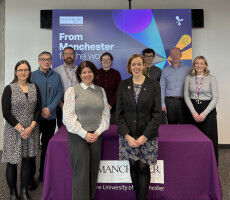
The University of Manchester signs Memorandum of Understanding with United Utilities
Agronomy & Food Science - Mar 27
Gather & Gather unveils fresh new Spring/Summer 2026 menu designed for the warmer seasons
Gather & Gather unveils fresh new Spring/Summer 2026 menu designed for the warmer seasons
Environment - Mar 26
University of Manchester hits major sustainability milestone, with Main Campus becoming 100% 'Zero Landfill'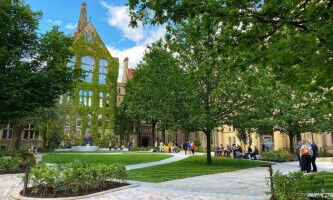
University of Manchester hits major sustainability milestone, with Main Campus becoming 100% 'Zero Landfill'
Campus - MANCHESTER - Mar 26
Manchester students mentor local teenagers to build confidence in applying for university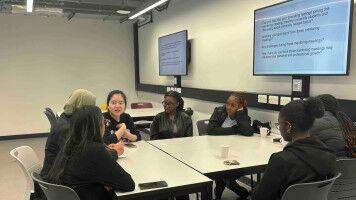
Manchester students mentor local teenagers to build confidence in applying for university

news
University College London
Results 1221 - 1240 of 2154.
Health - Pharmacology - 22.04.2020
Opinion: When should we lift the coronavirus lockdown?
Dr Jasmina Panovska-Griffiths (UCL Epidemiology & Health) comments on UK lockdown procedures, the possibility of a second wave and when the lockdown might ease. The world is watching closely following the lifting of the public lockdown in the city of Wuhan, where the coronavirus pandemic started.
Life Sciences - Paleontology - 20.04.2020
Brain’s language pathway dates back at least 25 million years
A research team involving UCL has discovered an earlier origin to the human language pathway in the brain, pushing back its evolutionary origin by at least 20 million years. Previously, a precursor of the language pathway was thought by many scientists to have emerged more recently, about 5 million years ago, with a common ancestor of both apes and humans.
Life Sciences - Health - 17.04.2020
Some worms programmed to die early for sake of colony
Some worms are genetically predisposed to die before reaching old age, which appears to benefit the colony by reducing food demand, finds a new UCL-led study. The modelling study, published in Aging Cell , provides the first evidence of programmed, adaptive death in an animal that has evolved due to the benefits to the community.
Health - 08.04.2020
Analysis: BMJ study suggests 78% of people with Covid-19 don’t show symptoms
Dr Jasmina Panovska-Griffiths (UCL Epidemiology & Health) explains how a recent study which suggests 78% of people with Covid-19 are asymptomatic could affect future models and responses to the virus. The COVID-19 pandemic continues to spread, with 1.4 million cases and almost 75,000 deaths reported worldwide as of April 7.
Environment - Life Sciences - 08.04.2020
Climate change could cause sudden biodiversity losses worldwide
A warming global climate could cause sudden, potentially catastrophic losses of biodiversity in regions across the globe throughout the 21st century, finds a new UCL-led study. The findings and suggests that the first waves could already be happening. The study's lead author, Dr Alex Pigot (UCL Centre for Biodiversity & Environment Research): "We found that climate change risks to biodiversity don't increase gradually.
Health - Law - 07.04.2020
Covid-19: Scientists develop Bluetooth tracing system, with privacy at heart
A new Bluetooth contact tracing system for detecting Covid-19 proximity, has been developed by a team of scientists and data privacy experts, including from UCL. The DP-3T tracing system, which is presented openly for public scrutiny in a new White Paper , works at scale and has been developed to the highest privacy standards, ready to deploy into an app.
Psychology - 07.04.2020
False memories of crime appear real when retold to others
People are no better than chance at identifying when someone else is recounting a false or real memory of a crime, according to a new UCL study. The findings, published in Frontiers in Psychology , build on a previous study that was the first to successfully implant false memories of committing a crime - involving either assault or assault with a weapon that resulted in police contact.
Health - Life Sciences - 06.04.2020
Red wine component mimics oestrogen to support healthy ageing
Some dietary compounds such as resveratrol, which is commonly found in red wine, can mimic oestrogen to activate anti-ageing proteins called sirtuins, finds a new UCL study. Some dietary compounds such as resveratrol, which is commonly found in red wine, can mimic oestrogen to activate anti-ageing proteins called sirtuins, finds a new UCL study.
Health - 06.04.2020
School closures play marginal role in containing COVID-19 but are key to restarting society
School closures do not appear to have a significant effect on the spread of infections during coronavirus outbreaks such as COVID-19 but will be crucial to how we restart society after lockdown, according to a new study led by UCL. The systematic review, published today in The Lancet Child & Adolescent Health, is the first study to look at the evidence and emerging data on the benefit of school closures and other school social distancing interventions in outbreaks such as SARS, MERS and COVID-19.
Pharmacology - Health - 02.04.2020
Researchers lead trial to test remdesivir drug on COVID-19 patients
Patients with severe COVID-19 are being recruited to test the drug remdesivir as part of a new trial which is being led by the MRC Clinical Trials Unit at UCL. The trial is the first academic study of the drug as a treatment for coronavirus to take place in the UK The Adaptive COVID-19 Treatment Trial (ACTT-EU/UK) trial, which is taking place in about 75 hospitals globally, recruited its first UK patient this week.
Health - Pharmacology - 01.04.2020
New blood test can detect wide range of cancers
A new blood test that can detect more than 50 types of cancer with high accuracy has been developed by an international team of researchers co-led by UCL. It is expected that the study , published in Annals of Oncology , will play a key role in early detection of cancer, which can often be critical to successful treatment.
Physics - Health - 31.03.2020
New quantum technology could help diagnose and treat heart condition
The conductivity of living organs, such as the heart, could be imaged non-invasively using quantum technology developed by UCL researchers, which has the potential to revolutionise the diagnosis and treatment of atrial fibrillation. Atrial fibrillation (AF) is a heart condition that causes an irregular and abnormally fast heart rate, potentially leading to blood clots, stroke, heart failure and other heart-related complications.
Health - 30.03.2020
Historical coronaviruses show evidence of seasonality & immunity
Using historical data, a UCL research team has found that levels of infection from three common coronaviruses appear to have followed a seasonal pattern in England, with peaks occurring during winter and broadly at the same time as influenza. The researchers found that only small amounts of coronavirus were transmitted in the summer.
Psychology - 30.03.2020
Growing gap in children’s socio-emotional skills
The gap between children with the highest and lowest socio-emotional skills has increased over the past three decades, and the socio-economic status of mothers is a significant contributing factor, according to a new UCL study. The study, published in the Journal of Public Economics , compares the socio-emotional skills of two cohorts of children born in England 30 years apart, and shows for the first time that inequality in these early skills has increased.
Pharmacology - Health - 26.03.2020
’More effective’ stem cell transplant method could aid blood cancer patients
Researchers at UCL have developed a new way to make blood stem cells present in the umbilical cord 'more transplantable', a finding in mice which could improve the treatment of a wide range of blood diseases in children and adults. Blood stem cells, also known as haematopoietic stem cells (HSCs), generate every type of cell in the blood (red cells, white cells and platelets), and are responsible for maintaining blood production throughout life.
Health - Social Sciences - 26.03.2020
Opinion: why we need to consult engineers as well as scientists for solutions
Dr Adam Cooper (UCL STEaPP) argues that the current response to Covid-19 coronavirus would be improved if the expertise of engineers was better utilised. The coronavirus outbreak has shone a bright light on the use of experts and scientific advice. In the UK the prime minister, Boris Johnson, is flanked by his chief scientist and chief medical officer when giving updates about his response to the outbreak - emphasising that it is driven by scientific advice.
Health - 26.03.2020
Opinion: how values drive decisions in science, not data
Dr Erman Sozudogru (UCL Science & Technology Studies) discusses how the choice between different methods of controlling the Covid-19 outbreak is one of differing values, rather than just pure science. The outbreak of COVID-19 resulted in a range of emergency responses and policy strategies across the globe.
Life Sciences - Environment - 25.03.2020
Urban birds need to be smart or fast-breeding
To thrive in urban environments, birds need to either have large brains, or breed many times over their life, according to a new study involving UCL. The study, published in Frontiers in Ecology and Evolution , suggests that birds have two alternative strategies for coping with the difficulties of humanity's increasingly chaotic cities.
Life Sciences - Health - 23.03.2020
Brain reading technology could help development of brainwave-controlled devices
A new method to accurately record brain activity at scale has been developed by researchers at UCL, the Crick, and Stanford University. The technique could lead to new medical devices to help amputees, people with paralysis or people with neurological conditions such as motor neurone disease. The research in mice, published in Science Advances , developed an accurate and scalable method to record brain activity across large areas, including on the surface and in deeper regions simultaneously.
Environment - 20.03.2020
The right dose of geoengineering could reduce climate change risks
Injecting the right dose of sulphur dioxide into Earth's upper atmosphere to thicken the layer of light reflecting aerosol particles artificially could reduce the effects of climate change overall, according to UCL and Harvard researchers. Stratospheric aerosol geoengineering is the idea that adding a layer of aerosol particles to the upper atmosphere can reduce climate changes caused by greenhouse gases such as carbon dioxide.


Environment - Mar 27
The University of Manchester signs Memorandum of Understanding with United Utilities
The University of Manchester signs Memorandum of Understanding with United Utilities
Agronomy & Food Science - Mar 27
Gather & Gather unveils fresh new Spring/Summer 2026 menu designed for the warmer seasons
Gather & Gather unveils fresh new Spring/Summer 2026 menu designed for the warmer seasons
Environment - Mar 26
University of Manchester hits major sustainability milestone, with Main Campus becoming 100% 'Zero Landfill'
University of Manchester hits major sustainability milestone, with Main Campus becoming 100% 'Zero Landfill'
Campus - MANCHESTER - Mar 26
Manchester students mentor local teenagers to build confidence in applying for university
Manchester students mentor local teenagers to build confidence in applying for university