


Environment - Mar 27
The University of Manchester signs Memorandum of Understanding with United Utilities
The University of Manchester signs Memorandum of Understanding with United Utilities
Agronomy & Food Science - Mar 27
Gather & Gather unveils fresh new Spring/Summer 2026 menu designed for the warmer seasons
Gather & Gather unveils fresh new Spring/Summer 2026 menu designed for the warmer seasons
Environment - Mar 26
University of Manchester hits major sustainability milestone, with Main Campus becoming 100% 'Zero Landfill'
University of Manchester hits major sustainability milestone, with Main Campus becoming 100% 'Zero Landfill'
Campus - MANCHESTER - Mar 26
Manchester students mentor local teenagers to build confidence in applying for university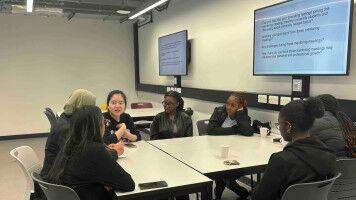
Manchester students mentor local teenagers to build confidence in applying for university

news
University College London
Results 1081 - 1100 of 2154.
Health - 08.10.2020
Symptoms of Covid-19 are a poor marker of infection
86% of people who tested positive for Covid-19 during lockdown did not have virus symptoms (cough, and/or fever, and/or loss of taste/smell), finds a study by UCL researchers. The authors say a more widespread testing programme is needed to catch 'silent' transmission. The study, which is published today in Clinical Epidemiology, used data from the Office for National Statistics Coronavirus (COVID-19) Infection Survey pilot study - a large population based survey looking at the association between Covid-19 symptoms and Covid-19 test results.
Environment - Social Sciences - 07.10.2020
City dwellers just as willing to help a stranger
People in cities are just as likely to help a stranger on the street as those in towns and villages, finds a study by UCL researchers. Helping behaviour was higher in more affluent areas, as social deprivation predicted lower levels of helping, according to the results of the UK-based study published in Proceedings of the Royal Society B .
Health - Psychology - 06.10.2020
High COVID-19 rates in psychiatric hospitals highlight inequalities
At least 38% of older adults in psychiatric wards in London were infected with COVID-19 at the height of the pandemic, finds a new study led by UCL researchers. The research team reports in The Lancet Psychiatry that 15% of infected patients (19 people) in the mental health wards died from the illness.
Life Sciences - Health - 05.10.2020
Dozens of mammals could be susceptible to SARS-CoV-2
Numerous animals may be vulnerable to SARS-CoV-2, the virus that causes Covid-19, according to a large study modelling how the virus might infect different animals' cells, led by UCL researchers. The study, published in Scientific Reports , reports evidence that 26 animals regularly in contact with people may be susceptible to infection.
Life Sciences - Social Sciences - 05.10.2020
How the brain helps us navigate social differences
Our brain responds differently if we talk to a person of a different socioeconomic background from our own compared to when we speak to someone whose background is similar, according to a new imaging study by UCL and Yale researchers. In the study, published in the journal Social Cognitive and Affective Neuroscience , 39 pairs of participants had a conversation with each other while wearing headsets that tracked brain activity.
Social Sciences - 05.10.2020
Working mothers: The legacy of East German culture
Decades after German reunification, women who grew up in East Germany are still quicker to return to work after the birth of a child than mothers who grew up in West Germany, according to new UCL and Queen Mary University of London research. The research, published as Discussion Paper with the Centre for Research and Analysis of Migration (CReAM), also shows that women from East Germany still work longer hours even after many years' exposure to West German culture, while West German migrants adjust their post-birth employment behaviour nearly entirely to that of their East German colleagues.
Health - 05.10.2020
Singing and worship the focus of new Covid-19 study
Religious and faith followers are being invited to take part in a new UCL study, which aims to understand how the practice of worship has changed during Covid-19. Researchers will also ask a subset of participants to sing, chant or hum as part of an aerosol droplet test, to establish the risk of transmitting Covid-19 when singing hymns or prayers in a place of worship or similar faith setting.
Environment - Social Sciences - 01.10.2020
Analysis: Rising sea levels could leave millions at risk by 2100
Ilan Kelman (UCL Institute for Risk & Disaster Reduction) joins experts in examining 33 studies of how rising sea levels will affect migration patterns, 'trapped populations' and call for policymakers to institute measures to protect residents living in high-risk areas. An article in 2011 shocked many by suggesting that up to 187 million people could be forced to leave their homes as a result of two metres of sea level rise by 2100.
Life Sciences - Environment - 01.10.2020
Alien species to increase by 36% worldwide by 2050
The number of alien (non-native) species, particularly insects, arthropods and birds, is expected to increase globally by 36% by the middle of this century, compared to 2005, finds new research by an international team involving UCL. Published in Global Change Biology, the study also predicts the arrival of around 2,500 new alien species in Europe, which translates to an increase of 64% for the continent over the 45-year period.
Health - 01.10.2020
Loss of smell a ’highly reliable’ indicator of Covid-19 infection
Four out of five people with sudden loss of smell or taste tested positive for Covid-19 antibodies, finds a new study by researchers at UCL and UCLH (University College London Hospitals NHS Foundation Trust). Scientists say the findings, published in PLOS Medicine , show that an acute loss of smell or taste is a 'highly reliable' virus indicator and should now be considered globally as a criterion for self-isolation, testing, and contact tracing.
Health - Psychology - 30.09.2020
Depression and anxiety twice as common among older people who were shielding
Older people who were instructed to shield and self-isolate at the beginning of the pandemic experienced higher levels of depression, anxiety and loneliness compared with those who were not shielding, according to a new study co-led by UCL. The research shows that the increase in poor mental health was not related to reductions in social contacts, but due to higher levels of worry about obtaining food and other essentials, and less physical activity and sleep.
Health - 30.09.2020
Winter coughs and fevers will put huge strain on COVID-19 testing capacity
Higher numbers of people with coughs and fevers in the coming months will place a significant strain on the UK's COVID-19 testing system and capacity must be 'immediately scaled up', finds a new modelling study led by UCL and Liverpool School of Tropical Medicine. The study, currently published by Wellcome Open, quantified baseline cough or fever cases in the UK and looked at the impact this will have on COVID-19 laboratory testing services.
Health - 28.09.2020
Largest study confirms children significantly less likely to catch Covid-19
Children and young people are around 40% per cent less likely to be infected than adults when exposed to someone with the virus, finds a new study of global Covid-19 transmission data, co-led by UCL researchers. In this study, published in JAMA Pediatrics , the researchers have updated their previous systematic review* and meta-analysis, published as a preprint in May**, to encompass more than 13,900 studies, to understand how likely it is that children catch Covid-19 (known as susceptibility) and whether they pass it on to others (known as transmission or infectiousness).
Health - 25.09.2020
COVID-19: Emergency homeless accommodation saved hundreds of lives
Measures introduced to protect homeless people from COVID-19 infection, including the use of hotel accommodation and increased hostel hygiene, are estimated to have prevented hundreds of deaths in this vulnerable population, finds a new study led by UCL researchers. The research team, whose modelling study is published in The Lancet Respiratory Medicine , also find that relaxing these infection control measures could lead to outbreaks and potentially hundreds of deaths among homeless people, whether there is a second wave or not.
Life Sciences - Health - 24.09.2020
Parental touch reduces pain responses in babies’ brains
Being held by a parent with skin-to-skin contact reduces how strongly a newborn baby's brain responds to a painful medical jab, finds a new study led by researchers at UCL and York University, Canada. The scientists report in the European Journal of Pain that there was more activity in the brains of newborn babies in reaction to the pain when a parent was holding them through clothing, than without clothing.
Health - Pharmacology - 24.09.2020
A fifth of people say they’re unlikely to get vaccinated against Covid-19
A fifth (22%) of people have said that when a Covid-19 vaccine is approved, they're unlikely to get it, with 10% of people saying they were 'very unlikely' to get vaccinated, find UCL researchers as part of the Covid-19 Social Study. Only half (49%) of people reported being 'very likely' to get vaccinated.
Health - Life Sciences - 23.09.2020
Analysis: Coronavirus mutations - what we’ve learned so far
Dr Lucy van Dorp (UCL Genetics, Evolution & Environment) explains the mutations that Covid-19 is undergoing and how we're still facing fundamentally the same virus as we were at the start of the pandemic. In early January, the first genome sequence of Sars-CoV-2 - the virus that causes Covid-19 - was released under the moniker "Wuhan-1".
History & Archeology - Materials Science - 23.09.2020
Chromium steel was first made in ancient Persia
Chromium steel - similar to what we know today as tool steel - was first made in Persia, nearly a millennium earlier than experts previously thought, according to a new study led by UCL. The discovery, published in the Journal of Archaeological Science , was made with the aid of a number of medieval Persian manuscripts, which led the researchers to an archaeological site in Chahak, southern Iran.
Health - Psychology - 17.09.2020
Hospitals miss mental illness diagnosis in more than a quarter of patients
Severe mental illness diagnoses are missed by clinicians in more than one quarter of cases when people are hospitalised for other conditions, finds a new study led by UCL researchers. People from ethnic minority groups are even more likely to have previously diagnosed mental illnesses go unnoticed by medical staff, according to the findings from hospitals in England, published in PLOS Medicine .
Health - Psychology - 17.09.2020
Analysis: Post-traumatic stress disorder linked to increased risk of dementia
Dr Vasiliki Orgeta (UCL Psychiatry) shares new research which shows that PTSD is a risk factor for developing dementia. Dementia is one of the greatest global health challenges. As the world's population continues to age and to live longer, the number of people affected by dementia is expected to rise to 130 million by 2050.


Environment - Mar 27
The University of Manchester signs Memorandum of Understanding with United Utilities
The University of Manchester signs Memorandum of Understanding with United Utilities
Agronomy & Food Science - Mar 27
Gather & Gather unveils fresh new Spring/Summer 2026 menu designed for the warmer seasons
Gather & Gather unveils fresh new Spring/Summer 2026 menu designed for the warmer seasons
Environment - Mar 26
University of Manchester hits major sustainability milestone, with Main Campus becoming 100% 'Zero Landfill'
University of Manchester hits major sustainability milestone, with Main Campus becoming 100% 'Zero Landfill'
Campus - MANCHESTER - Mar 26
Manchester students mentor local teenagers to build confidence in applying for university
Manchester students mentor local teenagers to build confidence in applying for university