


Environment - Mar 27
The University of Manchester signs Memorandum of Understanding with United Utilities
The University of Manchester signs Memorandum of Understanding with United Utilities
Agronomy & Food Science - Mar 27
Gather & Gather unveils fresh new Spring/Summer 2026 menu designed for the warmer seasons
Gather & Gather unveils fresh new Spring/Summer 2026 menu designed for the warmer seasons
Environment - Mar 26
University of Manchester hits major sustainability milestone, with Main Campus becoming 100% 'Zero Landfill'
University of Manchester hits major sustainability milestone, with Main Campus becoming 100% 'Zero Landfill'
Campus - MANCHESTER - Mar 26
Manchester students mentor local teenagers to build confidence in applying for university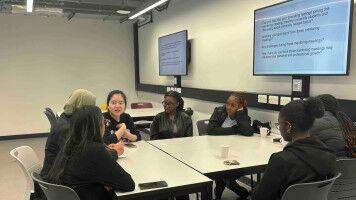
Manchester students mentor local teenagers to build confidence in applying for university

news
University College London
Results 1 - 20 of 2154.
History & Archeology - Life Sciences - 25.03.2026
Humans kept dogs 5,000 years earlier than thought
The earliest genetic evidence for the existence of dogs, dating to about 15,800 years ago - more than 5,000 years earlier than previously thought - has been identified by a team of researchers including archaeologists from UCL. Their study, published in Nature , analysed ancient DNA from remains discovered at archaeological sites in the UK and Turkey (Türkiye) dating to the Late Upper Palaeolithic period, approximately 14,000 to 16,000 years ago, a time before agriculture when humans were hunter-gatherers.
Health - Social Sciences - 25.03.2026
Parenting programmes can improve wellbeing for families from diverse backgrounds
Evidence-based parenting programmes delivered through community organisations can support family wellbeing and should be considered as part of wider strategies to reduce health inequalities, a landmark UCL study has found. In a new paper published in The Lancet Public Health, the researchers assessed the effectiveness and value for money of the Race Equality Foundation-designed Strengthening Families, Strengthening Communities (SFSC) programme, which has been run for parents and children aged up to 18 in the UK for the last two decades.
Health - Life Sciences - 23.03.2026
Multiple sclerosis doubles in prevalence while survival rates improve
Multiple sclerosis (MS) has more than doubled in recorded prevalence in England from 2000 to 2020, increasing by 6% per year, largely due to improved diagnosis and longer life expectancy, finds a new study by UCL and Imperial College London researchers. The team found that survival of people with MS improved significantly over time thanks to advances in treatments and care, although they also identified inequalities, with higher mortality in deprived areas.
Life Sciences - Health - 20.03.2026
Pain relief could be more effective at certain times of day
Time plays a key role in our perception of pain and administering pain relief and medication for chronic pain-related depression may be more effective at certain times of day, UCL and University of Toronto researchers say. In an article published in Science, the researchers commented on two new, separate studies by two different teams of Chinese researchers published in the same journal, one into acute pain and one into chronic pain.
Health - Physics - 19.03.2026
New X-ray technique could transform tissue diagnosis
A new X-ray imaging technique could transform how hospitals analyse tissue samples, potentially speeding up diagnoses and improving outcomes for patients, shows a new study led by UCL researchers. The technology, developed in collaboration with the Memorial Sloan Kettering Cancer Centre, Rigaku Americas and Creatv MicroTech, Inc., produces crisp 3D maps of biological tissue without cutting or staining samples, a significant improvement on the conventional process used in histopathology - the process of examining tissue to study, diagnose and treat diseases, particularly cancer.
Health - Pharmacology - 19.03.2026
Analysis: Why arthritis in children can threaten eyesight
Recent research shows that immune cells called B cells, previously overlooked, play an important role in juvenile idiopathic arthritis (JIA), explain Dr Lizzy Rosser and Dr Beth Jebson (both UCL Division of Medicine) in a new article for The Conversation. Arthritis is often associated with older age, but it also affects children.
Life Sciences - 10.03.2026
Movies reconstructed from mouse brain activity
Scientists have successfully reconstructed videos purely from the brain activity of mice, showing what the mice were seeing, in a new study led by UCL researchers. The findings, published in eLife , could help shed light on the intricate workings of how the brain processes visual information and open new avenues for exploring how different species perceive the world.
Health - Life Sciences - 09.03.2026
New ’molecular switch’ controlling antiviral immunity identified
A previously unknown chain of molecular signals that determines how strongly the body's immune system responds to viral infection has been discovered by scientists at UCL and the University of Cologne. Pattern recognition receptors act as sensors in the body's immune system that detect the molecular signatures of invading viruses and bacteria.
Health - Pharmacology - 03.03.2026
Weight loss drugs could cut risk of major heart complications after heart attack
Weight loss drugs may help prevent further tissue damage following a heart attack, significantly reducing the risk of further life-threatening complications that affect up to half of all patients, finds a new study in mice led by UCL and University of Bristol researchers. Published in Nature Communications , the research suggests that GLP-1 mimicking weight loss drugs could offer a promising new therapeutic approach for improving heart attack recovery.
Life Sciences - 20.02.2026
Study sheds new light on early brain development in Down syndrome
Scientists have found new clues about how the brains of people with Down syndrome develop differently from a very early age, in a study led by researchers at UCL and Queen Mary University of London. Brain cells with an extra copy of a chromosome (trisomy 21) - the genetic cause of Down syndrome - have difficulty forming strong, well-coordinated connections with each other, according to the new Nature Communications study.
Psychology - Health - 13.02.2026
Academic pressure linked to increased risk of depression in teens
Pressure to achieve at school at age 15 is linked to depressive symptoms and risk of self-harm, and the association appears to persist into adulthood, finds a study led by UCL researchers. The authors of the new study, published in The Lancet Child & Adolescent Health , say their findings suggest that reducing academic pressure in schools could reduce depression and self-harm among young people.
Health - Life Sciences - 10.02.2026

Just over one in 10 deaths from a wide range of infectious diseases are associated with obesity worldwide, finds a major new study led by a UCL researcher. People with obesity face a 70% higher risk of hospitalisation or death from an infection than those of a healthy weight, suggest the findings published in The Lancet .
Psychology - 10.02.2026

How does language impact moral dilemmas? Dr Irini Mavrou and Professor Andrea Revesz (both UCL Ioe), along with a colleague, explore the cognitive and emotional processes behind moral judgement by bilingual speakers. If you're bilingual, moral choices can often feel more urgent and emotionally charged in one language yet distant and rational in another.
Health - Pharmacology - 09.02.2026
Diabetes medicine could save thousands more lives a year
Diabetes drugs that may soon be prescribed more widely in England could save thousands of lives each year, suggests a new study by researchers at UCL and the London School of Hygiene & Tropical Medicine (LSHTM). Last August the UK diabetes guideline committee at the National Institute for Health and Care Excellence (NICE) proposed SGLT-2 inhibitors alongside another drug, metformin, as a first-line treatment for people with type 2 diabetes.
Health - 09.02.2026
Early diagnosis key to improving childhood cancer survival
A major study by UCL and Fondazione IRCCS Istituto Nazionale dei Tumori in Milan (INT) researchers has for the first time shown in detail how far children's cancer has spread at diagnosis in a way that can be compared between countries. While poorer survival following late-stage diagnosis is well recognised, the study is the first to show that differences in tumour stage at diagnosis may explain why childhood cancer survival varies between some European regions and tumour types.
Health - Psychology - 06.02.2026

In an article for the Institute of Alcohol Studies, Dr Sharon Cox (UCL Institute of Epidemiology & Health Care) reports on new analysis finding that one in eight people who drink at increasing or higher-risk levels felt guilt or remorse after drinking in the past six months. Many people recognise the feeling.
Health - 04.02.2026
Study sheds new light on sight-threatening arthritis in children
A team led by UCL researchers with Great Ormond Street Hospital (GOSH) and Moorfields Eye Hospital, found B cells-alongside T cells-play a key role in arthritis-related eye disease (JIA uveitis), a condition that can cause long-term vision loss in children. The study, funded by the Medical Research Foundation, Moorfields Eye Charity, Arthritis UK and Fight for Sight challenges how the disease has been previously understood, and could open the door to new treatments that help protect children's sight.
Health - Social Sciences - 03.02.2026
Analysis: How mental health has changed in baby boomers and gen X across their entire adulthoods
Dr Darío Moreno Agostino (UCL Institute of Education) outlines his research into the mental health of baby boomers and generation X throughout their adulthoods, revealing persistent gender and socioeconomic inequalities and increased distress levels during the pandemic. It's been almost five years since the end of the COVID lockdowns.
Life Sciences - Health - 29.01.2026
How the brain’s ’memory replay’ goes wrong in Alzheimer’s disease
Memory dysfunction in Alzheimer's disease may be linked to impairment in how the brain replays our recent experiences while we are resting, according to a new study in mice by UCL scientists. The researchers say their findings, published in Current Biology , could help scientists develop drug treatments targeting this impaired brain function, or help design new tests for early diagnosis.
Health - Life Sciences - 28.01.2026
Targeting the gut’s immune system could tackle early stages of Parkinson’s
New research reveals how Parkinson's spreads from the gut to the brain, with the help of immune cells - offering a new potential therapeutic strategy - in a study in mice led by scientists at the UK Dementia Research Institute at UCL. Scientists have long theorised that Parkinson's may start in the gut.


Environment - Mar 27
The University of Manchester signs Memorandum of Understanding with United Utilities
The University of Manchester signs Memorandum of Understanding with United Utilities
Agronomy & Food Science - Mar 27
Gather & Gather unveils fresh new Spring/Summer 2026 menu designed for the warmer seasons
Gather & Gather unveils fresh new Spring/Summer 2026 menu designed for the warmer seasons
Environment - Mar 26
University of Manchester hits major sustainability milestone, with Main Campus becoming 100% 'Zero Landfill'
University of Manchester hits major sustainability milestone, with Main Campus becoming 100% 'Zero Landfill'
Campus - MANCHESTER - Mar 26
Manchester students mentor local teenagers to build confidence in applying for university
Manchester students mentor local teenagers to build confidence in applying for university