


Campus - GLASGOW - Mar 16
Evidence from five decades of graduates confirms Humanities skills power careers and lifelong impact
Evidence from five decades of graduates confirms Humanities skills power careers and lifelong impact
Health - Mar 13
Oxford and Serum Institute of India sign IP license agreement to advance NipahB vaccine candidate
Oxford and Serum Institute of India sign IP license agreement to advance NipahB vaccine candidate
Career - Mar 13
Faye Holland joins pioneering Cambridge x Manchester collaboration as Partnership Director
Faye Holland joins pioneering Cambridge x Manchester collaboration as Partnership Director
news
University of Leeds
Results 81 - 100 of 250.
Life Sciences - Health - 02.03.2021

Scientists have taken a significant step forward in their search for the origin of a progressive eye condition which can cause sight loss. A new study into keratoconus by an international team of researchers, including a Leeds group led by Chris Inglehearn, Professor of Molecular Ophthalmology in the School of Medicine , has for the first time detected DNA variations which could provide clues as to how the disease develops.
Life Sciences - 24.02.2021

Researchers have mapped the physical organisation of the brain of a soil-living nematode worm, creating a new model for the architecture of the animal's brain. They found a large degree of variation in the structure of some neural circuits or pathways in individual worms which complemented a core set of neural circuits common to the animals.
Environment - Astronomy & Space - 23.02.2021

Glaciers in West Antarctica are moving more quickly from land into the ocean, contributing to rising global sea levels. A 25-year record of satellite observations has been used to show widespread increases in ice speed across the Getz sector for the first time, with some ice accelerating into the ocean by nearly 50%.
Environment - Health - 22.02.2021

A blanket ban on the trade of wild meat could create risks for nature and for human health, according to a new study. Governments and the World Health Organization (WHO) are under pressure from wildlife protection and animal welfare campaigners to ban hunting of all wild animals for food, and end trade in wildlife.
Life Sciences - Health - 18.02.2021

Scientists at Leeds are part of an international collaboration that has designed a protein that self-assembles into an artificial pore. The protein sequence spontaneously transforms into a "transmembrane beta-barrel" – a tiny conduit or pore that embeds itself into a lipid membrane, mimicking its natural counterparts which are found in the walls of bacterial cells and enable nutrients, vitamins and strands of DNA to pass through.
Life Sciences - Physics - 16.02.2021

Videos showing for the first time how small circles of DNA adopt dance-like movements inside a cell have been developed by researchers in Yorkshire. The footage, created by a team of scientists from the Universities of Leeds, Sheffield and York, and recorded at UCL, is based on the highest resolution images of a single molecule of DNA ever captured.
Environment - 10.02.2021
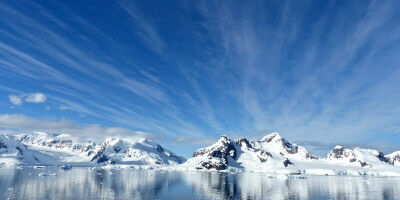
The emissions of a banned ozone-depleting gas have dropped rapidly following a previously unexpected spike. A team of international researchers analysed global air measurements of the ozone-depleting chemical chlorofluorocarbon CFC-11. The analysis involved the use of detailed atmospheric models to remove the effects of natural meteorological variations.
Chemistry - Environment - 02.02.2021

Scientists are using an analysis of gases in the atmosphere of Venus to develop a new generation of lower-cost and more effective catalytic converters. Based on what they learned, a research team at the University has manufactured a synthetic compound which they believe will reduce toxic emissions of carbon monoxide (CO) and nitrogen oxides (NOx) from diesel engine exhaust.
Environment - Life Sciences - 29.01.2021

The health of the UK-s insect populations is to be assessed by a new project, which aims to advise on policies to help protect them more effectively post-Brexit. There are growing concerns that insects are in widespread decline across Europe and beyond, thought to be caused by intensive agriculture and other human-induced pressures such as climate change.
Earth Sciences - Environment - 25.01.2021

Scientists believe a key nutrient transported by the wind is contributing to the growth of algal blooms on melting ice sheets. The presence of the blooms increases the rate at which the ice melts, causing sea levels to rise. The Greenland ice sheet – the second largest ice body in the world after the Antarctic ice sheet – covers almost 80%of the surface of Greenland.
Environment - Astronomy & Space - 25.01.2021

The rate at which ice is disappearing across the planet is speeding up, according to new research. And the findings also reveal that the Earth lost 28 trillion tonnes of ice between 1994 and 2017 – equivalent to a sheet of ice 100 metres thick covering the whole of the UK. The research is the first of its kind to carry out a survey of global ice loss using satellite data.
Mechanical Engineering - Life Sciences - 25.09.2015
Offshore wind farms could be more risky for gannets than previously thought, study shows
Offshore wind farms which are to be built in waters around the UK could pose a greater threat to protected populations of gannets than previously thought, research led by the University of Leeds says. It was previously thought that gannets, which breed in the UK between April and September each year, generally flew well below the minimum height of 22 metres above sea level swept by the blades of offshore wind turbines.
Mechanical Engineering - Life Sciences - 25.09.2015
Offshore wind farms could be more risky for gannets than previously thought
Offshore wind farms which are to be built in waters around the UK could pose a greater threat to protected populations of gannets than previously thought, research led by the University of Leeds says. It was previously thought that gannets, which breed in the UK between April and September each year, generally flew well below the minimum height of 22 metres above sea level swept by the blades of offshore wind turbines.
Health - 23.09.2015
If you’re sitting down, don’t sit still, new research suggests
New research suggests that the movements involved in fidgeting may counteract the adverse health impacts of sitting for long periods. In a study published today in the American Journal of Preventive Medicine, a team of researchers, co-led by the University of Leeds and UCL, report that an increased risk of mortality from sitting for long periods was only found in those who consider themselves very occasional fidgeters.
Environment - 09.09.2015
Ocean life triggers ice formation in clouds
Researchers have shown for the first time that phytoplankton (plant life) in remote ocean regions can contribute to rare airborne particles that trigger ice formation in clouds. A study published online today in the journal Nature shows that the organic waste from life in the oceans, which is ejected into the atmosphere along with sea spray from breaking waves, stimulates cloud droplets to freeze into ice particles.
Health - Life Sciences - 02.09.2015
Brazilian wasp venom kills cancer cells by opening them up
The venom of a wasp native to Brazil could be used in the fight against cancer, according to new University of Leeds research. The social wasp Polybia paulista protects itself against predators by producing venom known to contain a powerful cancer-fighting ingredient. The research reveals exactly how the venom’s toxin - called MP1 (Polybia-MP1) - selectively kills cancer cells without harming normal cells.
Health - Agronomy & Food Science - 17.08.2015
Aspirin reduces obesity cancer risk
Research has shown that a regular dose of aspirin reduces the long-term risk of cancer in those who are overweight. Researchers found that being overweight more than doubled the risk of bowel cancer in people with Lynch Syndrome, an inherited genetic disorder which affects genes responsible for detecting and repairing damage in the DNA.
Life Sciences - Health - 13.08.2015
"Brainy" mice raise hope of better treatments for cognitive disorders
Researchers have created unusually intelligent mice by altering a single gene and as a result the mice were also less likely to feel anxiety or recall fear. The study, led by the University of Leeds and Mount Sinai Hospital in Toronto, is published today. It sheds light on the molecular underpinnings of learning and memory and could form the basis for research into new treatments for age-related cognitive decline, cognitive disorders such as Alzheimer’s disease and schizophrenia, and other conditions.
Health - Life Sciences - 03.08.2015
Further evidence of genetic key to deadliest form of skin cancer
University of Leeds experts have uncovered further evidence that protective buffers at the ends of chromosomes - telomeres - are fundamental to the understanding of the deadliest form of skin cancer. A team of international researchers, co-led by Dr Mark Iles from the University’s School of Medicine and St James’s University Hospital in Leeds, has uncovered five new common genetic risk factors for melanoma.
Environment - 30.07.2015
Climate change threatens precious UK ecosystem
An entire ecosystem is at risk from the effects of climate change on the UK's blanket bogs, scientists at the University of Leeds have warned. These wetland habitats provide important feeding and nesting grounds for bird species including the dunlin, red grouse and golden plover. Blanket bogs are also the source of most of our drinking water and vital carbon stores.


Campus - GLASGOW - Mar 16
Evidence from five decades of graduates confirms Humanities skills power careers and lifelong impact
Evidence from five decades of graduates confirms Humanities skills power careers and lifelong impact
Health - Mar 13
Oxford and Serum Institute of India sign IP license agreement to advance NipahB vaccine candidate
Oxford and Serum Institute of India sign IP license agreement to advance NipahB vaccine candidate
Career - Mar 13
Faye Holland joins pioneering Cambridge x Manchester collaboration as Partnership Director
Faye Holland joins pioneering Cambridge x Manchester collaboration as Partnership Director