


news
GLASGOW
Results 281 - 300 of 981.
Health - 29.04.2022
Dog rabies persists despite low virus prevalence
Dog-mediated rabies, a fatal disease which kills tens of thousands of people in Africa every year, remains persistently endemic in affected regions. That is, despite an overall low virus prevalence, and attempts to combat the deadly pathogen. The findings, from an important new study led by the University of Glasgow and published in Science , are based on information gained from tracing the fatal disease in a population of more than 50,000 dogs in Tanzania from 2002 until 2016.
Sport - Health - 26.04.2022
New landmark study offers hope for former footballers at risk of dementia
A new research study will investigate possible ways to reduce dementia risk in former professional footballers. The £1.3 million, four-year BrainHOPE study - led by the University of Glasgow, in collaboration with the University of Edinburgh, Imperial College London and the wider PREVENT Dementia research collaborators - builds on the ground-breaking observations of the FIELD study, which found risk of dementia and related disorders among former professional footballers was around three and a half times higher than expected.
Physics - 11.04.2022
Imaging breakthrough could aid development of quantum microscopes
A breakthrough in quantum imaging could lead to the development of advanced forms of microscopy for use in medical research and diagnostics. A team of physicists from the University of Glasgow and Heriot-Watt University have found a new way to create detailed microscopic images under conditions which would cause conventional optical microscopes to fail.
Astronomy & Space - Physics - 07.04.2022

A sophisticated new observation of a cool zone on the surface of the sun could help scientists develop a new kind of solar thermometer. A team of astrophysicists led by researchers from the University of Glasgow are the first to use observations from the ALMA observatory in Chile to estimate the temperature of a solar prominence.
Computer Science - Astronomy & Space - 04.04.2022
New algorithm could be quantum leap in search for gravitational waves
A new method of identifying gravitational wave signals using quantum computing could provide a valuable new tool for future astrophysicists. A team from the University of Glasgow's School of Physics & Astronomy have developed a quantum algorithm to drastically cut down the time it takes to match gravitational wave signals against a vast databank of templates.
Innovation - Materials Science - 04.04.2022
3D printed heat exchanger ’more efficient’ than conventional designs
A new type of lightweight, 3D printed heat exchanger with a maze-like design is more compact and efficient than its conventional counterparts, its developers say. A team led by engineers from the University of Glasgow have developed the system, which exploits the unique properties of microscale surfaces to create a high-performance heat exchanger.
Health - Life Sciences - 31.03.2022
People in deprivation with poorer lifestyle factors at most risk for severe illness or death with COVID-19
Unhealthy lifestyles are associated with a higher risk of severe COVID-19, but risks are highest in the most economically disadvantaged, according to a new study. The research - led by the University of Glasgow and published in BMC Infectious Diseases - looked at 343,850 people with an average age over 60 and found that the combined influence of both lifestyle and socioeconomic factors further increased the risk of severe disease or death from CO
Life Sciences - Chemistry - 30.03.2022

The deadly venom of a poisonous sea snail could hold the key to developing new medicines including more effective, less addictive forms of pain relief. A team led by researchers from the University of Glasgow is setting out to learn more about the unique form of venom produced by cone snails, predatory marine animals found in warm seas and oceans throughout the word.
Health - Life Sciences - 30.03.2022
People in deprivation with poorer lifestyle factors at most risk for COVID-19
Unhealthy lifestyles are associated with a higher risk of severe COVID-19, but risks are highest in the most economically disadvantaged, according to a new study. The research - led by the University of Glasgow and published in BMC Infectious Diseases - looked at 343,850 people with an average age over 60 and found that the combined influence of both lifestyle and socioeconomic factors further increased the risk of severe disease or death from CO
Health - Chemistry - 28.03.2022
New method of developing diagnostic tests could help tackle future pandemics
Software which helps speed up the process of creating new diagnostic tests could help combat future pandemics, its developers say. A team of bioengineers and chemists in Scotland and China have developed a system which suggests new reaction pathways to accelerate the design and development of new diagnostic assays.
Health - Chemistry - 21.03.2022

Scientists develop 'holy grail' method to identify the ageing mosquitos which cause malaria Scientists at the University of Glasgow and partner institutes have developed an inexpensive, fast and simple way to identify the ageing mosquitos which transmit the deadly malaria parasite.
Health - Pharmacology - 16.03.2022

Rheumatoid arthritis patients living with frailty may find their frailty is reversible following treatment, according to a new study. The research, published in RMD Open and led by the University of Glasgow, looked at frailty - a vulnerability to poor health-outcomes - in people with rheumatoid arthritis (RA).
Social Sciences - 23.02.2022

Sexual harassment is common in Scotland's secondary schools, however the ways in which students distinguish between what's acceptable or not is nuanced, according to new research. The study - led by the University of Glasgow's MRC/CSO Social and Public Health Sciences Unit, and published in PLOS ONE - suggests that school-based strategies to tackle sexual harassment must engage with the complexity of the issue, as many participants in the study, aged between 13-17, expressed uncertainty regarding the experience or acceptability of certain behaviours.
Environment - Earth Sciences - 10.02.2022

A new method suggests that past landscape changes can cast a shadow on future bird biodiversity, leading to avian communities facing impeding species extinctions, as well as the arrival of new colonising species. The study revealed widespread extinction debts and colonisation credits in USA bird biodiversity.
Health - Life Sciences - 09.02.2022
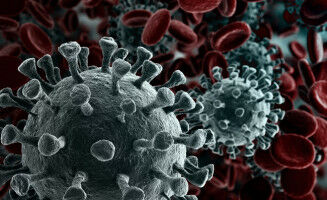
New research has disentangled the complex evolutionary history of bat coronaviruses related to SARS-CoV-2, the virus responsible for COVID-19. Scientists agree that bats are the most likely animal host species of SARS-CoV-2 viral ancestors, however no one has yet been able to fully explain the virus's history or pinpoint the animal species that ultimately passed the new coronavirus to humans.
Astronomy & Space - Chemistry - 08.02.2022
Microgravity experiments could help future space missions source oxygen
New research on generating oxygen from water found on the surfaces of other planets could help support future long-term missions to the Moon and Mars. Researchers from the University of Glasgow and colleagues took a series of gruelling flights into microgravity to study how the different gravitational pull of other planets could affect the process of electrolysis.
Materials Science - Innovation - 07.02.2022
’Smart’ 3D-printed braces could improve scoliosis treatment
A new type of lightweight 3D-printed back brace capable of sensing how effectively it fits patients could lead to improved treatment for scoliosis, its developers say. Scoliosis, a common form of spine deformity, affects around three percent of the population, most often between the ages of 10 and 15.
Health - 03.02.2022

Lockdown measures throughout 2020 have been linked to people in Scotland and England drinking more at home, according to new research. The latest study, led by the University of Glasgow in collaboration with researchers at the University of Sheffield and published in the journal Addiction, measured the impact of COVID-19 restrictions in 2020 on drinking practices, using data on almost 300,000 adult drinkers.
Astronomy & Space - Earth Sciences - 03.02.2022
New research uncovers ancient Martian meteorite’s shocking history
Planetary scientists from the University of Glasgow have lent their support to an important new study of a Martian meteorite. The research, led by Curtin University in Australia, has found the first physical evidence of high-intensity damage caused by asteroid impact in ancient Martian meteorites, which could help identify when conditions suitable for life may have existed on early Mars.
Health - Life Sciences - 31.01.2022

Study reveals differences in replication rates of SARS-CoV-2 variants of concern Research led by scientists at the MRC-University of Glasgow Centre for Virus Research and the University of Oxford, in collaboration with UKHSA and Brighton NHS have revealed new insights into transmissibility of variants and susceptibility to infection.


