


Campus - GLASGOW - Mar 16
Evidence from five decades of graduates confirms Humanities skills power careers and lifelong impact
Evidence from five decades of graduates confirms Humanities skills power careers and lifelong impact
Health - Mar 13
Oxford and Serum Institute of India sign IP license agreement to advance NipahB vaccine candidate
Oxford and Serum Institute of India sign IP license agreement to advance NipahB vaccine candidate
Career - Mar 13
Faye Holland joins pioneering Cambridge x Manchester collaboration as Partnership Director
Faye Holland joins pioneering Cambridge x Manchester collaboration as Partnership Director
news
University of Birmingham
Results 181 - 200 of 882.
Environment - 22.06.2021

Although the emissions targets for aviation are in line with the overall goals of the Paris Agreement, there is a high likelihood that the climate impact of aviation will not meet these goals, according to a new study. Aviation is an important contributor to the global economy, but contributes to climate change by creating carbon dioxide (CO2) as well as non-CO2 effects such as forming nitrogen oxides, ozone and contrailcirrus clouds, which all contribute to global warming.
Health - Pharmacology - 18.06.2021

People of South Asian origin are the most likely of all Britain's minority ethnic communities to agree to COVID-19 vaccination - the safest way to reach population immunity, a new study reveals. In the first survey focussing on the UK's Black and Minority Ethnic (BAME) population and other high-risk groups identified for priority vaccination, researchers discovered that from 4,884 respondents, 79·3% were interested in taking approved vaccines.
Health - Pharmacology - 09.06.2021
Experts call for new standards for diagnostic tests to address testing problems during the COVID-19 pandemic
The Royal Statistical Society (RSS) has today published its review of the statistical evidence needed to assure the performance of future diagnostic tests, so we are better prepared for future pandemics. The RSS Working Group on Diagnostic Tests, which is co-chaired by University of Birmingham's Professor Jon Deeks , is calling on the Medicines and Healthcare Products Regulatory Agency (MHRA) to review and revise the national licensing process for in vitro diagnostic tests, to ensure that reliable evidence about the performance of tests is available and public safety is protected.
Physics - 08.06.2021
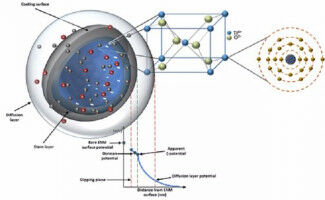
Researchers have developed a 'library of properties' to help identify the environmental impact of nanomaterials faster and more cost effectively. Whilst nanomaterials have benefited a wide range of industries and revolutionised everyday life, there are concerns over potential adverse effects - including toxic effects following accumulation in different organs and indirect effects from transport of co-pollutants.
Health - Pharmacology - 04.06.2021
Many patients with COVID-19 produce immune responses against their body’s own tissues or organs, finds study
A University of Birmingham-led study funded by the UK Coronavirus Immunology Consortium has found that many patients with COVID-19 produce immune responses against their body's own tissues or organs. COVID-19 has been associated with a variety of unexpected symptoms, both at the time of infection and for many months afterwards.
Health - Pharmacology - 03.06.2021
Study of UK dental professionals reveals extent of occupational risk of SARS-CoV-2 infection
A University of Birmingham-led study of over a thousand dental professionals has shown their increased occupational risk of SARS-CoV-2 infection during the first wave of the pandemic in the UK. The observational cohort study , published today (3 June 2021), in the Journal of Dental Research, involved 1,507 Midland dental care practitioners.
Psychology - 02.06.2021
Autistic people find it harder to identify anger in facial expressions - new study
Autistic people's ability to accurately identify facial expressions is affected by the speed at which the expression is produced and its intensity, according to new research at the University of Birmingham. In particular, autistic people tend to be less able to accurately identify anger from facial expressions produced at a normal 'real world' speed.
Life Sciences - 25.05.2021

While we sleep, the brain produces particular activation patterns. When two of these patterns - slow oscillations and sleep spindles - gear into each other, previous experiences are reactivated. The stronger the reactivation, the clearer will be our recall of past events, a new study reveals. Scientists have long known that slow oscillations (SOs) and sleep spindles - sudden half-second to two-second bursts of oscillatory brain activity - play an important role in the formation and retention of new memories.
Astronomy & Space - 17.05.2021

Scientists have succeeded in dating some of the oldest stars in our galaxy with unprecedented precision by combining data from the stars' oscillations with information about their chemical composition. The team led by researchers at the University of Birmingham, surveyed around a hundred red giant stars, and were able to determine that some of these were originally part of a satellite galaxy called Gaia-Enceladus, which collided with the Milky Way early in its history.
Physics - Astronomy & Space - 14.05.2021

Scientists searching for evidence of lensed gravitational waves have published new research outlining the most recent findings on their quest for the first detection of these elusive signals. Gravitational lensing has been predicted by Einstein himself, and observed by scientists for decades: light emitted by distant objects in the Universe is bent by the gravitational pull of very massive galaxies, as they cross the line-of-sight of the light source.
Environment - 14.05.2021

Scientists exploring the drivers of Antarctic climate change have discovered a new and more efficient pathway for the creation of natural aerosols and clouds which contribute significantly to temperature increases. The Antarctic Peninsula has shown some of the largest global increases in near-surface air temperature over the last 50 years, but experts have struggled to predict temperatures because little was known about how natural aerosols and clouds affect the amount of sunlight absorbed by the Earth and energy radiated back into space.
Health - 14.05.2021
New study into paediatric intensive care paves the way for improving care for critically ill children
A new study carried out in collaboration with the University of Birmingham has identified factors that increase the likelihood of critically ill children needing life-saving cardiopulmonary resuscitation (CPR). Using anonymised hospital records in the first multi-centre study of its kind in England, the team found that one of these factors related to race, with children from Black and Asian ethnic backgrounds more likely to require CPR.
Health - Pharmacology - 14.05.2021
New imaging technique could lead to better bio-implants for patients
University of Birmingham scientists have developed a new microscopic imaging approach to take a closer look at 3D-printing for developing future patient implants, as well as improved disease modelling and drug screening. Additive manufacturing (3D printing) platforms create bioprinted structures by moving a special bioink, containing cells, biomolecules and materials, through a narrow tube, but the process can result in cells becoming damaged as they pass through the tiny tube.
Computer Science - 13.05.2021
Locomotion Vault will help guide innovations in virtual reality locomotion
Experts in virtual reality locomotion have developed a new resource that analyses all the different possibilities of locomotion currently available. Moving around in a virtual reality world can be very different to walking or employing a vehicle in the real world and new approaches and techniques are continually being developed to meet the challenges of different applications.
Linguistics & Literature - 12.05.2021

The 'missing link' that helped our ancestors to begin communicating with each other through language may have been iconic sounds, rather than charades-like gestures - giving rise to the unique human power to coin new words describing the world around us, a new study reveals. It was widely believed that, in order to get the first languages off the ground, our ancestors first needed a way to create novel signals that could be understood by others, relying on visual signs whose form directly resembled the intended meaning.
Life Sciences - Health - 11.05.2021
Agents that target viral RNA could be the basis for next generation broad spectrum anti-viral drugs- new study
A new approach to tackling viruses by targeting the 'control centre' in viral RNA could lead to broad spectrum anti-viral drugs and provide a first line of defence against future pandemics, according to new research at the University of Birmingham. In a new study, published in Angewandte Chemie , researchers have shown how this approach could be effective against the SARS-CoV-2 virus responsible for the COVID-19 pandemic.
Life Sciences - Health - 07.05.2021
Bacterial DNA can be read either forwards or backwards - new study
Bacteria contain symmetry in their DNA signals that enable them to be read either forwards or backwards, according to new findings at the University of Birmingham which challenge existing knowledge about gene transcription. In all living organisms, DNA code is divided into sections which provide information about a specific process.
Environment - 28.04.2021
Is forest harvesting increasing in Europe?
Is forest harvesting increasing in Europe? Yes, but not as much as reported last July in a controversial study published in Nature . The study, titled 'Abrupt increase in harvested forest area over Europe after 2015', used satellite data to assess forest cover and claimed an abrupt increase of 69% in the harvested forest in Europe from 2016.
Health - Psychology - 26.04.2021
Researchers call for end of postcode lottery in miscarriage care and treatment
Leading experts at the University of Birmingham and Tommy's National Centre for Miscarriage Research are calling on the UK government to invest in early pregnancy units and recurrent miscarriage clinics to end the current care and treatment postcode lottery. The calls come as the team has laid bare the devastating impact of miscarriage and sets out recommendations to improve treatment and care in a series of three articles published today in The Lancet.
Physics - 22.04.2021

Stars spin faster than expected as they age according to a new study led by scientists at the University of Birmingham which uses asteroseismology to shed new light on this emerging theory. All stars, like the Sun, are born spinning. As they grow older, their spin slows down due to magnetic winds in a process called 'magnetic braking'.


Campus - GLASGOW - Mar 16
Evidence from five decades of graduates confirms Humanities skills power careers and lifelong impact
Evidence from five decades of graduates confirms Humanities skills power careers and lifelong impact
Health - Mar 13
Oxford and Serum Institute of India sign IP license agreement to advance NipahB vaccine candidate
Oxford and Serum Institute of India sign IP license agreement to advance NipahB vaccine candidate
Career - Mar 13
Faye Holland joins pioneering Cambridge x Manchester collaboration as Partnership Director
Faye Holland joins pioneering Cambridge x Manchester collaboration as Partnership Director