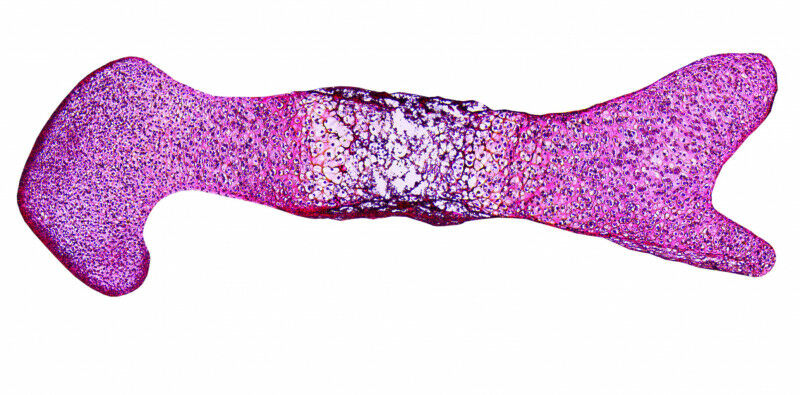
A developing mouse embryo thigh bone stained to highlight collagen.
A developing mouse embryo thigh bone stained to highlight collagen. A new Imperial College London study has revealed a potential new therapeutic target for problems with foetal bone and joint growth during development. In the uterus, foetal movements such as kicking generate mechanical forces that drive the development of healthy bones and joints, including their shape. However, the precise mechanisms of how these mechanical movements affect cartilage and bone formation are unknown. TRPV4 might be a valuable target for future therapeutic medicines for abnormalities of babies' skeletal growth - Dr Nidal Khatib Department of Bioengineering Now, new research published in Science Advances indicates that an ion channel in the membranes of cells called TRPV4 is a key link between the mechanical loading from foetal movements and healthy bone and joint formation. Therefore, TRPV4 may be a valuable target in future treatments for abnormalities in skeletal development. First author Dr Nidal Khatib , from Imperial's Department of Bioengineering , said: "If our findings can be validated in humans, TRPV4 might be a valuable target for future therapeutic medicines for abnormalities of babies' skeletal growth and shaping, or even for growing new tissues to treat joint arthritis in adults." Senior author Professor Niamh Nowlan of University College Dublin (UCD) said: "This research identifies the TRPV4 channel as playing a key role in translating mechanical signals from a baby's movement in the womb to healthy development of the skeleton.
TO READ THIS ARTICLE, CREATE YOUR ACCOUNT
And extend your reading, free of charge and with no commitment.