Analysis: A spacecraft is starting to unravel the sun’s biggest mysteries
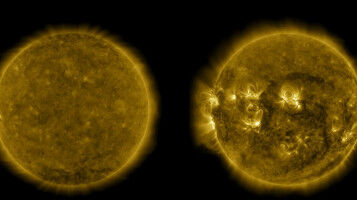
NASA's Parker Solar Probe is going closer to the sun than any spacecraft has been before - Dr Daniel Verscharen (UCL Space & Climate Physics) writes about the findings so far. If you ask a child to paint a picture of the sun, you will most likely get a bright yellow circle on a piece of paper. This is actually quite accurate, given that the sun is a ball of hot gas and that its surface (called the photosphere) mostly shines in bright yellow light. The yellow colour is determined by the temperature of the photosphere, which is about 5,500°C. In fact, the sun sometimes looks pretty much exactly like a child's drawing. During a solar eclipse, the sun's outer atmosphere, called the solar corona, can actually be seen as a bright circle, with the moon blocking the rest of the sunlight. Like the sun below, the corona consists of a plasma - a gas of charged particles.