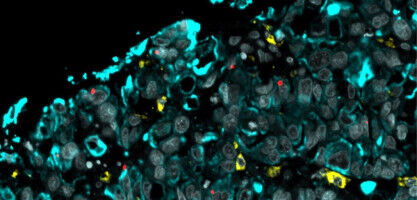
Childhood leukaemia distinct from adult disease
Scientists have identified and modelled a distinct biology for paediatric acute myeloid leukaemia, one of the major causes of death in children. The breakthrough research, from the University of Glasgow's Institute of Cancer Sciences and published , significantly advances understanding of the disease and provides potential for developing specific treatment strategies for this childhood cancer, which is currently treated with therapies extrapolated from adult practice. Acute myeloid leukaemia (AML) is one of the most aggressive types of blood cancer that affects children and adults of all ages and has the worst survival rates of all the leukaemias; and for children with AML, relapse is often fatal. The researchers modelled AML in mice and demonstrated that AML is different in young cells compared to older cells. By analysing human paediatric AML samples, they discovered a 'gene signature' which highlighted immune system pathways significant. Previously it was accepted that features of AML within the bone marrow apply to all AMLs, both paediatric and adult. Instead, the researchers found that the age of the original cell that becomes a leukaemia cell majorly impacts the nature of the disease that develops; young cells give rise to acute leukaemia with unique blood cell features and changes to the bone marrow environment that are distinct to the disease in adults. Dr Karen Keeshan from the University's Paul O'Gorman Leukaemia Research Centre, said: "Our findings are important because we have identified and modelled a distinct biology for paediatric AML.