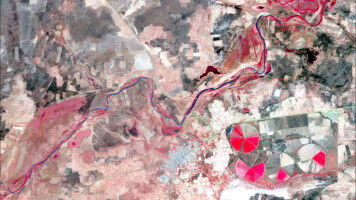
Long-term phosphorus accumulation in land and water
Researchers studying three of the world's great rivers have found evidence of a legacy that could affect our planet for generations. The study of three river basins where food and water security are directly linked to phosphorus - a chemical element in fertiliser essential for food production - included the Thames River basin in the U.K., the Maumee River Basin in the mid-western section of the U.S. and the Yangtze River Basin in China. For the first time, the international group of scientists have discovered a way to estimate on a large scale how phosphorus flows through an environment over many decades. By doing so, researchers are gaining a better understanding of how and where phosphorus accumulates. The results showed that massive amounts of phosphorus have accumulated in the landscape — a form of "legacy P" that may affect aquatic ecosystems for decades or even centuries. Of the three sites, only one showed clear improvement over several decades — the Thames River in the U.K. Professor Phil Haygarth of Lancaster Environment Centre said: "This study was very important because for the first time we have long-term data from these big rivers from around the world and we can see the scale of the problem and it is quite compelling. The information from the Thames shows there is hope, but we can't be complacent.