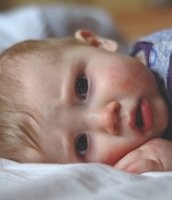
Researchers at Imperial College London have discovered a new way in which a very common childhood disease could be treated.
Researchers at Imperial College London have discovered a new way in which a very common childhood disease could be treated. In the first year of life, 65 per cent of babies get infected by Respiratory Syncytial Virus (RSV). This causes bronchiolitis, and is thought to kill nearly 200,000 children every year worldwide. In 1966 and 1967, vaccines were tested for RSV. These had disastrous effects on the immune response, leading to a worsening of the disease and, in many cases, death. Scientists have so far not been able to fully explain this effect, which continues to hold back vaccine development. Professor Peter Openshaw Director of the Centre for Respiratory Infection (CRI) at the National Heart and Lung Institute, Imperial College London Studying this effect in mice, Imperial's Peter Openshaw and his team developed a new technique which they hope might be used in tackling a wide range of other diseases including viral bronchiolitis.
TO READ THIS ARTICLE, CREATE YOUR ACCOUNT
And extend your reading, free of charge and with no commitment.