


news 2013
« BACK
 Investment in innovative science could reduce need for animal research
 New stem cell gene therapy gives hope to prevent inherited neurological disease
 Clearest new pictures of immune cells
Health
Results 201 - 220 of 538.
Health - History & Archeology - 05.08.2013
Breastfeeding may reduce Alzheimer’s risk
A new study suggests that mothers who breastfeed run a lower risk of developing Alzheimer's, with longer periods of breastfeeding further reducing the risk. In the future, we expect Alzheimer's to spread most in low and middle-income countries, so it is vital that we develop low-cost, large-scale strategies to protect people against it.
Environment - Health - 04.08.2013
Global investigation reveals true scale of ocean warming
Warming oceans are causing marine species to change breeding times and shift homes with expected substantial consequences for the broader marine landscape, according to a new global study. The three-year research project, funded by the National Centre for Ecological Analysis and Synthesis in California, has shown widespread systemic shifts in measures such as distribution of species and phenology – the timing of nature’s calendar – on a scale comparable to or greater than those observed on land.
Health - Life Sciences - 04.08.2013
Curable cause for some cases of high blood pressure
Five per cent of high blood pressure cases are caused by small nodules on hormone gland; now scientists have developed a scan which enables rapid diagnosis. This tremendous collaboration illustrates how gene technology can be used to identify specific causes for common diseases which can now be cured rather than requiring life-long drug treatment.
Health - Life Sciences - 02.08.2013
New findings could influence the development of therapies to treat dengue disease
New research into the fight against Dengue, an insect-borne tropical disease that infects up to 390 million people worldwide annually, may influence the development of anti-viral therapies that are effective against all four types of the virus. The findings, led by researchers at the University of Bristol and published in the Journal of Biological Chemistry today [2 August], show for the first time that there may be significant differences in specific properties of the viral proteins for the four dengue virus types.
Health - Agronomy & Food Science - 01.08.2013
Obese black Americans half as likely as whites to have bariatric surgery
White Americans who are obese are twice as likely as black Americans to have surgery to tackle the problem, a study has found. Bariatric surgery is now recognised as a successful treatment for preventing serious complications of obesity such as diabetes and high blood pressure. The new study is one of the first to look at whether people who need surgery most are actually receiving it.
Health - Life Sciences - 01.08.2013
Research hope for bladder cancer
Research carried out by a team at Plymouth University has for the first identified an important mechanism behind the process that allows a benign, small polyp to develop into spreading and invasive bladder cancer. Bladder cancer is a common condition – an estimated 10,000 people are diagnosed with the disease each year in the UK.
Health - Life Sciences - 01.08.2013
Molecular ’switch’ in cancers of the testis and ovary
We need new ways of treating patients with malignant germ cell tumours to minimise the toxic effects of chemotherapy and to improve survival rates when tumours are resistant to treatment. Professor Nick Coleman Cambridge scientists have identified an 'on/off' switch in a type of cancer which typically occurs in the testes and ovaries called 'malignant germ cell tumours'.
Health - 31.07.2013
Researchers study effects of Oxford Street air pollution on heart and lungs
Imperial scientists are taking volunteers to Oxford Street to investigate how air pollution affects the blood vessels and the lungs. Participants in the study, including healthy volunteers and patients with heart or lung disease, spend two hours walking along one of London's busiest roads while a researcher monitors pollution levels with a portable kit.
Life Sciences - Health - 30.07.2013
We use cookies to ensure that we give you the best experience on our website. You can change your cookie settings at any time. Otherwise, we'll assume you're OK to continue. Investment in innovative science could reduce need for animal research Durham University has been awarded £74,993 to reduce animal use in science and improve animal welfare.
Life Sciences - Health - 30.07.2013
A new tool for brain research
Physicists and neuroscientists from The University of Nottingham and University of Birmingham have unlocked one of the mysteries of the human brain, thanks to new research using functional Magnetic Resonance Imaging (fMRI) and electroencephalography (EEG). The work will enable neuroscientists to map a kind of brain function that up to now could not be studied, allowing a more accurate exploration of how both healthy and diseased brains work.
Life Sciences - Health - 26.07.2013
Key target responsible for triggering detrimental effects in brain trauma identified
Researchers studying a type of cell found in the trillions in our brain have made an important discovery as to how it responds to brain injury and disease such as stroke. A University of Bristol team has identified proteins which trigger the processes that underlie how astrocyte cells respond to neurological trauma.
Health - Life Sciences - 25.07.2013
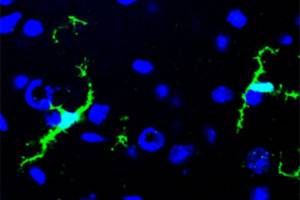
25 Jul 2013 Scientists from The University of Manchester have used stem cell gene therapy to treat a fatal genetic brain disease in mice for the first time. The method was used to treat Sanfilippo - a fatal inherited condition which causes progressive dementia in children - but could also benefit several neurological, genetic diseases.
Health - 24.07.2013
Combining treatments for people who inject drugs is the first step towards eliminating hepatitis C
The burden of liver disease could be dramatically reduced by scaling up the combination of interventions for hepatitis C infection among people who inject drugs according to University of Bristol researchers. The findings, published today [24 July], form part of new global recommendations on treating the virus.
Health - 24.07.2013
Using suggestion to navigate the mind
New research has revealed how hypnotic suggestion can provide insights into brain mechanisms involved in attention, motor control, pain perception, beliefs and volition. For more than a century, hypnotic suggestion has successfully been used as a supplementary therapy to treat a wide range of clinical conditions.
Life Sciences - Health - 24.07.2013
Cat dander triggers allergic responses
Immune system's extreme reaction to cat allergen previously poorly understood; study could lead to new treatments for those with cat and dog allergies We are hopeful that our research will lead to new and improved treatments for cat and possibly dog allergy sufferers Clare Bryant New research reveals how the most common cause of severe allergic reactions to cats, the Fel d 1 protein which is found in cat dander, triggers an allergic response.
Health - 24.07.2013
Children as young as seven affected by parents smoking
A new study out today [24 July] shows that children as young as seven had elevated levels of cotinine (a by-product of nicotine) in their blood if their mother smoked, particularly children whose mothers smoked ten cigarettes a day or more. The study looked at cotinine levels among children in the Children of the 90s study at the University of Bristol.
Health - Physics - 24.07.2013
24 Jul 2013 Scientists from The University of Manchester have revealed new images which provide the clearest picture yet of how white blood immune cells attack viral infections and tumours. They show how the cells, which are responsible for fighting infections and cancer in the human body, change the organisation of their surface molecules, when activated by a type of protein found on viral-infected or tumour cells.
Health - 23.07.2013
Sex hormones linked to breast cancer risk in women under 50
Premenopausal women with high levels of sex hormones in their blood have an increased risk of breast cancer, an Oxford University study suggests, though further research is needed to understand this link. Lead author Professor Tim Key of the Cancer Epidemiology Unit at the University of Oxford said: 'While the link between higher levels of sex hormones and breast cancer is well established in older, postmenopausal women, it's much less clear what effect hormones have on cancer risk in younger, premenopausal women.
Health - Life Sciences - 23.07.2013
Scientists edge closer towards first pancreatitis treatment
Scientists have for the first time provided proof of principle for a drug-based treatment of acute pancreatitis - a disease for which currently there is no treatment. Each year around 20,000 people in the UK are admitted to hospital with acute pancreatitis. One in five of these cases are severe, resulting in around 1000 deaths annually.
Health - Life Sciences - 23.07.2013
Cannabis constituent has no effect on MS progression
Study from Plymouth University Peninsula Schools of Medicine and Dentistry shows no evidence to support an effect of the main active constituent of cannabis on MS progression: but there may be some benefit to those at the lower end of the disability scale. The first large non-commercial clinical study to investigate whether the main active constituent of cannabis (tetrahydrocannabinol or THC) is effective in slowing the course of progressive mul


