


news 2013
« BACK
 Anatomical analysis puts insects in their place
 Indian job-guarantee scheme reduces child malnutrition
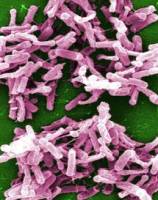 Restricting antibiotics could be key to fighting 'hospital superbug'
 Maths experts are "made, not born", Sussex study shows
Health
Results 121 - 140 of 538.
Health - Administration - 01.10.2013
Understanding lipids
Establishing a clearer understanding of the role lipids (or fats) play in the development of heart disease and dementia has received a major €3M funding boost through the University's first European Research Council Advanced Grant award for Life Sciences research. Awarded to Professor Valerie O'Donnell's Lipidomic Group based in the School of Medicine the funding will help the Group determine the total number and diversity of lipids in two types of blood cells that help us fight infection and prevent bleeding.
Health - 30.09.2013
Concerns over mercury levels in fish may be unfounded
New research from the Children of the 90s study at the University of Bristol suggests that fish accounts for only seven per cent of mercury levels in the human body. In an analysis of 103 food and drink items consumed by 4,484 women during pregnancy, researchers found that the 103 items together accounted for less than 17 per cent of total mercury levels in the body.
Life Sciences - Health - 30.09.2013
Researchers uncover 48 new genetic variants associated with multiple sclerosis
Each of the new associations brings nearer an understanding of how multiple sclerosis develops and thereby closer to our ultimate goal of a rational therapy that is both safe and effective at all stages of the disease. Professor Stephen Sawcer Scientists of the International Multiple Sclerosis Genetics Consortium (IMSGC) have identified an additional 48 genetic variants influencing the risk of developing multiple sclerosis.
Pedagogy - Health - 30.09.2013
New research offers hope for parents of picky eaters
An intervention developed by UCL psychologists significantly increases consumption of fruit and vegetables commonly disliked among picky young children, new research has found. The research, published in the Journal of the Academy of Nutrition and Dietetics, showed that in a randomised controlled trial involving 450 young children, a new method of taste exposure significantly increased the proportion of children willing to try new foods and to continue eating them.
Health - Life Sciences - 30.09.2013
A study by an Oxford University researcher has shed new light on the origins of modern animal groups including insects and spiders. The paper shows that insects evolved from a marine crustacean ancestor, while spiders evolved from a trilobite-like ancestor. Based on analysis of more than 750 anatomical features in over 300 species, more than 200 of which are fossils, the results support previous hypotheses on the evolution of arthropods produced using molecular techniques such as DNA sequencing.
Health - 30.09.2013
Scottish heather honey is best for beating bacteria
Honey has long been known for its anti-bacterial properties: it was prized by the ancient Egyptians and is widely used today in veterinary medicine as a wound dressing. The most famous honey used for medical purposes is Manuka honey from New Zealand, but a new study has revealed a particular type that is even more effective - Scottish heather honey.
Health - 30.09.2013
’East meets West’ in cancer fight
Combining traditional forms of Chinese and Western medicine could offer new hope for developing new treatments for liver, lung, colorectal cancers and osteosarcoma of the bones. Experts from the University's School of Medicine have joined forces with Peking University in China to test the health benefits of a traditional Chinese medicine.
Health - Life Sciences - 27.09.2013
'Jekyll and Hyde' protein offers new route to cancer drugs
The mood changes of a 'Jekyll-and-Hyde' protein, which sometimes boosts tumour cell growth and at other times suppresses it, have been explained in a new study led by Oxford University researchers. The researchers in Britain, with collaborators in Singapore and the USA, carried out a comprehensive biological study of the protein E2F, which is abnormal in the vast majority of cancers.
Health - Social Sciences - 26.09.2013
Life Study: understanding lives now and for the future
Life Study - the latest British birth cohort study which is being led by a team based at UCL's Institute of Child Health (ICH) - is now recruiting pregnant women, their partners, and mothers of babies who are aged six or 12 months for their pilot study. The pilot study will run at University College Hospital (UCH) between October and December this year and will test the questions and survey measures in volunteers before Life Study starts recruiting pregnant mothers, babies and families next year.
Health - Life Sciences - 26.09.2013
New research helps fight against motor neurone disease
New research from the University of Sheffield could offer solutions into slowing down the progression of motor neurone disease (MND). Scientists from the University of Sheffield's Institute for Translational Neuroscience (SITraN) conducted pioneering research assessing how the devastating debilitating disease affects individual patients.
Health - Life Sciences - 26.09.2013
Folic acid deficiency can affect the health of great, great grandchildren
It surprised us to find that the great, great grandchildren of a parent who has had a folic acid deficiency could have health problems as a result. Dr Erica Watson Folic acid deficiency can cause severe health problems in offspring, including spina bifida, heart defects and placental abnormalities. A study out today reveals that a mutation in a gene necessary for the metabolism of folic acid not only impacts the immediate offspring but can also have detrimental health effects on the next several generations.
Health - Life Sciences - 26.09.2013
Restricting antibiotics could be key to fighting "superbug"
New ways are needed to fight the infection Clostridium difficile and better use of antibiotics could be key, according to the authors of ground-breaking research. In a unique United Kingdom study, the team from the University of Leeds, Oxford University Hospitals NHS Trust and Oxford University, mapped all cases of Clostridium difficile (C.diff) in Oxfordshire over a three-year period (2008 to 2011).
Agronomy & Food Science - Health - 26.09.2013
Babies in a rural area of India are less likely to suffer from acute malnutrition where their families are taking part in a job-guarantee programme to provide work with a guaranteed wage, an Oxford University study has found. However, the Indian government programme appears to have no effect on long-term malnutrition.
Health - Life Sciences - 26.09.2013
How meningitis bacteria 'slip under the radar'
Scientists have discovered a natural temperature sensor in a type of bacteria that causes meningitis and blood poisoning. The sensor allows the bacteria to evade the body's immune response, leading to life-threatening infections. Professor Christoph Tang, who led the research at the Sir William Dunn School of Pathology, University of Oxford, said: 'These infections are extremely dangerous to vulnerable groups, particularly young children, and can cause blindness, brain damage and limb loss.
Health - Life Sciences - 26.09.2013
New ways are needed to fight the infection Clostridium difficile and better use of antibiotics could be key, say Oxford researchers. The team from Oxford University Hospitals NHS Trust and the University of Oxford led a unique study to map all cases of Clostridium difficile (C.diff) in Oxfordshire over a three-year period from 2008 to 2011.
Life Sciences - Health - 25.09.2013
Ballet dancers’ brains adapt to stop them feeling dizzy
Scientists have discovered differences in the brain structure of ballet dancers that may help them avoid feeling dizzy when they perform pirouettes. The research suggests that years of training can enable dancers to suppress signals from the balance organs in the inner ear. The findings, published in the journal Cerebral Cortex , could help to improve treatment for patients with chronic dizziness.
Health - Life Sciences - 25.09.2013
Link between commonly prescribed statin and memory impairment
New research that looked at whether two commonly prescribed statin medicines, used to lower low-density lipoprotein (LDL) or 'bad cholesterol' levels in the blood, can adversely affect cognitive function has found that one of the drugs tested caused memory impairment in rats. Between six and seven million people in the UK take statins daily and the findings follow anecdotal evidence of people reporting that they feel that their newly prescribed statin is affecting their memory.
Health - Life Sciences - 24.09.2013
Do anaesthetics trigger stress?
New research could improve the welfare standards of millions of fish used by scientists around the world. The study, published in PLOS ONE, is one of the first to formally assess the welfare implications of anaesthetics on fish. Researchers use fish to study the developmental origins of health and disease.
Life Sciences - Health - 24.09.2013
Maths experts are "made, not born", Sussex study shows A new study of the brain of a maths supremo supports Darwin's belief that intellectual excellence is largely due to "zeal and hard work" rather than inherent ability. University of Sussex neuroscientists took fMRI scans of champion 'mental calculator' Yusnier Viera during arithmetical tasks that were either familiar or unfamiliar to him and found that his brain did not behave in an extraordinary or unusual way.
Health - Social Sciences - 24.09.2013
Life enrichment after stroke
In the UK, family carers supporting their ill or disabled relatives save the country over £100billion a year in care costs - roughly the annual cost of the NHS. Family carers require support if they are to fulfil their roles compassionately, effectively and lastingly. Published today, a new study by the University sets out to understand what sustains a carer's role and what makes caring a positive and fulfilling experience.


