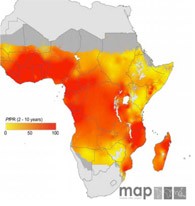
Malaria was one of the better-mapped diseases, but there is still work to be done
A systematic review examining the current methods used to map infectious diseases worldwide has found them to be severely lacking. The study, led by researchers at the University of Oxford, makes several recommendations to improve future mapping efforts. The review, published as open-access in Philosophical Transactions of the Royal Society B , identified 355 infectious diseases of clinical significance to humans. There are strong arguments for mapping 174 of these, but only 7 have been mapped reliably. Unreliable mapping makes it difficult to fully understand the geographic scope and threat of diseases, which presents challenges to policy advisers looking to manage their spread. 'This systematic review has shown that we have an astonishingly poor knowledge of the global distribution of the vast majority of infectious diseases of clinical importance,' says Simon Hay, lead author of the study and Professor of Epidemiology at the University of Oxford. Beyond detailing the shortcomings of current methods, the researchers also suggest ways in which maps could be improved.
TO READ THIS ARTICLE, CREATE YOUR ACCOUNT
And extend your reading, free of charge and with no commitment.