This work shows how mass extinctions can re-set the whole pattern of evolution. Life recovers after these crises, and numbers may bounce back, but our new methods allow us to explore in detail what’s really going on
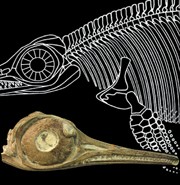
The evolution of ichthyosaurs , important marine predators of the age of dinosaurs, was hit hard by a mass extinction event 200 million years ago, according to a new study from the University of Bristol. Ichthyosaurs are iconic fossils, first discovered 200 years ago by Mary Anning on the Jurassic coast of Dorset at Lyme Regis. Hundreds of specimens of these dolphin-shaped predators have since been found, and they were abundant and important predators in Jurassic seas. The new study shows, however, that Mary Anning's Jurassic ichthyosaurs were actually a much-reduced remnant of the former glory of the group. Ichthyosaurs originated in the Early Triassic, 250 million years ago, and during the Triassic they became hugely varied in adaptations. Triassic ichthyosaurs ranged in length from 0.3 to 20m, and in shape from long and slender to deep-bodied. The giant shonisaurids of the Late Triassic were whale-sized, 20m (60ft) long and may have fed on shoals of squid by gulping them down with their massive mouths.
TO READ THIS ARTICLE, CREATE YOUR ACCOUNT
And extend your reading, free of charge and with no commitment.