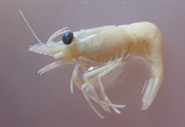
We found that that the larvae of crabs and lobsters, who actively search out reefs to set up home, were attracted by the noise but the crustacean groups that naturally live away from coral reefs actively avoided our traps playing back reef noise.
Coral reefs present a treacherous wall of mouths to flea-sized planktonic crustaceans, but the clamour generated by animals on the reef may act like a foghorn to warn them away from danger. In the first study to examine the response to noise of a diverse range of crustaceans, an international team led by the University of Bristol found that many families of crustaceans previously assumed to be deaf could detect, and avoid, reef noise. Working at Lizard Island on the Great Barrier Reef, the team collected nearly 700,000 crustaceans, many of which underpin entire marine food webs. On each of 34 nights, one light trap was attached to an underwater sound system broadcasting a recording of a coral reef, while another identical trap had no playback. After weeks of sorting in the lab, it became clear that almost all the crustacean groups caught showed a response to the noise, and that their preference depended on their lifestyle. 'We found that that the larvae of crabs and lobsters, who actively search out reefs to set up home, were attracted by the noise,' explains lead author Dr Steve Simpson of the University of Bristol's School of Biological Sciences , 'but the crustacean groups that naturally live away from coral reefs actively avoided our traps playing back reef noise.' The team found a negative response to noise in both crustaceans that spend all their life feeding on plankton, such as woodlouse-like hyperriids, as well as in those that emerge from the sand at night and ascend to feed on plankton near the surface, such as mysid shrimps.
TO READ THIS ARTICLE, CREATE YOUR ACCOUNT
And extend your reading, free of charge and with no commitment.