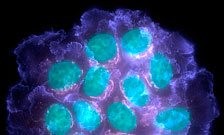
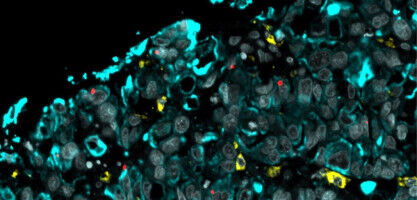
Cancer cells
Scientists at King's have found that the body's surveillance for cancer causing damage and its response to allergies share a common pathway, according to research published in the journal, Science. The cells that line the body's surfaces, known as epithelial cells, are exposed to potentially cancer causing damage every day, such as the effects of UV light and tobacco smoke. Looking at the effect this can have on mouse skin cells, the researchers at King's College London and Cancer Research UK's London Research Institute found damaged cells display a stress molecule that activates neighbouring immune cells to destroy them. But, unexpectedly, the scientists also found that this activates another response that involves the body's whole immune system, similar to the allergic response the body uses to mop up allergens such as pollen. The stress molecules also trigger a separate part of the body's defence system to produce large amounts of antibodies typically linked to an allergic response. The researchers think they are used by the body to recognise and flag the toxins that have caused the damage, clearing them before they affect the rest of the body. This combination allows the immune system to 'see' and respond to developing tumours on the body's surface and initiate allergic-type reactions to protect the rest of the body.
TO READ THIS ARTICLE, CREATE YOUR ACCOUNT
And extend your reading, free of charge and with no commitment.