


news 2011
Categories
Years
2009 | 2010 | 2011 | 2012 | 2013 | 2014 | 2015 | 2016 | 2017 | 2018 | 2019 | 2020 | 2021 | 2022 | 2023 | 2024 | 2025 | 2026 |
2009 | 2010 | 2011 | 2012 | 2013 | 2014 | 2015 | 2016 | 2017 | 2018 | 2019 | 2020 | 2021 | 2022 | 2023 | 2024 | 2025 | 2026 |
Results 441 - 460 of 597.
Life Sciences - Chemistry - 30.03.2011
Experts reveal why plants don’t get sunburn
Experts at the University have discovered how plants know when to make their own sunscreen to protect themselves from the harmful rays of the sun. Scientists have speculated for decades that plants must have a 'photoreceptor' for UV-B wavelengths in sunlight, similar to those they use to detect other wavelengths which control other processes, such as triggering when they flower.
History & Archeology - 29.03.2011
Multiculturalism ‘not to blame’ for failed sense of community
Multiculturalism is associated with strengthening the ties between different ethnic groups, according to an extensive study of English data. A research team led by Dr Laia Bécares from The University of Manchester reveals that neighbourhoods with higher ethnic diversity are associated with higher rates of social cohesion, respect for ethnic differences, and neighbours of different backgrounds getting on well together.
Health - Chemistry - 28.03.2011
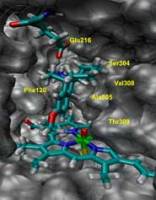
A new discovery about how molecules are broken down by the body, which will help pharmaceutical chemists design better drugs, has been made by researchers at the University of Bristol. Working with Professor Jeremy Harvey and Professor Adrian Mulholland of Bristol's School of Chemistry , Dr Julianna Olah, an EU Marie Curie Fellow in Bristol at the time, studied a class of enzymes ' cytochromes P450 - which play an important role in removing drug molecules from the body.
Health - 28.03.2011
A short burst of vigorous physical activity like running and jogging is important for building bones in children, whereas more gentle exercise like walking, even for a longer period, has little effect. This suggests that while current recommendations on exercise aim to combat obesity and heart disease by promoting walking, these are unlikely to offer much protection against the risk of osteoporosis in later life.
Physics - Earth Sciences - 27.03.2011

The earliest rocks in our Solar System were more like candy floss than the hard rock that we know today, according to research published Geoscience. The work, by researchers from Imperial College London and other international institutions, provides the first geological evidence to support previous theories, based on computer models and lab experiments, about how the earliest rocks were formed.
Health - 24.03.2011
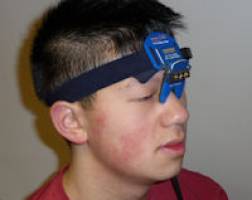
Liverpool, UK - 24 March 2011: Scientists at the University of Liverpool have found that eye movement patterns of Chinese people, born and raised in China, are different to those of Caucasian people living in Britain. The team, working with Sichuan University in Chengdu, China, investigated eye movements in Chinese and British people to further understanding of the brain mechanisms that control them and how they compare between different human populations.
Health - Psychology - 24.03.2011
Could ’training the brain’ help children with Tourette syndrome?
PA96/11 Children with Tourette syndrome could benefit from behavioural therapy to reduce their symptoms, according to a new brain imaging study. Researchers at The University of Nottingham discovered that the brains of children with Tourette syndrome (TS) develop in a unique way — which could suggest new methods of treating the condition.
Health - 24.03.2011

A group of leading researchers and clinicians, led by Professor Irene Higginson OBE at King's College London, will today call for delivery of end-of-life care across Europe to be reviewed, and investment in research increased, in order to meet people's needs more effectively at the end of their lives.
Chemistry - Life Sciences - 23.03.2011

The organic compounds surviving in fifty million year old fossilized reptile skin can be seen for the first time today, thanks to a stunning infra-red image produced by University of Manchester palaeontologists and geochemists. Published in the journal Royal Society Proceedings B , the brightly-coloured image shows the presence of amides - the organic compounds, or building blocks of life - in the ancient skin of a reptile, found in the 50 million year-old rocks of the Green River Formation in Utah, USA.
Health - Life Sciences - 22.03.2011
Liverpool, UK - 23 March 2011: Scientists at the University of Liverpool and the Royal College of Surgeons in Ireland have identified a gene that could indicate if epilepsy patients starting drug treatment are likely to experience side-effects resulting in blistering of the skin. The drug, called carbamazepine, is commonly used to treat patients with epilepsy and other diseases such as depression and trigeminal neuralgia.
Health - 21.03.2011
Blood test identifies more heart attacks
A highly sensitive blood test could help identify heart attacks in thousands of patients who would otherwise have gone undiagnosed,. A University study evaluating the test, which identifies heart muscle damage, found that it detected heart attacks in a third more patients who were admitted to hospital with chest pain than previous tests.
Health - Life Sciences - 21.03.2011
New method delivers Alzheimer’s drug to the brain
Science | Health 21 Mar 11 Oxford University scientists have developed a new method for delivering complex drugs directly to the brain, a necessary step for treating diseases like Alzheimer's, Parkinson's, Motor Neuron Disease and Muscular Dystrophy. These diseases have largely resisted attempts to over the last 50 years develop new treatments, partly because of the difficulty of getting effective new drugs to the brain to slow or halt disease progression.
Environment - 18.03.2011
Blue Peter sleep over in eco-home
PA 92/11 As part of their Climate Week coverage next week Blue Peter presenters Helen Skelton and Barney Harwood took up residence in one of the eco-homes on Green Close at The University of Nottingham to find out just how energy efficient - or not - they are. Together with Barney the dog they spent 24 hours in the E.ON 2016 research house, part of the Creative Energy Homes Project which is led by the Department of Architecture and Built Environment.
Health - Life Sciences - 18.03.2011
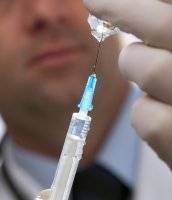
Scientists have discovered a protein secreted by tuberculosis (TB) bacteria that could be a promising new vaccine candidate, they report today in Proceedings of the National Academy of Sciences . The protein could also be used to improve diagnosis of TB. TB is caused by the bacterium Mycobacterium tuberculosis (MTB), which infects the lungs and spreads through the air as a result of coughing.
Health - 18.03.2011
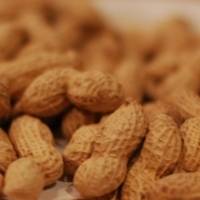
Allergy experts at the University of Cambridge have convincing evidence that a new treatment for peanut allergies is effective, following a three-year trial. The trial, from the group of Dr Pamela Ewan of the Department of Medicine and conducted at Addenbrooke's Hospital, involved a careful regime of feeding chocolate containing peanut flour in gradually increasing doses to patients with severe peanut allergies.
Physics - 18.03.2011
Stripes 'play key role' in superconductivity
Science 18 Mar 11 The mysterious hourglass-shaped magnetic spectrum found in high temperature superconductors could be caused by fluctuating magnetic stripes Fluctuating magnetic stripes could be the cause of the mysterious hourglass-shaped magnetic spectrum found in high temperature superconductors, according to new research.
Health - Chemistry - 17.03.2011
Scientists create test to track global spread of antibiotic resistance
Scientists at the University of Birmingham have developed a molecular test that has tracked the global spread of a carrier of antibiotic resistance, according to a paper published online today by a leading medical journal. Researchers led by Professor Laura Piddock in the School of Immunity and Infection devised a specific test that can identify the carrier, known as a plasmid, and track its progress around the world in both humans and animals in various strains of E. coli.
Life Sciences - Environment - 17.03.2011
Not So Eagle Eyed: New Study Reveals Why Birds Collide with Manmade Objects
From office block windows to power lines and wind turbines, many species of bird are prone to colliding with large manmade objects, many of which appear difficult not to notice to human eyes. A new study by a University of Birmingham Emeritus Professor outlines a new approach to understanding how birds see the world and why they find pylons and turbines so hard to avoid.
Health - Life Sciences - 17.03.2011
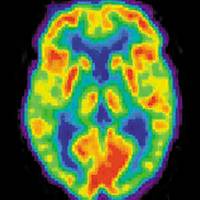
Drug abuse is probably linked to an in-built tendency to act without thinking, as shown by studies of siblings of chronic stimulant users, a leading neuroscientist will claim this week. Drawing on his research, Professor Trevor Robbins will argue that the risk-taking behaviour seen in drug abusers is not, as often thought, the result of drug-induced impaired brain function but instead is a factor that predisposes to drug taking in the first place.
Law - 16.03.2011

The complex question of how children should give evidence to court - particularly when it could be critical to convicting someone of child abuse - will be the subject of a University of Cambridge conference next month. The one-day conference, hosted by the University's Law Faculty, will bring together experts from various legal systems around the world, including some where mechanisms are already in place to prevent young children from having to go through the distressing experience of giving their evidence to full court during a trial.


