


news 2011
Categories
Years
2009 | 2010 | 2011 | 2012 | 2013 | 2014 | 2015 | 2016 | 2017 | 2018 | 2019 | 2020 | 2021 | 2022 | 2023 | 2024 | 2025 | 2026 |
2009 | 2010 | 2011 | 2012 | 2013 | 2014 | 2015 | 2016 | 2017 | 2018 | 2019 | 2020 | 2021 | 2022 | 2023 | 2024 | 2025 | 2026 |
Results 381 - 400 of 597.
Health - Life Sciences - 03.05.2011
Scientists discover ’how to stop your immune system from killing you’
Scientists at the University of Birmingham have discovered a 'molecular hoover' with the potential to prevent autoimmune conditions. Research findings published today in the journal Science by Dr David Sansom and his team in the MRC Centre for Immune Regulation at Birmingham show how a protein, called CTLA-4, keeps the immune system damped down during day-to-day activities and prevents inappropriate aggressive behaviour from T cells, the 'command centre of our immune response'.
Health - History & Archeology - 29.04.2011
New antibiotic should be used to treat typhoid
A new and affordable antibiotic called gatifloxacin should be used to treat typhoid. That's the recommendation of Oxford University researchers who have carried out the largest clinical trial yet to compare treatments for the disease. The results of the trial in Kathmandu, Nepal, which was funded by the Wellcome Trust and the Li Ka Shing Foundation, are published in the medical journal Lancet Infectious Diseases.
Environment - 28.04.2011
Spring babies face anorexia risk
Anorexia nervosa is more common among people born in the spring, a new study led by Oxford University scientists has found. The researchers writing in the British Journal of Psychiatry say their study - which is the largest to date - provides 'clear evidence' of a season-of-birth effect in anorexia.
Health - Life Sciences - 27.04.2011
New weapon in fight against cancer
PA 127/11 A virus-packed blood cell that attacks cancers from within has added a new weapon to its armoury — and it's all down to timing. Mathematicians at The University of Nottingham have worked with scientists at the University of Sheffield and Keele University to apply mathematical modelling to a revolutionary cancer treatment to optimise outcomes.
Physics - 27.04.2011
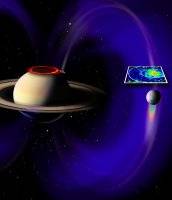
By Simon Levey Scientists studying Saturn have detected a glowing patch of ultraviolet light that marks the presence of an electrical circuit connecting the planet with its moon Enceladus, they report today . Long theorized, but not previously seen, the newly discovered bright patch indicates that electrically charged particles travel between Saturn and Enceladus, interacting with the planet's magnetic field lines.
Life Sciences - Health - 27.04.2011
Scientists prove new technology to control malaria-carrying mosquitoes
Scientists at Imperial College London and the University of Washington, Seattle, have taken an important step towards developing control measures for mosquitoes that transmit malaria Scientists at Imperial College London and the University of Washington , Seattle, have taken an important step towards developing control measures for mosquitoes that transmit malaria.
Health - 27.04.2011
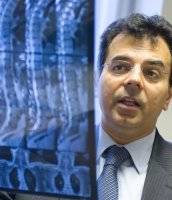
Current UK procedures to screen new immigrants for tuberculosis (TB) fail to detect more than 70 per cent of cases of latent infection, according to a new study published in The Lancet Infectious Diseases. TB is caused by a bacterial infection which is normally asymptomatic, but around one in 10 infections leads to active disease, which attacks the lungs and kills around half of people affected.
Health - 27.04.2011
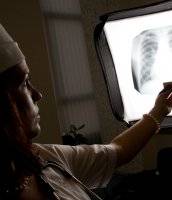
Scientists have identified a key enzyme responsible for destroying lung tissue in tuberculosis (TB), they report today in the Journal of Clinical Investigation . Drugs that inhibit this enzyme are already available, meaning that the finding could lead quickly to new treatments. TB is caused by the bacterium Mycobacterium tuberculosis .
Health - 21.04.2011
Research brings new hope of renal recovery for cancer patients
A new study conducted by researchers at the University of Birmingham has identified a 21 day treatment threshold to facilitate renal recovery and significantly improve survival rates of myeloma or Kahler's disease; a cancer of the bone marrow. Led by Dr Colin Hutchison from the School of Immunity and Infection at the University of Birmingham, the research published today (21 April) in the Journal of the American Society of Nephrology shows that chances of survival are strongly linked to recovery of kidney damage, a common side-effect of the disease.
Environment - Life Sciences - 21.04.2011
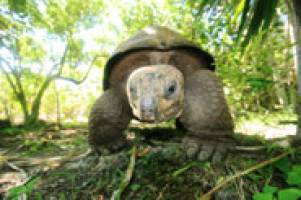
Exotic species can be used to restore important functions in ecosystems that were lost following the extinction of key species, according to a new study of giant tortoises on a small island in the Indian Ocean. The study was carried out by an international team of researchers led by the University of Bristol.
Health - Life Sciences - 21.04.2011
Parasite sheds light on sleeping sickness
Fresh insight into the survival strategy of the sleeping sickness parasite could help inform treatments for the disease. University scientists have found that the parasite, which can transform itself into either of two physical forms, has developed a careful balance between these. One of these types ensures infection in the bloodstream of a victim, and the other type is taken up by the tsetse fly and spread to another person or animal.
Physics - Earth Sciences - 20.04.2011
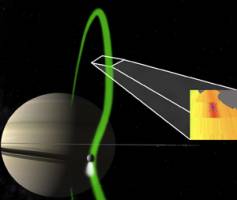
Data from NASA's Cassini spacecraft have revealed that Enceladus, one of Saturn's diminutive moons, is linked to Saturn by powerful electrical currents - beams of electrons that flow back and forth between the planet and moon. The finding is part of a paper published in Nature today. CAPS, one of the instruments on board Cassini which made the electron beam discovery, includes a electron sensor called CAPS-ELS - led by UCL (University College London).
Health - Life Sciences - 20.04.2011
Heart drugs could cut pregnancy risks
Pregnant women could benefit from a pioneering trial that will test whether heart disease drugs can be used to treat pre-eclampsia. Researchers are investigating if a class of drugs - known as statins - can prevent the potentially fatal condition. Pre-eclamspia affects up to eight per cent of pregnant women in the UK.
Health - Psychology - 19.04.2011
Mood swings of bipolar patients can be predicted, study shows
The future mood swings of people with bipolar disorder can be predicted by their current thoughts and behaviour, a study published today (Tuesday) has found. Psychologists from the Universities of Manchester and Lancaster say their findings are important because they mean talking therapies, like cognitive behavioural therapy (CBT), could prove effective treatments for the condition.
Mathematics - Computer Science - 19.04.2011
Swapping 'dance partners' in the brain is key to learning
A new way of examining networks is revealing how different areas of the brain team up to help people learn. Researchers collected brain imaging data from people performing a motor task, and then analysed this data using new computational techniques. They found evidence that the 'flexibility' of a person's brain - how much different areas of the brain link up in different combinations; essentially 'swapping partners' - can be used to predict how fast someone will learn.
Health - Life Sciences - 18.04.2011
Protein KO stops tumour growth
Science | Health Jonathan Wood | 18 Apr 11 Research published last week in the journal PNAS may have identified a promising new target for developing drugs against one of the most common types of lung cancer. Oxford University researchers have helped a team at biotech company Genentech in South San Francisco look at the role of a protein called PAK1 in the growth of tumours.
Physics - History & Archeology - 18.04.2011

James Clerk Maxwell (1831-79) was one of the world's greatest physicists, and 2011 marks the 150th anniversary of two of his most important achievements, both accomplished while he was Professor of Natural Philosophy at King's from 1860 to 1865. 1861 saw not only the publication of his first paper on electromagnetic theory, but also the first photograph produced according to Maxwell's three-colour method, taken by photographic pioneer Thomas Sutton of King's.
Environment - Life Sciences - 15.04.2011
Big personality birds find the best homes
Science Cath Harris | 15 Apr 11 Birds willing to move around and take risks are better at finding the best places to live, researchers have found. Those with 'fast-exploring' personalities - birds tending to be hyperactive - are far more likely to end up in areas providing enough food, shelter and reproductive opportunities, a new study shows.
Health - 15.04.2011
New test identifies cancer patients to benefit from 10p-a-day diabetes drug
Scientists have developed a new test which can identify which breast cancer patients could benefit from a 10p-a-day diabetes drug. They used a new method based on the 'food' cancer cells eat to predict which patients would have poor prognosis. They suggest these patients could benefit from metformin, a cheap and safe diabetes drug that could be a revolutionary cancer treatment.
Physics - Electroengineering - 15.04.2011

University of Manchester scientists have found a way to make wonder material graphene magnetic, opening up a new range of opportunities for the world's thinnest material in the area of spintronics. A team led by Professor Andre Geim, a recipient of the 2010 Nobel Prize for graphene, can now show that electric current - a flow of electrons - can magnetise graphene.


