


news 2011
Categories
Years
2009 | 2010 | 2011 | 2012 | 2013 | 2014 | 2015 | 2016 | 2017 | 2018 | 2019 | 2020 | 2021 | 2022 | 2023 | 2024 | 2025 | 2026 |
2009 | 2010 | 2011 | 2012 | 2013 | 2014 | 2015 | 2016 | 2017 | 2018 | 2019 | 2020 | 2021 | 2022 | 2023 | 2024 | 2025 | 2026 |
Results 361 - 380 of 597.
Health - Life Sciences - 17.05.2011
Protection against one of Africa’s oldest animal plagues
An international research team, including University of Manchester scientists, using a new combination of approaches has found two genes that may prove of vital importance to the lives and livelihoods of millions of farmers in a tsetse fly-plagued swathe of Africa. The team's results, published in the Proceedings of the National Academy of Sciences (PNAS) , is aimed at finding the biological keys to protection from a single-celled trypanosome parasite that causes both African sleeping sickness in people and a wasting disease in cattle.
Health - Life Sciences - 16.05.2011
Scientists find genetic link to depression
Research led by King's College London has discovered the first solid evidence that genetic variations on chromosome 3 may cause depression. In a rare occurrence in genetic research the findings have been replicated concurrently by another group from Washington University, and both papers are published today in the American Journal of Psychiatry.
Life Sciences - Agronomy & Food Science - 16.05.2011

A gene linked to type 2 diabetes and cholesterol levels has been identified as a 'master regulator' by a team at King's College London and the University of Oxford. The researchers found that the gene controls the behaviour of other genes found within fat tissues in the body. As fat plays a key role in susceptibility to metabolic diseases such as obesity, heart disease and diabetes, the regulatory gene could be a possible target for future treatments to fight these diseases.
Agronomy & Food Science - Health - 16.05.2011

A team of researchers, led by King's College London and the University of Oxford, have found that a gene linked to type 2 diabetes and cholesterol levels is in fact a 'master regulator' gene, which controls the behaviour of other genes found within fat in the body. As fat plays a key role in susceptibility to metabolic diseases such as obesity, heart disease and diabetes, this study highlights the regulatory gene as a possible target for future treatments to fight these diseases.
Health - 13.05.2011
New form of inflammation
University scientists have discovered a previously unknown way in which white blood cells cope with injury and infection. Fighting infection It was previously assumed that when tissue becomes injured or infected, white blood cells enter the tissue via the bloodstream to repair and protect it from further damage.
Life Sciences - Health - 13.05.2011

Scientists at King's College London have for the first time uncovered a gene responsible for Adams-Oliver Syndrome (AOS), a condition which can cause birth defects of the heart, limbs or blood vessels. The study, published in the American Journal of Human Genetics today, gives valuable insight not only into this particular condition, but also the possible genetic causes of these common birth defects found in the wider population.
Psychology - Health - 13.05.2011
’Consciousness connections’ revealed in coma brains
A new test of consciousness which could be helpful in the diagnosis of coma patients has been identified in new research led by scientists from the University of Liège and UCL. Recent studies have shown that patients with severe brain damage who show little outward signs of perception or understanding may have a certain degree of pain experience and awareness.
History & Archeology - 13.05.2011

A three-year international research project, directed by two academics at the University of Oxford, finds that humans have natural tendencies to believe in gods and an afterlife. The £1.9 million project involved 57 researchers who conducted over 40 separate studies in 20 countries representing a diverse range of cultures.
Physics - 11.05.2011

by Colin Smith A researcher from Imperial College London, his family, and a BBC film crew travelled to Italy last month to commemorate a project that prevented the Leaning Tower of Pisa from collapsing. Emeritus Professor John Burland and his family visited Pisa with a film crew from BBC One's The One Show to see the city's most famous landmark.
Health - Life Sciences - 10.05.2011

The UK's biggest-ever study to discover the genes that cause the incurable autoimmune disease, lupus, is set to considerably advance understanding of the disease and could result in a genetic test predicting who is most likely to develop the condition. Researchers at King's are taking advantage of the latest advances in gene technology to analyse DNA samples from 5,000 people with lupus from all over the UK, Europe and Canada, in order to identify the full set of genes that predispose them to getting the condition.
Health - 10.05.2011
New evidence for when Neanderthals died out
Direct dating of a fossil of a Neanderthal infant suggests that Neanderthals probably died out earlier than previously thought. Researchers have dated a Neanderthal fossil discovered in a significant cave site in Russia in the northern Caucasus, and found it to be 10,000 years older than previous research had suggested.
Health - 10.05.2011
Sitting time is a diabetes risk factor for UK South Asians
A new study by scientists has revealed that time spent sitting down is a diabetes risk factor in South Asians independent of how much they exercise. Approximately one-quarter of UK South Asians over the age of 55 have type 2 diabetes. The study, conducted by researchers from the Universities of Glasgow and Edinburgh, screened 1,228 South Asians of Indian and Pakistani descent for blood glucose levels, waist size, time spent sitting down and physical activity levels.
Health - Economics - 10.05.2011
Prolonged breastfeeding may be linked to fewer behaviour problems
Breastfeeding for four months or more is associated with fewer behavioural problems in children at age 5, an Oxford University study suggests. The findings, published in the journal Archives of Disease in Childhood , add to the evidence base on the benefits of breastfeeding. 'Our results provide even more evidence for the benefits of breastfeeding,' says Maria Quigley of the National Perinatal Epidemiology Unit at Oxford University, who led the work with Katriina Heikkilä.
Health - 06.05.2011
Virus insight may help avoid farm culls
New insight into foot-and-mouth disease could help develop alternatives to mass culling, following University research. Scientists have pinpointed a time window during which cattle infected with the virus can be identified before they become infectious to other cattle, or show signs of illness.
Health - 06.05.2011

A study co-led by researchers at King's College London shows that the percentage of men who had a radical prostatectomy (removal of the prostate and surrounding cancer cells) and survived for 15 years is higher than men who were only given treatment at signs of further progression of prostate cancer, an approach known as 'watchful waiting.
Health - 05.05.2011
Painful periods increase sensitivity to pain throughout the month
Women with painful periods show increased sensitivity to pain throughout their cycles, even when there is no background period pain. The brain imaging study carried out at Oxford University shows that period pain is associated with differences in the way the brain processes pain, and that these differences persist throughout a woman's menstrual cycle.
Life Sciences - Health - 05.05.2011
Worm discovery could help one billion people worldwide
Scientists have discovered why some people may be protected from harmful parasitic worms naturally while others cannot in what could lead to new therapies for up to one billion people worldwide. Parasitic worms are a major cause of mortality and morbidity affecting up to a billion people, particularly in the Third World, as well as domestic pets and livestock across the globe.
Health - Life Sciences - 05.05.2011
Daily pill for Duchenne muscular dystrophy
A new drug for the muscle-wasting disease Duchenne muscular dystrophy has shown significant benefits in mice, opening the door for clinical trials. The promising results indicate that a simple, daily pill to treat all patients with Duchenne muscular dystrophy should be possible, whether or not this specific drug formulation makes it all the way through clinical trials without further development.
Earth Sciences - Environment - 03.05.2011
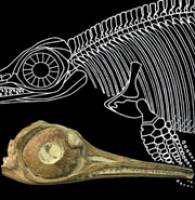
The evolution of ichthyosaurs , important marine predators of the age of dinosaurs, was hit hard by a mass extinction event 200 million years ago, according to a new study from the University of Bristol. Ichthyosaurs are iconic fossils, first discovered 200 years ago by Mary Anning on the Jurassic coast of Dorset at Lyme Regis.
Health - 03.05.2011
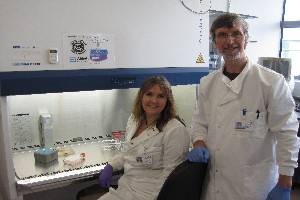
A widely used HIV drug could be used to prevent cervical cancer caused by infection with the human papilloma virus (HPV), say scientists. University of Manchester researchers, working with colleagues in Canada, have discovered how the antiviral drug lopinavir attacks HPV by switching on a natural viral defence system in infected cells.


