


news 2011
Categories
Years
2009 | 2010 | 2011 | 2012 | 2013 | 2014 | 2015 | 2016 | 2017 | 2018 | 2019 | 2020 | 2021 | 2022 | 2023 | 2024 | 2025 | 2026 |
2009 | 2010 | 2011 | 2012 | 2013 | 2014 | 2015 | 2016 | 2017 | 2018 | 2019 | 2020 | 2021 | 2022 | 2023 | 2024 | 2025 | 2026 |
Results 321 - 340 of 597.
History & Archeology - 01.06.2011

Painting army vehicles with high contrast geometric patterns - 'dazzle camouflage' - affects the perception of their speed and thus could make them less susceptible to rocket propelled grenade attacks, according to new research from the University of Bristol. Warships in both the First and Second World Wars were painted with dazzle camouflage: startling geometric patterns aimed at confusing the enemy rather than concealing the vessel.
Health - Environment - 01.06.2011
Scientists make breakthrough in study of Autoimmune Disease
Diseases of the immune system such as multiple sclerosis, rheumatoid arthritis and psoriasis could be treated by a gas produced naturally by the body, scientists at the University have found. Autoimmune disease occurs when a person's immune system attacks his own body. It is a major global health problem and it is vital that better treatment is found.
Health - 31.05.2011
Retina holds the key to better vision in deaf people
Retina holds the key to better vision in deaf people People who are deaf benefit from better vision due to the fact their retinas develop differently, experts at the University of Sheffield have shown. The research, which was funded by RNID – Action on Hearing Loss and published today (1 June 2010) in the journal PlosONE suggests that the retina of adults who are either born deaf or have an onset of deafness within the very first years of life actually develops differently to hearing adults in order for it to be able to capture more peripheral visual information.
Environment - Life Sciences - 31.05.2011
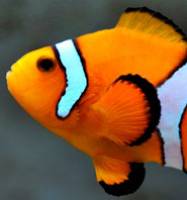
Baby clownfish use hearing to detect and avoid predator-rich coral reefs during the daytime, but new research from the University of Bristol demonstrates that ocean acidification could threaten this crucial behaviour within the next few decades. Since the Industrial Revolution, over half of all the CO2 produced by burning fossil fuels has been absorbed by the ocean, making pH drop faster than any time in the last 650,000 years and resulting in ocean acidification.
Health - 31.05.2011
Brain study shows why alcoholics fall off the wagon again and again
A new University of Sussex study adds to our understanding of why recovering alcoholic patients find it so hard to give up boozing for good. Researchers looked at the behaviour and brain activity of alcoholic patients who had recently undergone detoxification, and found that the very act of detoxification from alcohol results in damage to the areas of the brain that veto spontaneous desire - such as the desire to drink.
Health - Life Sciences - 30.05.2011
Study offers hope for cancer therapy
Ovarian cancer patients could be helped by a test that identifies the specific type of tumour they have. University researchers hope this improved diagnosis will help doctors to personalise treatment programmes so that patients receive the most effective drugs. The Edinburgh team worked with scientists from Ireland to identify six subgroups of the disease, each of which had a different genetic signature.
Health - 27.05.2011
Pancreas betrayed by 'double agent'
Science | Health Jonathan Wood | 27 May 11 Stellate cells, a type of cell in the pancreas which normally helps the body respond to damage or disease of the pancreas, can act as a double agent when it comes to cancer. These mysterious cells become 'partners in crime' with pancreatic cancer cells, Oxford University researchers have shown, stimulating growth of the cancer cells and protecting them against radiotherapy.
Health - 27.05.2011
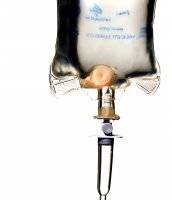
Adapted from a media release issued by the Medical Research Council. Thursday 26 May 2011 Giving fluids rapidly through a drip into a vein (fluid resuscitation) as an emergency treatment for African children suffering with shock from severe infections does not save lives, according to a major clinical trial funded by the Medical Research Council (MRC).
Life Sciences - 26.05.2011
Spatial awareness not reliant on just sight
Our brain's understanding of spatial awareness is not triggered by sight alone, scientists have found. University researchers have found that our brain can use other senses - such as touch - to help us understand spatial awareness. The findings could help in designing technology for the visually impaired.
Life Sciences - 26.05.2011
Orangutans bite back
Science Pete Wilton | 26 May 11 Life as a seed isn't easy: you need to be tough enough to deter all but the most muscular-jawed predators but not so hard that you can't germinate. A new study published this week in Journal of the Royal Society Interface shows just how fine this evolutionary balance between protection and reproduction is.
Health - Life Sciences - 26.05.2011
Reindeer use UV light to survive in the wild
Links : Research paper in Journal of Experimental Biology Professor Glen Jeffery UCL Institute of Ophthalmology UCL researchers have discovered that reindeer can not only see ultraviolet (UV) light, but that it is also crucial to their survival in the harsh arctic environment.
Physics - 26.05.2011
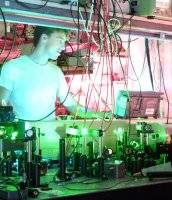
Scientists have made the most accurate measurement yet of the shape of the humble electron, finding that it is almost a perfect sphere. The experiment, which spanned more than a decade, suggests that the electron differs from being perfectly round by less than 0.000000000000000000000000001 cm.
Health - 26.05.2011

The world's first international polypill trial has shown that a four-in-one combination pill can halve the predicted risk of heart disease and stroke. The results are published online today in the open access journal PLoS ONE . The once-a-day polypill contains aspirin and agents to lower blood pressure and cholesterol.
Environment - 26.05.2011
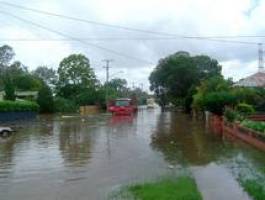
Dramatic climate swings behind both last year's Pakistan flooding and this year's Queensland floods in Australia are likely to continue as the world gets warmer, scientists predict. Researchers at the Universities of Oxford and Leeds have discovered that the El Niño Southern Oscillation (ENSO), the sloshing of the warmest waters on the planet from the West Pacific towards the East Pacific every 2-7 years, continued during the Earth's last great warm period, the Pliocene.
Health - 25.05.2011
Study links wealth to diabetes death risk
Having diabetes has the same effect on someone's risk of death as living in a very deprived community, research shows. University researchers have found that people with Type 2 diabetes from an affluent background had the same risk of dying as someone without the condition from a deprived area. But the highest risks of suffering an early death remained in patients from the worst off backgrounds who had diabetes.
Psychology - Health - 25.05.2011
Research study reveals profile for female drink-drivers
PA 169/11 Female drink-drivers are more likely to be older, better-educated and divorced, widowed or separated, research has shown. The study by academics at The University of Nottingham found that emotional factors and mental health problems were common triggers in alcohol-related offences committed by women.
Life Sciences - 25.05.2011

by Simon Levey 24 May 2011 New research suggests that scientists may need to revise the criteria they use to assess whether a plant species is at risk of going extinct, if they are to concentrate their conservation efforts on the plants most in need. According to widely-used criteria, known at the Red List, a species is considered to be 'at risk of extinction' if it inhabits a limited geographical area and has a small population size.
Environment - Earth Sciences - 25.05.2011

Experts quantify melting glaciers´ effect on ocean currents A team of scientists from the University of Sheffield and Bangor University have used a computer climate model to study how freshwater entering the oceans at the end of the penultimate Ice Age 140,000 years ago affected the parts of the ocean currents that control climate.
Electroengineering - Health - 24.05.2011
Expert discovers simple method of dealing with harmful radioactive iodine
Expert discovers simple method of dealing with harmful radioactive iodine A novel way to immobilise radioactive forms of iodine using a microwave, has been discovered by an expert at the University of Sheffield. Iodine radioisotopes are produced by fission of uranium fuel in a nuclear reactor. Radioactive iodine is of concern because it is highly mobile in the environment and selective uptake by the thyroid gland can pose a significant cancer risk following long term exposure.
Linguistics & Literature - 24.05.2011
New find in Sir Walter Scott’s library
A major literary discovery has been made in Sir Walter Scott's library at Abbotsford House. The Grotesquiad was recently uncovered by the Faculty of Advocates during efforts to catalogue Sir Walter's collection. Gerard Carruthers and Rhona Brown of the University's College of Arts have identified the author as James Beattie (1735-1803), who is known to have written a poem of this title, long thought to be lost.


