


news 2011
Categories
Years
2009 | 2010 | 2011 | 2012 | 2013 | 2014 | 2015 | 2016 | 2017 | 2018 | 2019 | 2020 | 2021 | 2022 | 2023 | 2024 | 2025 | 2026 |
2009 | 2010 | 2011 | 2012 | 2013 | 2014 | 2015 | 2016 | 2017 | 2018 | 2019 | 2020 | 2021 | 2022 | 2023 | 2024 | 2025 | 2026 |
Results 301 - 320 of 597.
Physics - Chemistry - 09.06.2011
Brightest exploding stars spotted
Science | Space Cath Harris | 09 Jun 11 Scientists have identified a new type of supernova or exploding star which is ten times brighter than any other type of stellar explosion. Astrophysicist Dr Mark Sullivan of Oxford University's Department of Physics is among researchers reporting the discovery in this week's Nature.
Health - Life Sciences - 09.06.2011
Protein presence could help diagnose cancer
Cancers of the gut, stomach and pancreas could be detected much sooner with a simple urine test, research suggests. University researchers have identified key proteins in the urine of patients with advanced cancers. The findings could help the detection of these cancers in people who have not yet started to show symptoms of the disease.
Health - Agronomy & Food Science - 09.06.2011
Will rising BMIs reverse heart attack decline?
UCL Epidemiology & Public Health UCL Primary Care & Population Health European Heart Journal Medical Research Council British Heart Foundation Better control of cholesterol levels and blood pressure and a decline in smoking have contributed to a 74% drop in the risk of heart attack among nearly 10,000 civil servants working in London over a 20-year period, according to new research from the UCL-led Whitehall II study.
Life Sciences - Environment - 09.06.2011
Parrots and crows show their inventive side
A team of researchers from the Universities of Oxford and Vienna have tested the technical skills and innovation abilities of two of the most intelligent birds known, kea parrots and New Caledonian crows. New Caledonian crows regularly use and manufacture complex tools in the wild to extract food, feats that they repeat in the laboratory.
Health - 09.06.2011
Two million had swine flu, study shows
The swine flu outbreak of winter 2009-2010 was much more widespread than was realised, University research shows. Blood samples taken from Scottish adults in March last year at the end of the H1N1 flu season showed that almost half were carrying antibodies to the virus. Most of the 44 per cent who tested positive had contracted swine flu, although some had acquired immunity from a previous bout of flu, or had been vaccinated.
Health - Life Sciences - 09.06.2011
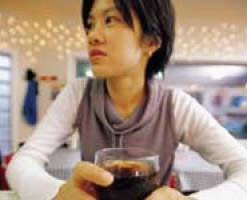
The research by academics at the universities of Bristol and Bangor has shown for the first time that overweight and obese people have a dulled sensitivity to the sweetness of soft drinks but an enhanced subconscious liking of sweet food. The findings also found that even if people are not overweight, drinking two sugary drinks a day for just four weeks is sufficient to both dull sensitivity to the taste sensation, and increase preference for sweeter tastes, particularly in people who did not already have a 'sweet tooth'.
Life Sciences - Chemistry - 08.06.2011

by Simon Levey 8 June 2011 Scientists across the country are today being invited to join two new multidisciplinary networks to carry out research and share knowledge in chemical biology, led by the Institute of Chemical Biology at Imperial College London. Chemical biology is defined as the use of chemistry and chemical tools to understand and solve biological problems.
History & Archeology - Health - 08.06.2011

A skeleton, possibly dating from Roman times, has been unearthed by archaeologists from the University of Bristol during a dig in the garden of vaccination pioneer Dr Edward Jenner in Berkeley, Gloucestershire. The archaeologists, led by Professor Mark Horton and Dr Stuart Prior , have been excavating part of the garden of The Chantry, the former country home of vaccination pioneer, Dr Edward Jenner (1749-1823), during a series of annual digs since 2007.
Environment - 08.06.2011
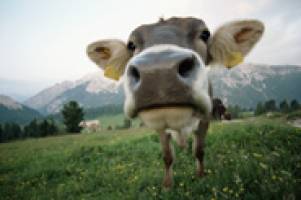
Scientists could have a revolutionary new way of measuring how much of the potent greenhouse gas methane is produced by cows and other ruminants, thanks to a surprising discovery in their excrement. Researchers from the University of Bristol and the Teagasc Animal and Grassland Research Centre in Ireland, have found a link between methane production and levels of a compound called archaeol in the faeces of several fore-gut fermenting animals including cows, sheep and deer.
Life Sciences - 08.06.2011
Learn to pay attention!
PA 180/11 A new scientific theory on what we learn to pay attention to and what we learn to ignore could turn 30 years of research on its head. Research by Dr Mark Haselgrove from The University of Nottingham (UK), and Dr Guillem Esber from the University of Maryland (USA), challenges two long held and contradictory theories on which cues our brains use to predict events of significance.
Physics - Chemistry - 08.06.2011
Liverpool scientists trap antimatter at ALPHA experiment
Physicists at the Universities of Liverpool and Swansea have succeeded in trapping atoms of antimatter for more than 16 minutes, long enough to begin to study their properties in detail. Antimatter was trapped using an experiment called ALPHA, part of a broad programme at CERN's (link to: http://public.web.cern.ch/public/) antiproton decelerator investigating the mysteries of one of nature's most elusive substances.
Life Sciences - Chemistry - 08.06.2011
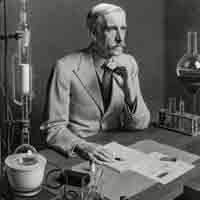
A plaque commemorating the life and work of the eminent biochemist Sir Frederick Gowland Hopkins (1861 to 1947) will be unveiled at his former Cambridge home on Friday. The plaque will be displayed on the exterior of 71 Grange Road, Cambridge, where Hopkins lived with his family for many years. It has been designed and made by the present owner of the house, Mark Bury FRSA, a distinguished engraver, designer and lettercutter.
Health - Life Sciences - 06.06.2011
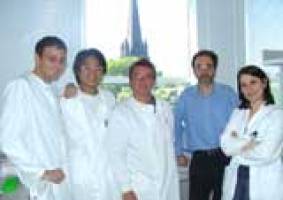
New research provides breakthrough in understanding common cancer Researchers from the University of Sheffield have discovered valuable insight into how people develop B-cell lymphoma, one of the most common cancers in the UK. The team, from the University's Institute for Cancer Studies and funded by Leukaemia and Lymphoma Research, Biotechnology and Biological Sciences Research Council (BBSRC) and Yorkshire Cancer Research, found that a mechanism different to that previously thought to be the cause of lymphoma may be responsible for the development of the disease.
Health - Life Sciences - 06.06.2011
Experts prove link between phosphate intake and heart disease
Lowering phosphate intake in humans can reduce heart disease, according to research by experts at the University of Sheffield. This is the first time the connection between a high phosphate diet and atherosclerosis - the cause of heart disease - has been proven. The findings have been published in Arteriosclerosis, Thrombosis and Vascular Biology (2 June 2011).
Environment - Earth Sciences - 03.06.2011
Frozen fjords found under Antarctic ice
Scientists have uncovered a landscape of deep fjords in Antarctica, carved by millions of years of ice movement. University researchers say the discovery, in a part of East Antarctica roughly the size of France, gives valuable insight into how the ice sheet formed. The global team of researchers say the find will also improve their understanding of how ice in the region might melt if ocean temperatures rise.
Health - Life Sciences - 02.06.2011
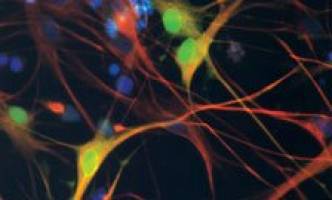
Cancer Research UK-funded researchers at King's College London have identified a way of eliminating leukaemic stem cells, which could in the future lead to new treatments that may enable complete remission for leukaemia patients. Leukaemic stem cells sustain the disease and are likely to be responsible for relapse, so elimination of these cells is believed to be key for achieving complete remission.
Health - Life Sciences - 02.06.2011
Study identifies protection against African sleeping sickness
Researchers at the University of Liverpool have identified two genes that may prove key to protecting against African sleeping sickness in people and a wasting disease in cattle. Cases of sleeping sickness infections in people have fallen in the last 13 years, from an estimated 300,000 incidences a year in 1998, to 30,000 in 2009.
Physics - Health - 02.06.2011
Microscopic worms could help open up travel into deep space
PA 175/11 A space flight by millions of microscopic worms could help us overcome the numerous threats posed to human health by space travel. The Caenorhabditis elegans (C. elegans) have also given experts an insight into how to block muscle degradation in the sick and elderly. The worms — from The University of Nottingham — were flown into space onboard the Space Shuttle Atlantis.
Life Sciences - Health - 02.06.2011
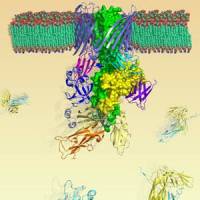
Scientists have uncovered the structure of the protein complex that assembles the tiny hair-like strands that cover the outside of bacteria. Called pili, these 'hairs' allow bacteria to group together and stick to human cells to cause infection - and are therefore a key target for a new generation of antibiotics.
Earth Sciences - Environment - 02.06.2011

Scientists have unlocked more secrets about our evolutionary past by using new techniques to extract information from the fossilised teeth of our ancient human ancestors. By testing the tooth enamel of 19 hominids found in cave sites in South Africa, a new study involving researchers at the University of Oxford provides surprising evidence of how individuals dating back more than 2 million years once lived.


