Real cause of Brecht’s demise revealed
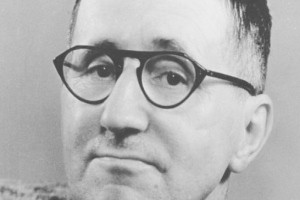
A dogged piece of detective work by a University professor has uncovered the truth about how one of the world's greatest playwrights died 54 years ago. Rumours have long surrounded the official version of Bertolt Brecht's death from a heart attack in 1956 in Communist East Berlin. But Professor Stephen Parker, from The University of Manchester, has now proved that the iconic German poet, playwright and theatre director suffered as a child in the early 1900s from undiagnosed rheumatic fever, then a poorly understood condition. Brecht was simply labelled a nervous child with an enlarged heart, but his condition caused a lifetime of suffering and eventual death. When Professor Parker, who is writing a book on the life of the German, spotted an obscure note about Brecht's childhood diagnosis of an enlarged heart buried in the vast 30-volume edition of Brecht's writing, he set to work in the archives. His findings, pieced together from archival documents - including a 1951 x-ray report as well as published sources - open up a wholly new way of looking at Brecht's life and work, not least his cultivation of a macho image as a serial womanizer who in photographs famously pitted himself against boxers. The research, funded by the Leverhulme Trust, finds that rheumatic fever attacked the boy's heart and his motorneural system, triggering chronic heart failure and Sydenham's chorea, manifest in erratic movements of the limbs and a facial grimace.
TO READ THIS ARTICLE, CREATE YOUR ACCOUNT
And extend your reading, free of charge and with no commitment.