University of Glasgow space tech ready for liftoff
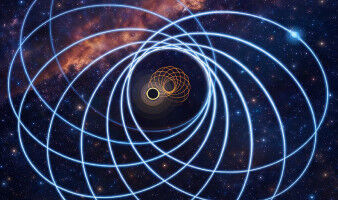
A new piece of technology which will help in the search for gravitational waves is setting off for South America on its final earthbound journey before heading to space. The LISA Pathfinder spacecraft is the first part of an ambitious European Space Agency (ESA) research project which will study the ripples in spacetime caused by massive astronomical events. The existence of these ripples, known as gravitational waves, was predicted by Einstein's Theory of General Relativity but they have not yet been detected on Earth by any sensors built to date. The ESA partners believe that the best way to detect the extremely faint ripples is to place multiple highly sensitive detectors in the vacuum of space, where they will be free of the Earth's vibrational interference. LISA Pathfinder will test new detector technologies which will be used in eLISA, the planned full-scale gravitational wave detector. The LISA Pathfinder spacecraft has passed all its final tests and will start its final earthbound journey when it is shipped to the spaceport in Kourou, French Guiana, on Thursday (3 September). In November, the spacecraft will set off from Earth atop a Vega rocket, an expendable launch system developed by the Italian Space Agency and the European Space Agency.