


Environment - Mar 27
The University of Manchester signs Memorandum of Understanding with United Utilities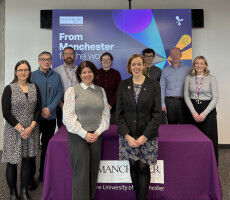
The University of Manchester signs Memorandum of Understanding with United Utilities
Agronomy & Food Science - Mar 27
Gather & Gather unveils fresh new Spring/Summer 2026 menu designed for the warmer seasons
Gather & Gather unveils fresh new Spring/Summer 2026 menu designed for the warmer seasons
Environment - Mar 26
University of Manchester hits major sustainability milestone, with Main Campus becoming 100% 'Zero Landfill'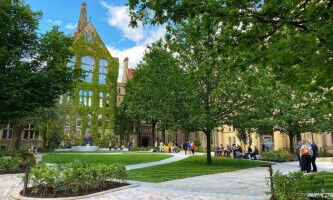
University of Manchester hits major sustainability milestone, with Main Campus becoming 100% 'Zero Landfill'
Campus - MANCHESTER - Mar 26
Manchester students mentor local teenagers to build confidence in applying for university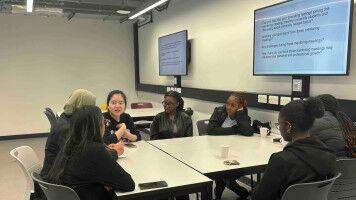
Manchester students mentor local teenagers to build confidence in applying for university

wire
University College London
Results 6201 - 6250 of 6397.
Health - 04.10.2009
UCL Union Volunteering Fair
Economics - 30.09.2009
ESRC new Strategic Plan presentation
History & Archeology - Health - 30.09.2009
Mystery of Dr Granville’s Mummy finally resolved
Press Release Links: A famous Egyptian mummy died from tuberculosis (TB) rather than a tumour of the ovary, according to new research led by UCL scientists. The research, published today in Proceedings of the Royal Society B, gives a definitive answer to a very old mystery. Augustus Bozzi Granville (1783-1872) caused a sensation when he described the first scientific autopsy on an ancient Egyptian mummy to the Royal Society of London in 1825.
Health - Economics - 30.09.2009
Funding for Endomagnetics Limited
UCL Business PLC, UCL's knowledge transfer and technology commercialisation company, today announced that it has led an initial investment round of £350,000 into a magnetic sensing technology company, Endomagnetics.
Health - 28.09.2009
Seminar: Social determinants of health: what next ?
UCL staff and students are invited to a seminar, 'Social determinants of health: what next?', on 6 October 2009.
Event - Health - 28.09.2009
UCL recognised for expanding deaf people’s access to society
Health - Life Sciences - 28.09.2009
Children of working mothers have unhealthier lifestyles
Children whose mothers go out to work have poorer dietary habits than those whose mothers are not in paid employment, according to a new UCL study. The children furthermore are more sedentary, and are more likely to be driven to school than children whose mothers do not work outside the home, according to research published today by Professor Catherine Law (UCL Institute of Child Health) in the Journal of Epidemiology and Community Health .
Computer Science - Health - 23.09.2009
Q&A: UCL computer scientist hails runaway success of iphone stethoscope
Peter Bentley readily admits he developed a piece of software that turned an iphone into a stethoscope as a bit of 'fun'.
Health - 23.09.2009
Cafe Scientifique in the Print Room Cafe
The Crucible Centre at UCL is running a 'café scientifique? from the Print Room Cafe on the first Thursday of every month at 6pm. Each month a speaker (or speakers) is invited to give a brief talk (a maximum of 20 minutes) about a scientific issue and the audience is then invited to join in informal discussion about what they have heard.
Health - 22.09.2009
Improving maternity care in Africa
Improving health facilities and access to drugs could mean 60,000 fewer maternal deaths in Africa per year from post-partum bleeding and sepsis, according to a UCL study.
Life Sciences - Pedagogy - 22.09.2009
UCL pioneers virtual educational resources for bioscience
Health - Life Sciences - 21.09.2009
Stem cell research awareness day
Links: UCL Centre for Stem Cells and Regenerative Medicine UCL iPSC working group members 2009 Stem Cell Awareness Day UCL podcasts: Stem cell research - the science, the methods and the applications UCL will this week mark Stem Cell Awareness Day (23 September) in a tradition honoured within research universities across the world.
Environment - Life Sciences - 21.09.2009
Biodiversity loss is undermining global development
Goals set to alleviate extreme poverty will not be met unless we address the accelerating rate of biodiversity loss, warn UCL scientists in a paper published in the latest issue of Science .
Health - History & Archeology - 16.09.2009
UCL podcast: Motherhood in the 21st Century
Environment - Health - 15.09.2009
Copenhagen climate change conference vital for human future
Failure to agree radical reductions in carbon dioxide emissions at the Copenhagen climate change conference in December would spell a global health catastrophe, warn Professor Sir Michael Marmot (Dir
Health - Environment - 13.09.2009
Engineering may be the key to curbing swine flu
A team of UCL experts led by Ka Man Lai (UCL Civil, Environmental and Geomatic Engineering) is investigating how revolutionising the design and building of our living spaces could dramatically reduce the spread of swine flu and other infectious diseases.
Health - Life Sciences - 13.09.2009
Scientists help to identify master gene
UCL scientists have helped to identify the master gene that causes blood stem cells to turn into disease-fighting 'Natural Killer? (NK) immune cells. The discovery could one day help scientists boost the body's production of these frontline tumour-killing cells, creating new ways to treat cancer. The researchers have 'knocked out? the gene in question, known as E4bp4, in a mouse model, creating the world's first animal model entirely lacking NK cells, but with all other blood cells and immune cells intact.
Health - Social Sciences - 13.09.2009
Adolescent health symposium
The 11th UCL Institute for Global Health (IGH) Symposium, 'Coming of age for adolescent health', was held on 9 September 2009.
Health - Social Sciences - 10.09.2009
Vast majority of adolescent deaths occur in low and middle-income countries
A study of global death rates for young people aged 10?24 years shows that the vast majority of deaths in this age group (97%) occur in low- and middle-income countries.
Health - Life Sciences - 08.09.2009
UCLH/UCL research showcase
UCLH and UCL will showcase their research work during an open event in London on September 17. The event will present some of the pioneering research work ahead of the second anniversary of the UCLH/UCL National Institute for Health Research Comprehensive Biomedical Research Centre (CBRC). The centre has been at the forefront of research into some of the major causes of illness and disease-related deaths since it was established in 2007.
Health - 03.09.2009
Team awarded £5.8m grant to improve interactive medical devices
A team of researchers led by Professor Ann Blandford from the UCL Interaction Centre (UCLIC) has been awarded a £5.8m grant from the Engineering and Physical Sciences Research Council to improve the usability and safety of interactive medical devices.
Economics - 02.09.2009
Poor money saving linked to general impulsiveness
Press Release Links: Financial imprudence is linked to other impulsive behaviour such as overeating, smoking and infidelity, according to a new study led by UCL researchers, published in the journal Personality and Individual Differences . The study, conducted through the BBC website with over 40,000 participants, measured people's financial impulsivity by asking whether they would they prefer to receive £45 in three days or £70 in three months.
Interdisciplinary / All Categories - 31.08.2009
Army of researchers needed to investigate mystery object?
An artist wants to recruit an army of researchers to investigate a mystery object as part of a unique mass participatory event in UCL's main quad.
Life Sciences - 27.08.2009
Milk drinking started in central Europe
Press Release Links: The ability to digest the milk sugar lactose first evolved in dairy farming communities in central Europe, not in more northern groups as was previously thought, finds a new stud
Economics - Mathematics - 26.08.2009
4.8 million in European Research Grants for UCL
UCL has been awarded four prestigious European Research Council (ERC) Starting Grants, worth a total of '4.8 million to the university.
Physics - History & Archeology - 24.08.2009
UCL staff to speak at British Science Festival
Health - 20.08.2009
Unravelling the mystery of Mozart’s death
A professor from UCL has attempted to unravel the 200-year-old mystery surrounding the premature death of Wolfgang Amadeus Mozart. The great composer was at the height of his creative powers in the months before his death in Vienna in 1791. Over the years a host of theories have emerged to account for his demise at the age of just 35 - including murder by a rival and suicide.
Health - 20.08.2009
Motherhood in the 21st Century
Health - 19.08.2009
Coming of age for adolescent health A UCL Global Health Symposium
Health - Life Sciences - 16.08.2009
Nano-magnets guide stem cells to damaged tissue
Microscopic magnetic particles have been used to bring stem cells to sites of cardiovascular injury in a new method designed to increase the capacity of cells to repair damaged tissue, UCL scientists announced today.
Chemistry - Environment - 11.08.2009
UCL awards for employment practice for women in science
Health - Economics - 10.08.2009
Team wins £500,000 grant to develop synthetic artery
A team of researchers from UCL has won a £500,000 grant to develop a synthetic artery that mimics a natural artery - and could revolutionise the treatment of coronary heart disease.
Health - Life Sciences - 09.08.2009
UCL to research non-invasive diagnostic tests during pregnancy
Professor Lyn Chitty (UCL Institute of Child Health) is leading a five-year research project to evaluate and, if appropriate, develop a plan to implement tests which could significantly reduce the number of women undergoing invasive tests during pregnancy such as amniocentesis. Invasive tests carry around a one per cent risk of miscarriage, so each thousand invasive tests avoided would potentially save ten healthy babies.
Pedagogy - 09.08.2009
Adventures in digital academia
Melissa Terras, Senior Lecturer in Electronic Communication in UCL Information Studies, not only runs a blog about her work - she also researches how blogs are used in academic life.
Health - Pedagogy - 06.08.2009
Promising alternative to invasive post-mortem
A study led by Sudhin Thayyil from the UCL Institute of Child Health published today in The Lancet today has shown that a less invasive approach to post-mortem is effective in the diagnostic study of small human foetuses.
- 05.08.2009
English for professional purposes course
Health - 04.08.2009
New study into childhood stroke launched
Despina Eleftheriou (UCL Institute of Child Health) is leading a new study that aims to develop a blood test to help identify children who are at risk of multiple strokes, and will also investigate the role of inflammation or injury to blood vessels in causing stroke.
Linguistics & Literature - 04.08.2009
Reminder: Opticon1826 submission deadline
Health - 03.08.2009
How long does it take to form a habit?
It takes an average 66 days to form a new habit, according to new research by Phillippa Lally and colleagues from the Cancer Research UK Health Behaviour Research Centre based at UCL Epidemiology and Public Health. The team has completed a groundbreaking investigation into how people form habits, published last month in the European Journal of Social Psychology .
Law - Computer Science - 03.08.2009
UCL unveils unique security SECReT?
- 02.08.2009
Sainsbury Wellcome Centre for Neural Circuits and Behaviour update
The Gatsby Charitable Foundation (Gatsby) and the Wellcome Trust (Wellcome) are collaborating for the purpose of developing a new research centre in neural circuits and behaviour, to be called the Sa
Health - Life Sciences - 01.08.2009
Genetic link found to increased risk of ovarian cancer
UCL scientists are part of a team that has located a region of DNA which - when altered - can increase the risk of ovarian cancer, according to research published today . An international research group involving UCL, the Cancer Research UK Genetic Epidemiology Unit, and the University of Cambridge searched through the genomes of 1,810 women with ovarian cancer and 2,535 women without the disease from across the UK.
Life Sciences - 26.07.2009
Animal Adventurers: Super Safari family activities
Life Sciences - 22.07.2009
International neurobiology prize for Professor Stephen Wilson
History & Archeology - Pedagogy - 21.07.2009
Cultural property conference
Health - 21.07.2009
New funding boosts head and neck cancer research
UCL has appointed a new Clinical Senior Lecturer to lead the development of clinical trials relating to head and neck cancer, which account for six per cent of all cancers in the UK.
Health - Life Sciences - 21.07.2009
UCL severe acute malnutrition research published
UCL researchers have undertaken a study, published in The Lancet of 11 July, to ascertain whether the treatment of severe acute malnutrition could be improved through the use of new types of therapeutic foods.
Health - 19.07.2009
Alzheimer’s research award for Professor Martin Rossor
Life Sciences - 15.07.2009
Fellowship award from Wellcome Trust to predict how smells smell?
Chemistry - Health - 15.07.2009
Scientists create antimicrobial surfaces to fight hospital-acquired infections
Scientists from UCL have created light-activated antimicrobial surfaces that could help fight the spread of hospital-acquired infections (HAIs).


Environment - Mar 27
The University of Manchester signs Memorandum of Understanding with United Utilities
The University of Manchester signs Memorandum of Understanding with United Utilities
Agronomy & Food Science - Mar 27
Gather & Gather unveils fresh new Spring/Summer 2026 menu designed for the warmer seasons
Gather & Gather unveils fresh new Spring/Summer 2026 menu designed for the warmer seasons
Environment - Mar 26
University of Manchester hits major sustainability milestone, with Main Campus becoming 100% 'Zero Landfill'
University of Manchester hits major sustainability milestone, with Main Campus becoming 100% 'Zero Landfill'
Campus - MANCHESTER - Mar 26
Manchester students mentor local teenagers to build confidence in applying for university
Manchester students mentor local teenagers to build confidence in applying for university