


Environment - Mar 27
The University of Manchester signs Memorandum of Understanding with United Utilities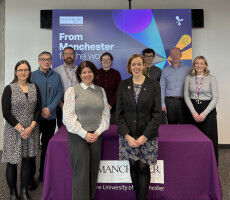
The University of Manchester signs Memorandum of Understanding with United Utilities
Agronomy & Food Science - Mar 27
Gather & Gather unveils fresh new Spring/Summer 2026 menu designed for the warmer seasons
Gather & Gather unveils fresh new Spring/Summer 2026 menu designed for the warmer seasons
Environment - Mar 26
University of Manchester hits major sustainability milestone, with Main Campus becoming 100% 'Zero Landfill'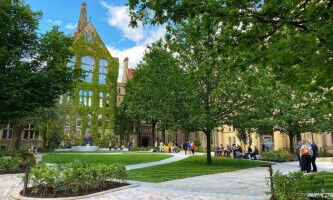
University of Manchester hits major sustainability milestone, with Main Campus becoming 100% 'Zero Landfill'
Campus - MANCHESTER - Mar 26
Manchester students mentor local teenagers to build confidence in applying for university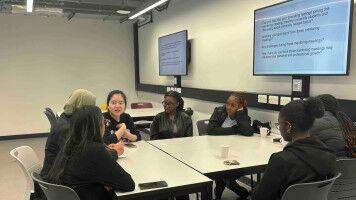
Manchester students mentor local teenagers to build confidence in applying for university

wire
University College London
Results 4951 - 5000 of 6397.
Health - Life Sciences - 09.11.2015
UCL professor is first UK winner of $3m Breakthrough Prize in Life Sciences
Professor John Hardy (UCL Institute of Neurology) was last night awarded the $3 million Breakthrough Prize in Life Sciences for his pioneering research into the genetic causes of Alzheimer's disease, other forms of dementia and Parkinson's disease.
Environment - 04.11.2015
Being moody may help us adapt to change
It's long been known that mood biases our judgments and perceptions, but this effect has usually been regarded as irrational or disadvantageous. A new theory published by UCL scientists in Trends in Cognitive Sciences argues that mood draws on experiences and can, in fact, help us quickly adapt to changes in our environment.
History & Archeology - Earth Sciences - 02.11.2015
Engraved stones revealed at ice age pioneer basecamp
Archaeologists from the UK working in the Channel Island of Jersey have found the remains of a 14,000 year old hunter-gatherer settlement offering great views over landscapes now drowned by the English Channel. The site, called Les Varines, is located in the Jersey parish of St Saviour and has produced over 5,000 scattered stone artefacts during the past five years of excavation, but in the summer of 2015 the team unearthed denser concentrations of tools and burnt bone and, for the first time, fragments of engraved stone.
History & Archeology - 27.10.2015
Nearly 2/3 of secondary school children do not know what antisemitism means
World's largest national Holocaust study finds nearly 2/3 of secondary school children do not know what antisemitism means.
Life Sciences - 26.10.2015
Tribute to Professor Lisa Jardine
We are deeply saddened to share the news that Professor Lisa Jardine CBE FRS passed away on Sunday 25 October 2015.
Pedagogy - 22.10.2015
President Xi Jinping joins UCL at Confucius Institute conference celebrating Mandarin teaching in UK schools
Life Sciences - 21.10.2015
Images of pleasure and winning have unique distracting power
Images related to pleasure or winning attract attention from demanding tasks, while equally intense but negative images and those associated with losing can be fully ignored, finds a new UCL study.
Health - Life Sciences - 19.10.2015
First human trial for innovative new drug in development to treat Huntington’s disease
Patients in London are being dosed for the first time with an experimental drug for Huntington's disease. This breakthrough could be one of the most important developments since the gene for Huntington's disease was discovered in 1993. The trial of the revolutionary new 'gene silencing' treatment is being led by scientists at UCL's Institute of Neurology.
Life Sciences - Agronomy & Food Science - 16.10.2015
Genes involved in schizophrenia and obesity highlighted
Genes involved in schizophrenia and obesity have been highlighted in a new UCL study, which could lead to a better understanding of the DNA variants which affect risk of these conditions and aid the development of improved strategies for prevention and treatment. The research by the UCL Genetics Institute, published in Annals of Human Genetics, involved analysing over one million genetic variants in over two thousand research subjects who had either schizophrenia or severe childhood onset obesity.
Life Sciences - Health - 15.10.2015
Extra brain cells make males remember sex
A pair of neurons have been found in the brain of male nematode worms that allow them to remember and seek sex even at the expense of food. These neurons, which are male-specific, are required for sex-based differences in learning, suggesting that sex differences in cognitive abilities can be genetically hardwired.
Health - Life Sciences - 05.10.2015
UCL and UK supermarkets unite to beat dementia with carrier bag funds
UK supermarkets Iceland, Asda, Morrisons and Waitrose have today pledged funds from the new levy on single-use carrier bags to support the construction of a new world class dementia research centre at UCL.
Event - Health - 02.10.2015
UCL receives Silver Athena SWAN award
Social Sciences - Life Sciences - 01.10.2015
UCL professor wins Klaus J. Jacobs Research Prize 2015
Professor Sarah-Jayne Blakemore (UCL Institute of Cognitive Neuroscience) has today been announced as the recipient of the 2015 Klaus J. Jacobs Research Prize for her research on understanding emotional and social brain development during adolescence.
Administration - 01.10.2015
UCL rises 8 places in THE rankings
Health - Life Sciences - 29.09.2015
London Project to Cure Blindness
A pioneering trial of a new treatment derived from stem cells for people with 'wet' age-related macular degeneration (AMD) has commenced at Moorfields Eye Hospital following a successful operation on a patient.
Life Sciences - Earth Sciences - 29.09.2015
Animals built of glass inspire art exhibition at the UCL Grant Museum
Career - Sport - 25.09.2015
Having the ’right’ connections only gets you so far
Working with a highly reputable corporate leader helps managers get promoted to senior positions in the short term, but such a career boost is balanced in the longer-term as competitive job markets, including professional sports, punish those managers who initially benefited.
Life Sciences - Health - 18.09.2015
How the Inuit adapted to Ice Age living and a high-fat diet
Greenland natives - the Inuit - have mutations in genes that control how the body uses fat which provides the clearest evidence to date that human populations are adapted to particular diets according to new UCL research. The genetic differences allow the Inuit to physically adapt to survive Arctic conditions and live healthily on a traditional diet which is rich in omega-3 polyunsaturated fatty acids from marine mammal fat.
Environment - Earth Sciences - 16.09.2015
Seven Ponds in Seven Days
Kicking off on 20 September, a conservation project in Norfolk is highlighting the vital role of ponds in the English countryside as part of a "seven ponds in seven days" restoration challenge.
Health - Administration - 15.09.2015
England has the potential to have the lowest disease burden in the world
For the first time, a new study led by Public Health England (PHE) and authored by a number of UCL researchers, ranks the diseases and risk factors that cause death and disability in England compared
Social Sciences - Life Sciences - 11.09.2015
Why other people’s skin always feels softer
Have you ever touched someone else and wondered why his or her skin felt so incredibly soft? Well, now researchers reporting in the Cell Press journal Current Biology on September 10 present evidence that this experience may often be an illusion. In a series of studies led by Aikaterini Fotopoulou of UCL, participants consistently rated the skin of another person as being softer than their own, whether or not it really was softer.
Administration - Health - 07.09.2015
Higher risk of death for patients admitted to NHS hospitals at the weekend
Patients admitted to hospital at the weekend are more likely to be sicker and have a higher risk of death, compared with those admitted during the week, finds an analysis published in The BMJ this week.
Law - 03.09.2015
UCL Qatar housing support allowance for staff
UCL has clarified issues raised by media coverage this week of payments of housing support allowance to staff at UCL Qatar.
Linguistics & Literature - 01.09.2015
Statement: UCL Bloomsbury Theatre closure
UCL's Bloomsbury Theatre is currently closed for planned building works which have impacted on known asbestos.
Environment - Agronomy & Food Science - 21.08.2015
Scientists warn only ’simplified’, degraded tropical forest may remain by end of century
A new and more dangerous phase of impacts on the world's remaining tropical forests is emerging, threatening to simplify the world's most diverse ecosystem including mass species loss, according to new UCL-led research published today in Science.
Health - 20.08.2015
Working long hours linked to higher risk of stroke
Working 55 hours or more per week is linked to a 33% greater risk of stroke and a more modest (13%) increased risk of developing coronary heart disease compared with working a standard 35 to 40 hour week, according to the largest study in this field so far, led by UCL and published in The Lancet . Professor Mika Kivimäki (UCL Epidemiology & Public Health) and colleagues did a systematic review and meta-analysis of published studies and unpublished individual-level data examining the effects of longer working hours on cardiovascular disease up to August 20, 2014.
Administration - 17.08.2015
UCL climbs Shanghai world rankings to 18th place
UCL has risen to 18th place in the new Academic Ranking of World Universities (ARWU), published this week by Shanghai Jiao Tong University, making it one of only three UK universities in the top 20.
Environment - 14.08.2015
Heat release from stagnant deep sea helped end last Ice Age
The build-up and subsequent release of warm, stagnant water from the deep Arctic Ocean and Nordic Seas played a role in ending the last Ice Age within the Arctic region, according to new research led by a UCL scientist. The study examined how the circulation of the ocean north of Iceland - the combined Arctic Ocean and Nordic Seas, called the Arctic Mediterranean - changed since the end of the last Ice Age (~20,000-30,000 years ago).
Linguistics & Literature - 13.08.2015
UCL Bloomsbury Theatre building works update
Event - 13.08.2015
UCL awarded for its efforts to advance ’race’ equality in pioneering new scheme
UCL has become one of the first universities in the UK to be formally awarded for its efforts to understand, and take steps to address, racialised inequalities in the academy.
Administration - 12.08.2015
A-Level Results 2015: adjustment places available at UCL
Life Sciences - 28.07.2015
The world’s rarest skeleton stands on four legs once again
Using cutting-edge technology, the world's rarest skeleton - a South African extinct zebra called a quagga - has regained its missing hind limb.
Environment - 20.07.2015
Cool summer of 2013 boosted Arctic sea ice
The volume of Arctic sea ice increased by a third after the summer of 2013 as the unusually cool air temperatures prevented the ice from melting, according to UCL and University of Leeds scientists. This suggests that the ice pack in the Northern hemisphere is more sensitive to changes in summer melting than it is to winter cooling, a finding which will help researchers to predict future changes in its volume.
Economics - Administration - 20.07.2015
UCL digital research facility gets go-ahead
The Government has committed to investing £4 million in a new facility at UCL to help policymakers develop ways of evening out the UK's regional economic divides.
Social Sciences - Health - 16.07.2015
UCL academics elected as British Academy Fellows
Life Sciences - Economics - 16.07.2015
Dr Celia Caulcott appointed Vice-Provost (Enterprise)
Dr Celia Caulcott has been appointed the next Vice-Provost (Enterprise) at UCL, with effect from 1 October 2015.
Psychology - Health - 16.07.2015
Large trial will assess effectiveness of teaching mindfulness in UK schools
A major study to assess whether mindfulness training for teenagers can improve their mental health launches today, involving researchers from UCL alongside staff and students at the UCL Academy.
Health - Chemistry - 16.07.2015
Improving treatment for systemic amyloidosis
A potential new approach to treat systemic amyloidosis, invented at UCL and being developed by GlaxoSmithKline (GSK), marks the start of a successful and innovative academic-industry collaboration. The first in human clinical trial of a novel investigational drug intervention for patients with systemic amyloidosis has established proof of mechanism.
Event - Economics - 09.07.2015
Missing people project wins ESRC impact award
Administration - 09.07.2015
UCL top performing university in Horizon 2020
UCL is the best performing university in the first year of the EU funding scheme Horizon 2020, securing a total of €73.2 million over 55 projects, according to an analysis by Research Professional .
Health - Agronomy & Food Science - 09.07.2015
Many overweight teenagers do not recognise they are too heavy
More than a third of overweight or obese teenagers don't see themselves as being too heavy and think their weight is about right, according to a UCL study published today in the International Journal of Obesity . The study used data from around 5,000 13-15-year-olds who were asked about their weight and if they thought they were too heavy, about right or too light.
Life Sciences - 09.07.2015
UCL Council and Sir Tim Hunt
Environment - 06.07.2015
Stronger action needed to transform the UK’s energy system
An ambitious policy package is essential for the UK to transform its energy system to achieve the deep reductions in carbon emissions required to avoid dangerous climate change, according to research led by UCL scientists.
Health - Philosophy - 03.07.2015
Commonly prescribed drugs affect decisions to harm oneself and others
Healthy people given the serotonin-enhancing antidepressant citalopram were willing to pay almost twice as much to prevent harm to themselves or others than those given placebo drugs in a moral decision-making experiment at UCL. In contrast, the dopamine-boosting Parkinson's drug levodopa made healthy people more selfish, eliminating an altruistic tendency to prefer harming themselves over others.
Administration - Social Sciences - 02.07.2015
Mapping the people of Scotland
Researchers at UCL have mapped the people of Scotland in unprecedented detail. The project, 'DataShine Scotland', commissioned by National Records of Scotland and the Scottish Government, uses data from Scotland's Census 2011 to show over 1,000 social characteristics for over 46,000 Scottish areas.
Event - Life Sciences - 02.07.2015
Human brain might reconstruct past events
When remembering something from our past, we often vividly re-experience the whole episode in which it occurred. New UCL research funded by the Medical Research Council and Wellcome Trust has now revealed how this might happen in the brain. The study the representation of the entire event can be reactivated in the brain, including incidental information such as where they were and what they did.
Life Sciences - 26.06.2015
Rats ’dream’ paths to a brighter future
When rats rest, their brains simulate journeys to a desired future such as a tasty treat, finds new UCL research funded by the Wellcome Trust and Royal Society. The researchers monitored brain activity in rats, first as the animals viewed food in a location they could not reach, then as they rested in a separate chamber, and finally as they were allowed to walk to the food.
Life Sciences - 24.06.2015
Single gene controls fish brain size and intelligence
A single gene called Angiopoietin-1 ( Ang-1 ) drives brain size and intelligence in fish according to a new study by researchers at UCL, Stockholm University and University of Helsinki. Fish with larger brains and higher intelligence had higher expression of Ang-1 , and when expression levels of Ang-1 were experimentally reduced, brains shrunk.
Health - Environment - 23.06.2015
Climate change threatens to undermine the last half century of health gains
The threat to human health from climate change is so great that it could undermine the last fifty years of gains in development and global health, according to a major new UCL-led Commission, published in The Lancet.
Linguistics & Literature - 22.06.2015
UCL announces launch of Bloomsbury Studio


Environment - Mar 27
The University of Manchester signs Memorandum of Understanding with United Utilities
The University of Manchester signs Memorandum of Understanding with United Utilities
Agronomy & Food Science - Mar 27
Gather & Gather unveils fresh new Spring/Summer 2026 menu designed for the warmer seasons
Gather & Gather unveils fresh new Spring/Summer 2026 menu designed for the warmer seasons
Environment - Mar 26
University of Manchester hits major sustainability milestone, with Main Campus becoming 100% 'Zero Landfill'
University of Manchester hits major sustainability milestone, with Main Campus becoming 100% 'Zero Landfill'
Campus - MANCHESTER - Mar 26
Manchester students mentor local teenagers to build confidence in applying for university
Manchester students mentor local teenagers to build confidence in applying for university