Scientists can be prone to the occasional hyperbole, but in the case of supermassive black holes is it justified? Chris Clarke investigates.
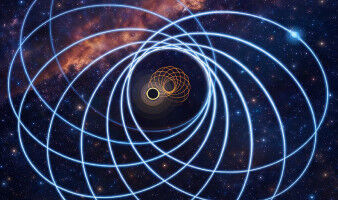
Black holes are deeply mysterious objects that exist throughout the universe: giant plugholes in space that drag in and consume anything that strays too close. Their enormous gravitational pull means that even light cannot escape making 'black hole' a pretty good description all round. The key to a black hole's immense power lies in its mass. Our Sun for example, weighs the same as 332,946 Earths, giving it enough gravity to keep our whole solar system in place around it. Imagine then, the gravitational pull of something 100 times the mass of our Sun? What about one thousand times? One billion? This is the sort of gravity that keeps whole galaxies in place. Until recently, the largest black holes observed were the supermassive black holes, weighing in at a minimum of 100,000 times the mass of our Sun. Supermassive black holes are thought to have originated in the early universe, growing larger over the millennia by sucking in matter or merging with other black holes.
TO READ THIS ARTICLE, CREATE YOUR ACCOUNT
And extend your reading, free of charge and with no commitment.