Hunt for Einstein’s "elusive" gravitational waves begins
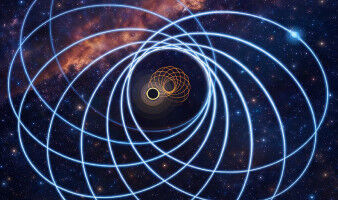
University researchers begin their search for tiny ripples in space. University researchers have begun looking for the first direct evidence of the existence of gravitational waves. Two upgraded detectors, based at Hanford and Livingston in the US, have been brought online and are starting to search for signals with unprecedented accuracy as part of the Advanced LIGO (Laser Interferometer Gravitational Wave Observatory) Project. Researchers from Cardiff University's School of Physics and Astronomy will use a powerful supercomputer to comb through the data to search for the tell-tale signals of a gravitational wave. Gravitational waves are tiny ripples in space-time that are emitted as a result of violent cosmic events, such as exploding stars and merging black holes. These waves were first predicted by Albert Einstein in 1916 as a consequence of his general theory of relativity, but have yet to be detected directly. As they travel towards Earth, these ripples bring with them information about their origins and about the nature of gravity that cannot be obtained by other astronomical tools.