


Environment - Mar 27
The University of Manchester signs Memorandum of Understanding with United Utilities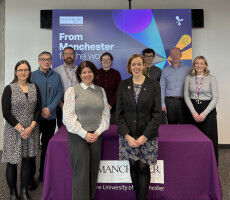
The University of Manchester signs Memorandum of Understanding with United Utilities
Agronomy & Food Science - Mar 27
Gather & Gather unveils fresh new Spring/Summer 2026 menu designed for the warmer seasons
Gather & Gather unveils fresh new Spring/Summer 2026 menu designed for the warmer seasons
Environment - Mar 26
University of Manchester hits major sustainability milestone, with Main Campus becoming 100% 'Zero Landfill'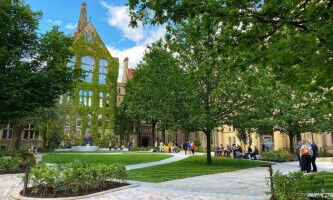
University of Manchester hits major sustainability milestone, with Main Campus becoming 100% 'Zero Landfill'
Campus - MANCHESTER - Mar 26
Manchester students mentor local teenagers to build confidence in applying for university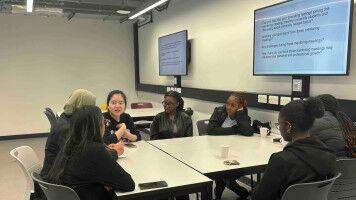
Manchester students mentor local teenagers to build confidence in applying for university
news
University College London
Results 761 - 780 of 2154.
Health - Life Sciences - 23.12.2021

The SARS-CoV-2 Alpha (B.1.1.7) variant mutated to evade our 'innate immune system', helping establish it as the world's first 'Variant of Concern', finds a new study led by researchers at UCL and the Quantitative Biosciences Institute, University of California San Francisco. Published in Nature , the study shows the Alpha variant, first identified in the UK, evolved to make more of its 'antagonism proteins' that nullify the body's first line of defence, known as the 'innate immune system'.
Health - 22.12.2021

Fundamental differences in the immune response of adults and children can help to explain why children are much less likely to become seriously ill from SARS-CoV-2, finds a new study by researchers at UCL and the Wellcome Sanger Institute. The study is the most comprehensive single-cell study to compare SARS-CoV-2 infection in adults and children across multiple organs.
Health - Career - 22.12.2021

The differences in Covid-19 infection risk between ethnic minority healthcare workers and their white colleagues is likely due to home and work factors rather than biology, finds the largest and most detailed study on the subject, co-led by researchers at UCL. Previous research has shown that healthcare workers from ethnic minority groups are at a disproportionately higher risk of contracting Covid-19 than their white colleagues.
Health - Pharmacology - 22.12.2021

A Covid-19 booster vaccination markedly increases immune response in residents and staff within care homes, according to a new preprint study co-led by UCL researchers, making it vital that people living and working in these settings get their third jab. Age and frailty are already recognised as major risk factors for severe Covid-19 outcomes, with elderly residents of long-term care facilities suffering much higher rates of mortality during the pandemic than the general population.
Life Sciences - Paleontology - 22.12.2021

The most detailed timeline of mammal evolution to date has been set out in a new study co-led by UCL researchers. The Nature paper describes a new and fast computational approach to obtain precisely dated evolutionary trees, known as 'timetrees'. The authors used the novel method to analyse a mammal genomic dataset and answer a long-standing question around whether modern placental mammal groups originated before or after the Cretaceous-Palaeogene (K-Pg) mass extinction, which wiped out over 70% of all species, including all dinosaurs.
Materials Science - Physics - 20.12.2021

Phosphorene nanoribbons have been incorporated into new types of solar cells, dramatically improving the cells' efficiency, in a new study led by UCL and Imperial College London researchers. Phosphorene nanoribbons (PNRs) are ribbon-like strands of the 2D material phosphorous, which, similar to graphene, are made of single-atom-thick layers of atoms.
Astronomy & Space - Physics - 17.12.2021

The NASA-led James Webb Space Telescope, which includes hardware designed and built at UCL and which will image the very first stars to shine in the Universe, is scheduled to be launched into space later this month. The telescope, one of the great space observatories following Hubble, will be launched on-board the Ariane rocket from Europe's spaceport in French Guiana on or after Friday 24 December.
Paleontology - Life Sciences - 17.12.2021

Giant, long-necked sauropods, thought to include the largest land animals ever, preferred to live in warmer regions on Earth, suggesting they may have had a different physiology from other dinosaurs, finds a new study led by researchers at UCL and the University of Vigo. The study, published in the journal Current Biology , investigated the enigma of why sauropod fossils are only found at lower latitudes, while fossils of other main dinosaur types seem ubiquitously present, with many located in the polar regions.
Health - Life Sciences - 15.12.2021

Scientists have spotted signs of 'pre-resistance' in bacteria for the first time - signs that particular bacteria are likely to become resistant to antibiotics in the future - in a new study led by UCL and Great Ormond Street Hospital researchers.
Health - 14.12.2021

A "lab-grown model" of the human stomach that can be used to study how infections impact the gastrointestinal system, has been developed for the first time by a UCL-led team of international scientists. The team from Great Ormond Street Hospital (GOSH), UCL Great Ormond Street Institute of Child Health (UCL GOS ICH) and the Istituto Zooprofilattico Sperimentale delle Venezie (Legnaro, Italy), have built on recent advances to grow 'mini-organs' in a laboratory, known as organoids.
Health - 11.12.2021

UCL academics will play a key role in a new three-year study investigating the long-term health impact of Covid-19 on NHS healthcare workers from diverse ethnic backgrounds and roles. Launched by the NHS Race and Health Observatory the 'REACH-OUT' study, builds on 'UK-REACH' (United Kingdom Research study into Ethnicity And COVID-19 outcomes in Healthcare workers), which is led by the University of Leicester in collaboration with UCL, University of Nottingham, national stakeholders and front-line healthcare workers.
Pharmacology - Innovation - 09.12.2021

The light from a smartphone screen can be used to print medications, in a new 3D printing technique developed by UCL researchers. The method could make it easier for personalised medicines to be prepared in clinics, remote areas or even in patients' homes. The report in the International Journal of Pharmaceutics is the first published study of smartphone-based 3D printing of pharmaceuticals.
Health - Psychology - 09.12.2021

During the COVID-19 pandemic, many mental health care service users were able to continue accessing some support by phone and video call (remote care), but the shift to remote care presented significant barriers to certain groups, finds a review co-led by UCL researchers. The authors of the systematic review are calling for further examination into the effects of telemental health on groups at risk of digital exclusion and for better evidence on long-term impacts.
Environment - Life Sciences - 08.12.2021

A population of Seychelles frog have adapted to a warmer climate over time, but as these adaptations have evolved gradually, the rapidly warming climate still poses a threat to species' survival, according to a new study led by a UCL researcher. In the study published in Global Change Biology , the researchers report that a subgroup of the Seychelles frog ( Sooglossus sechellensis) adapted to historic sea level rise after finding themselves on an island with a different climate.
Life Sciences - 08.12.2021

Cells in the developing embryo can sense the stiffness of other cells around them, which is key to them moving together to form the face and skull, finds a new study by UCL researchers. In the study of frog embryos researchers found that embryonic cells can navigate away from soft regions of the embryo and toward harder regions.
Health - Psychology - 03.12.2021

People choose whether to seek or avoid information about their health, finances and personal traits based on how they think it will make them feel, how useful it is, and if it relates to things they think about often, finds a new study by UCL researchers.
Astronomy & Space - 03.12.2021

An international team involving researchers at UCL has discovered a new planet, GJ 367 b, whose surface temperature may reach 1,500 degrees Centigrade - hot enough to melt all rock and metal - and which takes only eight hours to orbit its star. In a new study, published in the Science journal, the researchers show that the planet, which is 31 light years from Earth, is one of the lightest among the nearly 5,000 exoplanets (planets outside our own solar system) that are known today, with half the mass of Earth.
Environment - Campus - 02.12.2021

UCL has published its first report setting out how the university is addressing the UN Sustainable Development Goals (SDGs). Developed by the UCL Sustainable Development Goals Initiative (SDGI), the report showcases a selection of the hundreds of ways UCL's staff and student communities are supporting the SDGs across their research, teaching and extra-curricular activities, as well as how the university operates.
Astronomy & Space - Physics - 01.12.2021

Research into the logic behind AI shows that algorithms think in reliable and scientific ways that could help us learn undiscovered laws of physics, say PhD candidate Kai Hou Yip and Dr Quentin Changeat (both UCL Physics & Astronomy). Do you know what the Earth's atmosphere is made of? You'd probably remember it's oxygen, and maybe nitrogen.
Health - Pharmacology - 30.11.2021

Scientists at UCL have discovered that some patients with a common type of childhood cancer do not respond to treatment because of a rare and previously unrecognised type of cancer cell, which has the unique capacity to "lie dormant" during chemotherapy and resist its effects. The breakthrough study in mice, uncovers for the first time the specific biological features that explain why a small number of leukaemic cells are able survive the crucial first 28 days of chemotherapy for B-cell precursor acute lymphoblastic leukaemia (BCP-ALL).


Environment - Mar 27
The University of Manchester signs Memorandum of Understanding with United Utilities
The University of Manchester signs Memorandum of Understanding with United Utilities
Agronomy & Food Science - Mar 27
Gather & Gather unveils fresh new Spring/Summer 2026 menu designed for the warmer seasons
Gather & Gather unveils fresh new Spring/Summer 2026 menu designed for the warmer seasons
Environment - Mar 26
University of Manchester hits major sustainability milestone, with Main Campus becoming 100% 'Zero Landfill'
University of Manchester hits major sustainability milestone, with Main Campus becoming 100% 'Zero Landfill'
Campus - MANCHESTER - Mar 26
Manchester students mentor local teenagers to build confidence in applying for university
Manchester students mentor local teenagers to build confidence in applying for university