


Environment - Mar 27
The University of Manchester signs Memorandum of Understanding with United Utilities
The University of Manchester signs Memorandum of Understanding with United Utilities
Agronomy & Food Science - Mar 27
Gather & Gather unveils fresh new Spring/Summer 2026 menu designed for the warmer seasons
Gather & Gather unveils fresh new Spring/Summer 2026 menu designed for the warmer seasons
Environment - Mar 26
University of Manchester hits major sustainability milestone, with Main Campus becoming 100% 'Zero Landfill'
University of Manchester hits major sustainability milestone, with Main Campus becoming 100% 'Zero Landfill'
Campus - MANCHESTER - Mar 26
Manchester students mentor local teenagers to build confidence in applying for university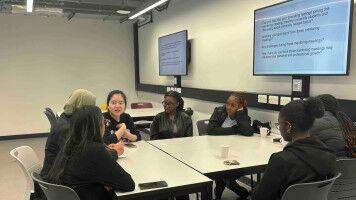
Manchester students mentor local teenagers to build confidence in applying for university

news
University College London
Results 481 - 500 of 2154.
Health - 09.05.2023

An estimated one million stillbirths and newborn baby deaths could be prevented each year by implementing low-cost pregnancy interventions in lowand middle-income countries, finds a new study involving UCL researchers. The new four-paper series, published in The Lancet , examined some of the most common causes of fetal growth restriction and preterm birth.
Health - Life Sciences - 09.05.2023
Autoimmune disorders now affect around one in ten individuals
New population-based study led by UCL and the University of Oxford shows that autoimmune disorders are more common than previously thought. The research, published in The Lancet , estimates that around one in ten individuals in the UK now live with an autoimmune disorder. The findings also highlight important socioeconomic, seasonal and regional differences for several autoimmune disorders, providing new clues as to what factors may be involved in these conditions.
Health - Pharmacology - 05.05.2023

New research led by UCL and Great Ormond Street Hospital (GOSH) to predict which childhood leukaemia patients are at higher risk of not responding well to chemotherapy will allow clinicians to refine treatment strategies to give the best chance of success. The study, published in the Journal of Clinical Oncology , combined UK trial data from 2003-2019 to see which patients had worse outcomes.
Health - Agronomy & Food Science - 05.05.2023

Poorly monitored badger farming and illegal poaching in South Korea is a cause for concern for wildlife and human health, with regulation of the trade urgently needed, according to a new study involving UCL researchers. Published today in the Journal of Asia-Pacific Biodiversity, the study by researchers from UCL, Zoological Society London (ZSL) and Seoul National University, South Korea, found that a growing range of badger-derived products have been introduced to the market in South Korea over the last two decades.
Health - 04.05.2023

Conditions such as coeliac disease and Parkinson's disease could be detected in principle up to 10 years earlier than they are currently, suggests a new study by UCL researchers. The study, published in the British Journal of General Practice , reviewed existing evidence on how people's use of healthcare changed in the weeks, months and years ahead of the diagnosis of a range of conditions.
Life Sciences - 28.04.2023

Neuroscientists at UCL have uncovered how exploratory actions enable animals to learn their spatial environment more efficiently. Their findings could help build better AI agents that can learn faster and require less experience. Unit at UCL found the instinctual exploratory runs that animals carry out are not random.
Health - Pharmacology - 27.04.2023
Cause of heart damage from cancer drugs identified
Safer cancer drugs are now one step closer after a new study led by UCL researchers found the likely reason that some treatments damage the heart. Modern drugs can be very effective at treating cancer and have led to greatly improved survival rates. However, some cancer treatments can cause damage to the heart, or cardiotoxicity.
Environment - Earth Sciences - 27.04.2023

Life in the ocean's "twilight zone" could decline dramatically due to climate change, suggests a new study involving UCL researchers. The twilight zone (200m to 1,000m deep) gets very little light but is home to a wide variety of organisms and billions of tonnes of organic matter. The new study, published in the journal Nature Communications , warns that climate change could cause a 20-40% reduction in twilight zone life by the end of the century.
Health - 27.04.2023
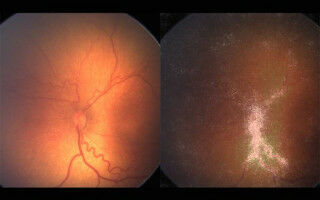
An artificial intelligence (AI) tool could be an effective way of identifying retinopathy of prematurity (ROP), the leading cause of childhood blindness in middle-income countries, finds a new study led by UCL and Moorfields Eye Hospital researchers. The team developed a deep learning AI model that can identify which at-risk infants have ROP that may lead to blindness if left untreated, and they hope their technique could improve access to screening in the many areas with limited neonatal services and few trained ophthalmologists.
Life Sciences - Health - 26.04.2023

Researchers at UCL, the Francis Crick Institute and King's College London have shed light on the genetics underlying changes in the structure and shape of the face and head in a mouse model of Down syndrome. They found that having a third copy of the gene Dyrk1a and at least three other genes was responsible for changes in development that result in 'craniofacial dysmorphology', which shows up as shortened back-to-front length and widened diameter of the head.
Astronomy & Space - Physics - 26.04.2023

Two massive touching stars in a neighbouring galaxy are on course to become black holes that will eventually crash together, generating waves in the fabric of space-time, according to a new study by researchers at UCL and the University of Potsdam. The study, accepted for publication in the journal Astronomy & Astrophysics , looked at a known binary star (two stars orbiting around a mutual centre of gravity), analysing starlight obtained from a range of groundand space-based telescopes.
Health - Life Sciences - 25.04.2023

A world-first trial at UCL and UCLH has found a new genetic therapy for Alzheimer's disease that is able to safely and successfully lower levels of the harmful tau protein known to cause the disease. The trial, led by consultant neurologist Dr Catherine Mummery (UCL Queen Square Institute of Neurology & the National Hospital for Neurology and Neurosurgery), represents the first time that a 'gene silencing' approach has been taken in dementia and Alzheimer's disease.
Life Sciences - 21.04.2023
Humans struggle to differentiate imagination from reality
The more vividly a person imagines something, the more likely it is that they believe it's real, finds a new study by UCL researchers. The research, published in Nature Communications , involved over 600 participants who took part in an online experiment, where they were asked to imagine images of alternating black and white lines while looking at a computer screen.
Environment - Life Sciences - 21.04.2023

The genomes of two hornet species, the European hornet and the Asian hornet (or yellow-legged hornet) have been sequenced for the first time by a team led by UCL scientists. By comparing these decoded genomes with that of the giant northern hornet, which has recently been sequenced by another team, the researchers have revealed clues suggesting why hornets have been so successful as invasive species across the globe.
Career - 19.04.2023
Analysis: Overconfidence dictates who gets ’top jobs’ and research shows men benefit more than women
Dr Nikki Sure and Anna Adamecz-Volgyi (both IOE, UCL's Faculty of Education and Society) describe in The Conversation how their research links a person's overconfidence in adolescence to their job market outcomes later in life. There has been a steady stream of popular literature in recent years telling women to "lean in", be more confident, and not worry about "imposter syndrome".
Environment - 19.04.2023

Scientists at UCL have worked with the Royal British Legion to assess a new plastic-free Remembrance poppy, finding that it produces 40% less carbon emissions over its lifetime. The Royal British Legion has been developing the plastic-free poppy for the last three years, in collaboration with expert partners, in efforts to reduce its use of single-use plastic and be economical, sustainable, and less impactful to the environment.
Health - Psychology - 19.04.2023

Using talking therapies to effectively treat depression in adults over the age of 45 may be linked with reduced rates of future cardiovascular disease, finds a new analysis of health data led by UCL researchers. In the first-of-its-kind study, published in the European Health Journal , researchers assessed whether evidence-based psychological therapies, such as cognitive behavioural therapy (CBT), used to treat depression could play a role in reducing the risk of cardiovascular disease later in life.
Health - Pharmacology - 17.04.2023
Targeting historic infections in DNA could boost cancer treatment
Remnants of ancient retroviruses passed down in our DNA could be an effective target for antibodies against lung cancer, according to a new study by researchers at UCL and the Francis Crick Institute. The research, published in Nature and part-funded by Cancer Research UK, could improve our understanding of why patients respond differently to immunotherapy treatments - allowing the therapies to be improved for the future.
Life Sciences - Health - 17.04.2023

Researchers at the UCL Queen Square Institute of Neurology have discovered a network of connections in the brain linked to seizures in people with epilepsy. The team believe that their findings, published in Brain , will help redesign neurological operations for patients whose epilepsy can't be controlled by medication.
Pharmacology - Health - 17.04.2023
Modified Botox gives long-term pain relief after nerve injury without side effects
A modified form of Botox could give long term pain relief to patients with chronic nerve injury pain, according to a study by scientists from UCL, the Universities of Sheffield and Reading and US-based biopharmaceutical company Neuresta. The researchers have created a new, elongated botulinum neurotoxin which can alleviate chronic pain without risk of paralysis or addiction.


Environment - Mar 27
The University of Manchester signs Memorandum of Understanding with United Utilities
The University of Manchester signs Memorandum of Understanding with United Utilities
Agronomy & Food Science - Mar 27
Gather & Gather unveils fresh new Spring/Summer 2026 menu designed for the warmer seasons
Gather & Gather unveils fresh new Spring/Summer 2026 menu designed for the warmer seasons
Environment - Mar 26
University of Manchester hits major sustainability milestone, with Main Campus becoming 100% 'Zero Landfill'
University of Manchester hits major sustainability milestone, with Main Campus becoming 100% 'Zero Landfill'
Campus - MANCHESTER - Mar 26
Manchester students mentor local teenagers to build confidence in applying for university
Manchester students mentor local teenagers to build confidence in applying for university