


Environment - Mar 27
The University of Manchester signs Memorandum of Understanding with United Utilities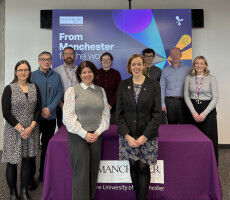
The University of Manchester signs Memorandum of Understanding with United Utilities
Agronomy & Food Science - Mar 27
Gather & Gather unveils fresh new Spring/Summer 2026 menu designed for the warmer seasons
Gather & Gather unveils fresh new Spring/Summer 2026 menu designed for the warmer seasons
Environment - Mar 26
University of Manchester hits major sustainability milestone, with Main Campus becoming 100% 'Zero Landfill'
University of Manchester hits major sustainability milestone, with Main Campus becoming 100% 'Zero Landfill'
Campus - MANCHESTER - Mar 26
Manchester students mentor local teenagers to build confidence in applying for university
Manchester students mentor local teenagers to build confidence in applying for university

news
University College London
Results 461 - 480 of 2154.
Health - Life Sciences - 09.06.2023

Scientists from across UCL, Great Ormond Street Hospital and the University of Padova have shown how 3D printing can be achieved inside 'mini-organs' growing in hydrogels, which could help better understand how cancer spreads through different tissues. The new technique can help control the shape and activity of the mini-organs, and even force tissue to grow into 'moulds'.
Life Sciences - 08.06.2023
Why we’re searching for the evolutionary origins of masturbation - and the results so far
Dr Matilda Brindle (UCL Anthropology) shares her new study in The Conversation on the evolutionary origins and advantages of auto sexual behaviour across the animal kingdom. "Spanking the monkey", "petting the poodle" and "pulling the python": all fitting euphemisms for masturbation, and closer to the truth than you might imagine.
Health - 08.06.2023
Long Covid can impact fatigue and quality of life worse than some cancers
Fatigue is the symptom that most significantly impacts the daily lives of long Covid patients, and can affect quality of life more than some cancers, finds a new study led by researchers at UCL and the University of Exeter. The research, published in BMJ Open and funded by the National Institute for Health and Care Research (NIHR), examines the impact of long Covid on the lives of over 3,750 patients who were referred to a long Covid clinic and used a digital app as part of their NHS treatment for the condition.
Health - Life Sciences - 07.06.2023

Three men who had heart failure caused by the build-up of sticky, toxic proteins are now free of symptoms after their condition spontaneously reversed in an unprecedented case described by a team at UCL and the Royal Free Hospital. The condition, a form of amyloidosis affecting the heart, is progressive and has until now been seen as irreversible, with half of patients dying within four years of diagnosis.
Health - 07.06.2023
The evolutionary origins and advantages of masturbation
The evolutionary advantages of autosexual behaviour have been revealed in a new study led by UCL researchers. Masturbation is common across the animal kingdom but is especially prevalent amongst primates, including humans. Historically, this behaviour was considered to be either pathological or a by-product of sexual arousal, and recorded observations were too fragmented to understand its distribution, evolutionary history, or adaptive significance.
Media - 06.06.2023

The addition of 'trust' and 'distrust' buttons on social media, alongside standard 'like' buttons, could help to reduce the spread of misinformation, finds a new experimental study led by UCL researchers. Incentivising accuracy cut in half the reach of false posts, according to the findings published in eLife.
Life Sciences - Health - 06.06.2023

Symptoms of the neurological movement disorder, dystonia, which include muscle spasms, twisting of the body and tremors, arise from an impairment in spinal cord function, finds a new study in mice by UCL researchers. Many neurological conditions that involve involuntary muscle contractions have long been considered as diseases of the brain.
Environment - Agronomy & Food Science - 02.06.2023

Professor Richard Gregory (UCL Biosciences) explains that pesticides and fertilisers are the single biggest cause of birds shocking decline across Europe and suggests how best to respond, writing in The Conversation. A trickle of studies warning that the enormous variety of living things on Earth is diminishing has turned into a flood.
Health - 01.06.2023

People who are socially engaged when middle aged and beyond are 30-50% less likely to develop dementia later on, finds a new review of evidence led by UCL researchers. The narrative review, published in Nature Aging , summarises the observational, interventional and mechanistic evidence for social participation as a way to reduce dementia risk, from studies conducted across the globe, while also providing recommendations for how societies could collectively reduce dementia risk.
Psychology - Health - 01.06.2023

Adolescents who show signs of alcohol dependence are more likely to develop depression by their mid-20s, according to a new study led by UCL and University of Bristol researchers. Drinking large amounts of alcohol regularly, but with no signs of dependency, did not predict depression risk, according to the findings published in The Lancet Psychiatry .
Health - 25.05.2023

Researchers from UCL, the UK Dementia Research Institute, Imperial College London and Newcastle University, are involved in a major new collaboration to develop a technology that could help identify people at risk of developing dementia by analysing their sleep patterns. Using a Sleep Analyzer tracking mat produced by technology company, Withings, the researchers created The Dementia Sleep Index - by comparing sleep patterns of people living with dementia to data that equates to 3.7million nights of sleep in the general population.
Health - Pharmacology - 25.05.2023

Five subtypes of heart failure that could potentially be used to predict future risk for individual patients have been identified in a new study led by UCL researchers. Heart failure is an umbrella term for when the heart is unable to pump blood around the body properly. Current ways of classifying heart failure do not accurately predict how the disease is likely to progress.
Life Sciences - 24.05.2023

A cleft lip or palate arises from the combined effects of genes and inflammatory risk factors experienced during pregnancy, such as smoking or infections, finds a new study led by UCL researchers. The study, published in Nature Communications , has revealed for the first time how genetic and environmental factors come together to form a cleft lip or palate in a developing foetus.
Life Sciences - Health - 24.05.2023

The biology underpinning a rare genetic mutation that allows its carrier to live virtually pain-free, heal more rapidly and experience reduced anxiety and fear, has been uncovered by new research from UCL. The study, published in Brain , follows up the teams' discovery in 2019 of the FAAH-OUT gene and the rare mutations that cause patient, Jo Cameron, to feel virtually no pain and never feel anxious or afraid.
Health - Life Sciences - 24.05.2023

Research led by UCL, in partnership with the MRC Laboratory of Molecular Biology (MRC LMB) and AstraZeneca, has identified a new compound that can stimulate nerve regeneration after injury, as well as protect cardiac tissue from the sort of damage seen in heart attack. The study, published in Nature , identified a chemical compound, named '1938', that activates the PI3K signalling pathway, and is involved in cell growth.
Health - 23.05.2023

Credit holidays, which allowed borrowers to postpone their credit repayments during the pandemic, helped improve the mental health of those who used them finds Dr Jacques Wels (UCL MRC Unit for Lifelong Health & Ageing), writing in The Conversation. Like other countries, the UK implemented a number of initiatives to mitigate the effects of the COVID-19 pandemic on people's economic circumstances.
Life Sciences - Law - 22.05.2023
Importance of neuroscientific evidence for rape trials
The law should take into consideration neuroscientific evidence that suggests fear and threat can cause victims to become 'frozen' in cases of rape or sexual assault, argue UCL experts. In a comment article, published in Nature Human Behaviour, Professor Patrick Haggard and former UCL undergraduate, Ebani Dhawan, state that victims of sexual assault are often blamed for not fighting or fleeing their attackers.
Environment - Life Sciences - 18.05.2023

Climate change is likely to abruptly push species over tipping points as their geographic ranges reach unforeseen temperatures, finds a new study led by a UCL researcher. The new Nature Ecology & Evolution study predicts when and where climate change is likely to expose species across the globe to potentially dangerous temperatures.
Health - Career - 15.05.2023

Writing in The Conversation, Dr Jacques Wels (UCL MRC Unit for Lifelong Health & Ageing) shares his new research which found home working was not detrimental to mental health in the early stages of the pandemic, but was associated with negative effects later on. One of the key changes to our daily lives brought about by the COVID pandemic was, for those able to do so, working from home.
Life Sciences - 09.05.2023

Humans inherited genetic material from Neanderthals that affects the shape of our noses, finds a new study led by UCL researchers. The new study finds that a particular gene, which leads to a taller nose (from top to bottom), may have been the product of natural selection as ancient humans adapted to colder climates after leaving Africa.


Environment - Mar 27
The University of Manchester signs Memorandum of Understanding with United Utilities
The University of Manchester signs Memorandum of Understanding with United Utilities
Agronomy & Food Science - Mar 27
Gather & Gather unveils fresh new Spring/Summer 2026 menu designed for the warmer seasons
Gather & Gather unveils fresh new Spring/Summer 2026 menu designed for the warmer seasons
Environment - Mar 26
University of Manchester hits major sustainability milestone, with Main Campus becoming 100% 'Zero Landfill'
University of Manchester hits major sustainability milestone, with Main Campus becoming 100% 'Zero Landfill'
Campus - MANCHESTER - Mar 26
Manchester students mentor local teenagers to build confidence in applying for university
Manchester students mentor local teenagers to build confidence in applying for university